“We’re all like one big family”: Joe Bence on Million Dollar Quartet

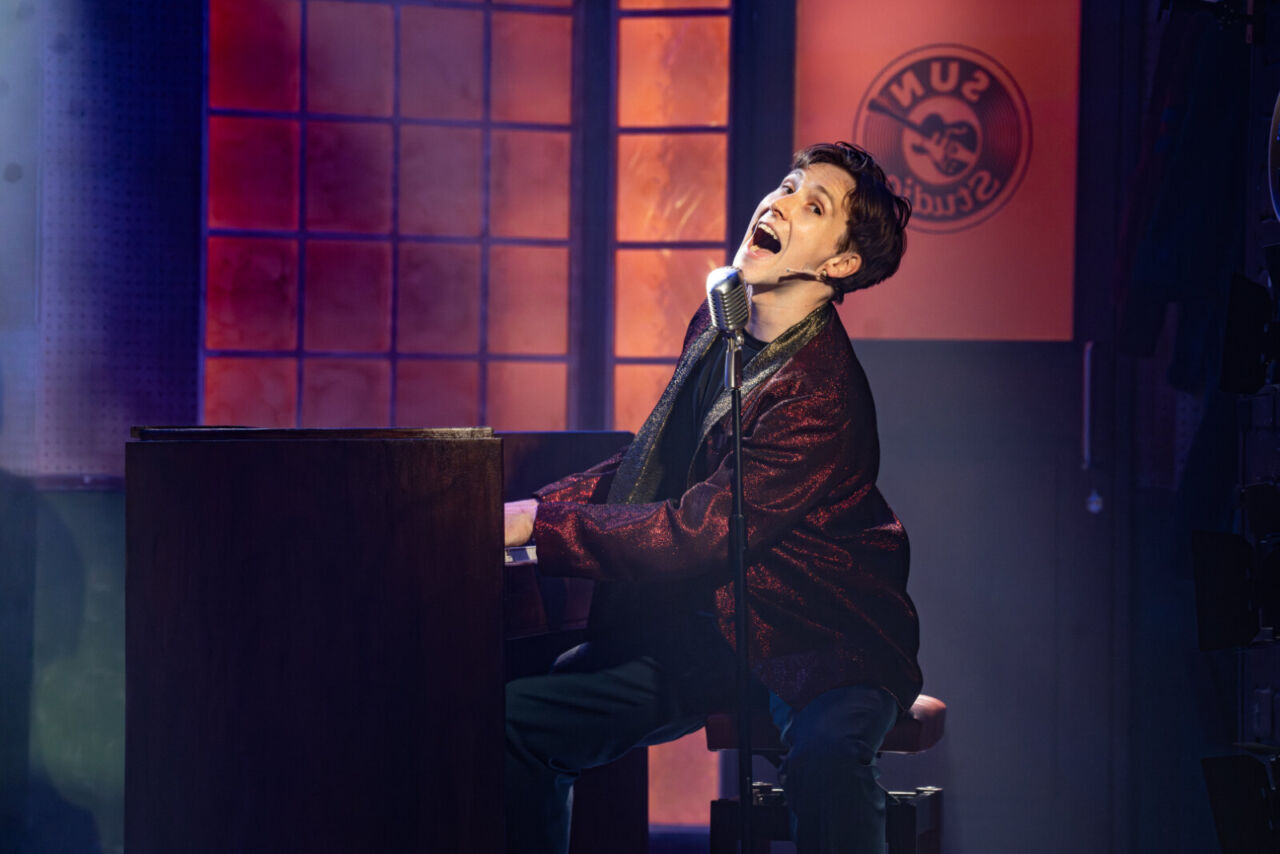
Joe Bence stars as iconic Jerry Lee Lewis in the critically acclaimed Million Dollar Quartet, infusing his character with all the energy, flamboyance and musical prowess the performer is known for. Having portrayed Buddy Holly in Rock & Roll Man, Bence has developed a particular affinity for bringing rock ‘n’ roll legends to life, with a career spanning theatre, screen and voiceover work.
Bence spoke to The Upcoming in an exclusive interview to discuss the challenges of portraying such an electrifying figure, from studying Lewis’s distinctive mannerisms to mastering his explosive piano performances. We also chatted about his theatrical upbringing, the camaraderie among the cast and a particularly nerve-wracking experience stepping onstage with just two hours’ rehearsal.
Hi, thank you for your time. You grew up in a theatrical family, with your father being a musical director, your mother a choreographer and your brother an actor. Did it feel inevitable that you would become a performer yourself, or did you perhaps go through a rebellious streak before embracing show business?
How I wish I were the black sheep of the family and took the brave leap into chartered accountancy! But no. Instability beckoned instead. In all seriousness, though, I am incredibly grateful for my theatrical family. Carrying on my late father’s musical legacy; taking inspiration from my mum’s extraordinary work ethic and optimism; and getting an early taste of the difficulty of the acting industry through my brother and attempting to emulate the resilience and confidence he tackles every day as an actor.
You’ve now starred as both Buddy Holly in Rock & Roll Man and Jerry Lee Lewis in Million Dollar Quartet. What’s the appeal of this era of music, and how did you approach portraying Jerry Lee Lewis in particular?
Rock ‘n’ roll continues to be one of the great music genres, 70 years on from its inception. The harmonic structures of blues, the rebellion of punk, the attack of rock music. Whether Buddy Holly or Jerry Lee Lewis, we’re talking pioneers who truly had it running through their veins. I’m spoilt with portraying Jerry Lee. We’re talking a man who did 60 years of live performance, a number of those recorded and all available online. I studied his mannerisms – how he hitches his trousers up, plays the piano with his feet, high-pitched yelps at certain points of songs. Also, his deep Pentecostal beliefs were key in forming the character and his dirt-poor upbringing in Ferriday, Louisiana. I recommend to everyone I meet to read the biography Hellfire, an extraordinary book that captures Jerry Lee’s crazy perfectly!
What are some of your favourite music genres, beyond rock ‘n’ roll?
Weirdly, I don’t listen to much music and so don’t have specific genres. But I love artists like Frank Ocean, Chappell Roan, The Doobie Brothers, Carole King, Ray Charles, Billy Joel. As a pianist, I adore playing Debussy and Chopin piano music.
Jerry Lee Lewis’s flamboyance and explosive piano playing are legendary. How physically demanding is playing this role, and how do you conjure up that energy each night?
The show is bl**dy knackering, so the secret is just resting as much as possible. Outside of the show, I’m very un-Jerry Lee and end up being a bit of a hermit. Going into each show, I warm up on the piano for a good half hour, stretch, warm up vocally and then psych myself up for two hours of jumping about like a numpty!
A big part of Million Dollar Quartet is the mix of rivalry and camaraderie between the four legends. Did any of that dynamic translate into your everyday interactions with your fellow actors?
I’m blessed to be working with such talented musicians. Joey Bradick is the guitar talent that Carl Perkins wished he was; Chris Erasmus fostering the brooding intensity of Johnny Cash; and Connor Payne with the swagger and confidence of Elvis. But even better – it’s not just the Quartet! Jenay Naima has one of the best voices you’ll hear on a West End stage; our incredible rhythm section in Perry Meadowcroft and Jacob Evans giving the show its drive. And we’re led beautifully by none other than Darren Day, who steers the show with grace and authority. We’re all like one big family.
When playing someone like Jerry Lee Lewis, do you find yourself focusing more on the music or the acting? Does one take precedence over the other, or do they work seamlessly together?
Similar to a figure like Elton John or Freddie Mercury, Jerry Lee’s talent comes from more than just his music. He is one of the great showmen of the 20th century. So for me, the acting and the music come in tandem; how he acts shapes the music he plays and vice versa.
The 4th December 1956 jam session at Sun Records has gone down in history as one of the most legendary get-togethers. When researching the events, did you discover anything particularly surprising, and did it change the way you viewed Jerry Lee or any of the other musicians?
Something people don’t necessarily realise is that you can listen to that legendary recording session on 4th December 1956. You can hear Jerry Lee eager to please and demonstrating his staggering abilities, Carl with his iconic guitar noodling, and Elvis complaining about a song’s key: “No, that’s too high, Carl, too high.” I think another surprising element is that the song Matchbox by Carl Perkins (which we play in the show) was actually recorded on that day! So you can hear Jerry Lee Lewis as a session musician on that recording.
You previously described going onstage with just six hours’ notice as an understudy. That must have been terrifying! What did that experience teach you about confidence and trusting your instincts? Have you been tempted to adopt that as your standard mode of preparation?
That experience taught me the old adage “fail to prepare, prepare to fail”. The play was Death Comes to Pemberley – I had guaranteed performances in that production, but it wasn’t until a week after press night so I theoretically could have taken a back seat. But the day before press night, we had two performances. I decided to meticulously study each movement of the actor I was covering a week in advance – and thank God! His wife went into labour the morning of press night, and I rehearsed scenes with my cast mates for the first time two hours before the show! If I hadn’t approached the job with that attention to detail, I’d have looked a right lemon on stage.
If you could play any character in any play/musical, what would you choose?
I’d love to sink my teeth into the role of the Emcee in Cabaret. Similar physical demands, emotionally turbulent. And SUCH iconic songs. Also, Leo Bloom in The Producers has been a dream role ever since I watched Lee Evans do the role 25 years ago.
Do you have any other exciting projects lined up for the near future?
An independent feature I shot in -25°C Norwegian conditions about part of the Scott expedition to the South Pole is due to be released soon. And of course, Million Dollar Quartet is set for a six-month tour. So keep your eyes peeled as it’ll be touring up and down the country!
Thank you so much for your time!
Michael Higgs
Photos: Courtesy of Million Dollar Quartet
Million Dollar Quartet is at The Arts at Marble Arch until 6th December 2026. For further information or to book, visit the theatre’s website here. Read our review here.
Watch the trailer for Million Dollar Quartet at The Arts at Marble Arch here:
- 1
A Talent for Murder
Umar Ali
- 2
- 3
- 4
Hexed
Umar Ali
- 5
Giant – The Play
Natallia Pearmain
The Afronauts at the Royal Court Theatre
Sophia Moss



Hexed
Umar Ali
Focker-in-Law
Antonia Georgiou