
The Fourth Plinth commission shortlist at St Martin-in-the-Fields
 25 September 2013
The Fourth Plinth gives another shrieking rooster call as the seminal shortlist proposals for 2014 and 2015’s commissions are revealed in an exhibition at St-Martin-in-the-Fields. Currently the bold, blue cockerel is internationally one of the most-talked about public art displays, but Katharina Fritsch’s Hahn/Cock shall hop off to make way for two of the six shortlisted artists.
This year’s Turner Prize nominee, the playful David Shrigley, and its 2008 winner Mark Leckey, along with four other internationally celebrated artists, contest for the Fourth Plinth Prize, which will be revealed in early 2014 and has been running since 1999.
As the Mayor of London describes, the “delicious juxtaposition” of Trafalgar Square’s history and the significance of the chosen art makes it an exhilarating and demanding undertaking for the shortlisted artists. Fittingly, this year’s proposed works have in common the intertwining of past, present and future timelines through tradition, social outlook and technology.
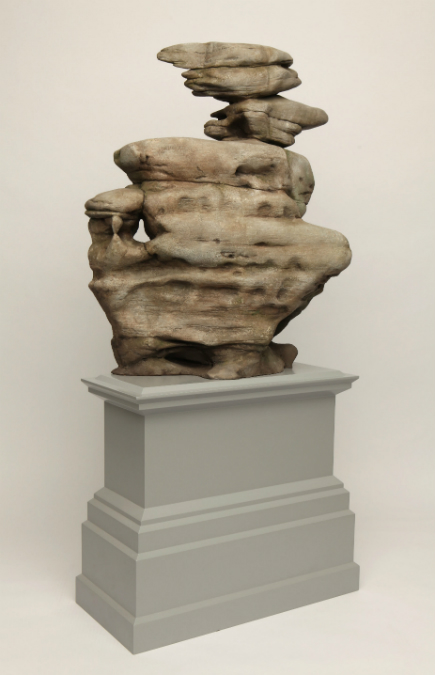
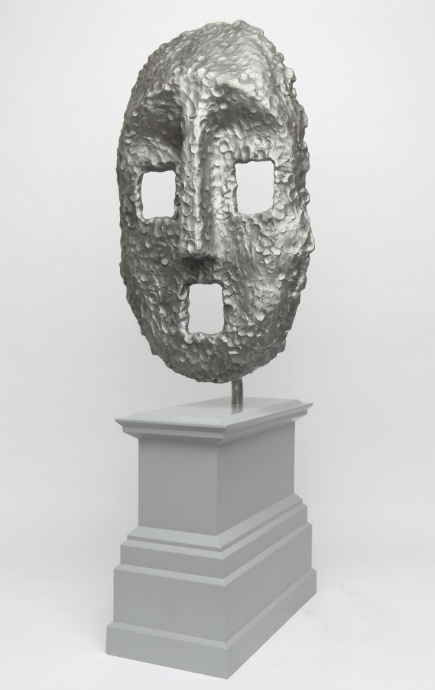
Marcus Coates proposes a duplication of naturally eroded Yorkshire rocks, as Unmade Monument imitates the beauty of stones used in Trafalgar Square’s elite architecture, yet places the material in an untarnished pre-human existence. Its organic form is similarly found in Ugo Rondinone’s folk art-influenced Moon Mask, in which the three gaping eyes and mouth frame its environment as shamanic spectacles.
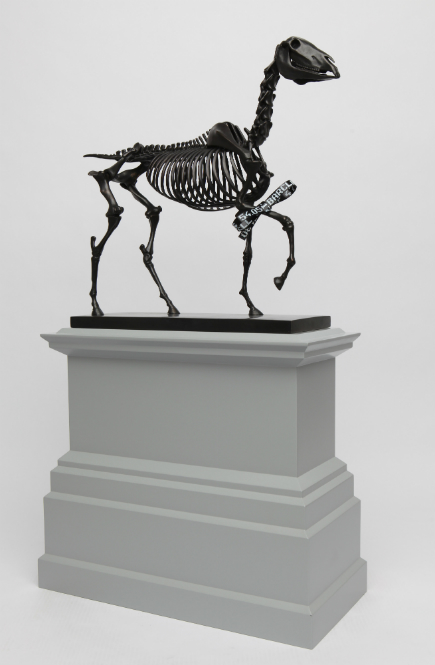
Hans Haacke’s Gift Horse directly absorbs Trafalgar Square’s history, as his lone horse skeleton encapsulates the ghost of the original, unfunded idea to situate a bronze William III upon his horse. It haunts today’s economic vision with a live bow ticker of the London Stock Exchange attached to the front. Similarly, Mark Leckey’s anagram of Trafalgar Square, Larger Squat Afar, is a sculptural collage of its pre-existing monuments, which was produced with 3D scanning.
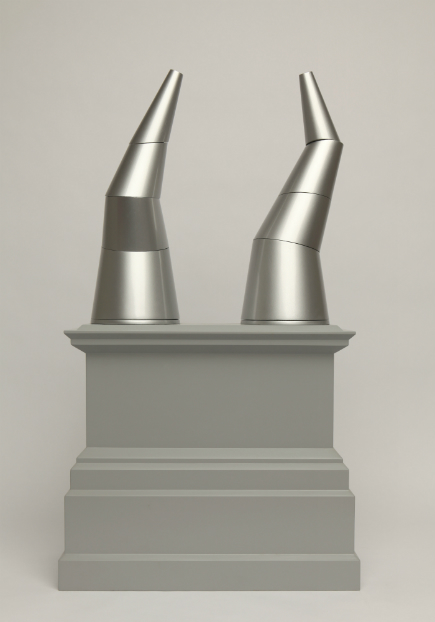
Spanning further into a futuristic realm, Liliane Lijn’s The Dance spellbinds by merging simple movements and complex technology in a kinetic sculpture. A no-nonsense approach from David Shrigley’s Really Good, the artist lends the Fourth Plinth Prize his typical satirical slant with a 10m elongated thumbs up.
However much uproar the Fourth Plinth commissions stir up, it essentially aims and succeeds in raising art’s presence to the public. It encourages involvement through debates on both controversy and appreciation. Since the art is for the public, visitors are invited to contribute to deciding the winners by commenting on the Fourth Plinth website, so don’t miss out on finding your inner art critic.
Angela Chan





Facebook
Twitter
Instagram
YouTube
RSS