
Maria Bartuszová at Tate Modern
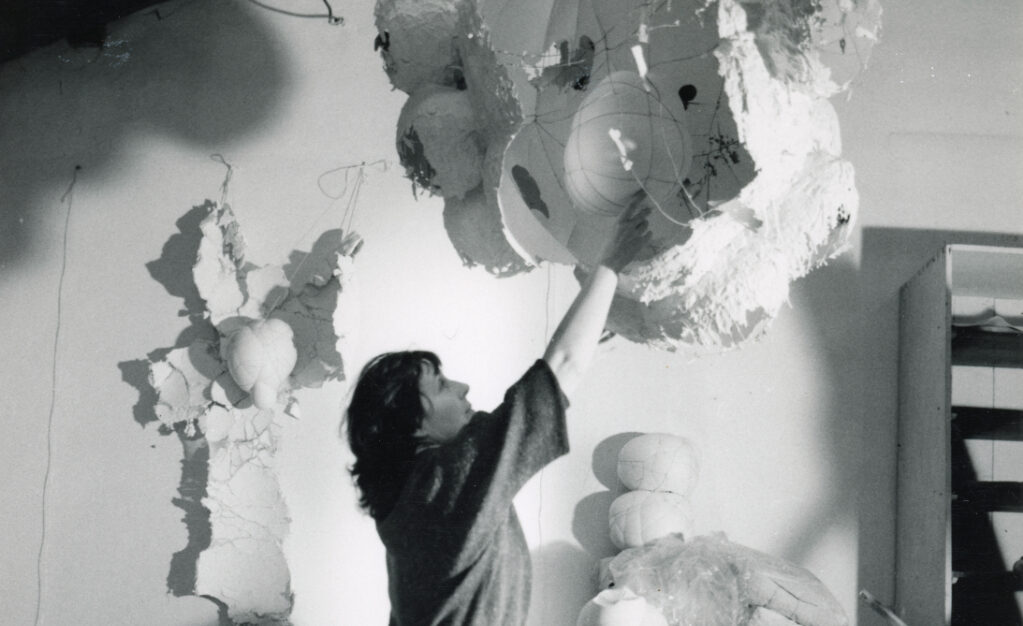


Maria Bartuszová’s solo exhibition at Tate Modern is one of a number of shows by remarkable female artists set to take place across the Tate museums nationwide this upcoming season. Tate Modern director Frances Morris, who wants to give wider recognition to female artists with diverse backgrounds, was captivated by the work of the Eastern European sculptor when she first came across it. Over the following years, she developed the idea of celebrating Bartuszová’s innovative approach to art-making by bringing all her works together in a perfectly suited space within the Blavatnik Building. Morris believes it’s important to get acquainted with artists who did not get much visibility in their time but that can help expand our idea of modernist art, even retrospectively, beyond its mainstream creations.
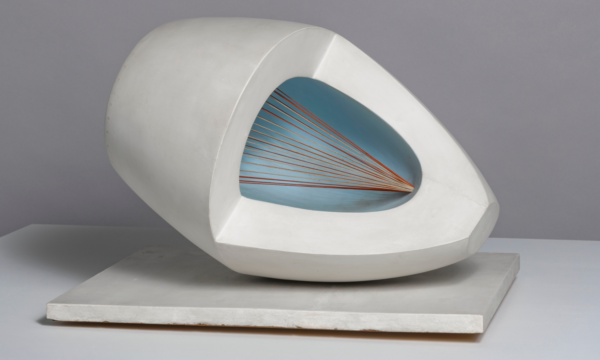
Born in Prague, Bartuszová worked extensively with plaster, a pliable material that she used in inventive ways. Her work spans from the 1960s to the 1980s and is mainly inspired by the body, by nature and the concept of life and rebirth, which she explores through shapes resembling cells, eggshells and other life forms. Among her most notable pieces are a teardrop-shaped plaster sculpture (1964) that hangs from a string, intended to make the viewer think of the tension between gravity and the suspended object. Another key exhibit is an untitled plaster creation (1985) that she made using a meteorological balloon to obtain concave forms resembling broken eggshells, grouped together like a wasp’s nest. These two works perfectly represent her shift from full and heavy forms in her early practice, to the fragile and delicate shapes she produced later in her career.
For most of her life, Bartuszová lived and worked in the industrial city of Košice, far away from the art scene. She thus developed an original approach informed by her secluded dimension. Nature became a big inspiration, and her techniques were very experimental and free. Viewed collectively, her works reveal something of the woman behind the sculptures and the emotional labour that went into her practice. The neutral palette pervading the rooms gives a sense of calm, while the diverse shapes pique the viewers’ curiosity, inviting them to a closer inspection of the objects.
Although the plain, abstract sculptures can feel somewhat cold, the overall experience is one of awe towards these surreal yet familiar forms that carry allusions to relationships of all kinds – between matter and form, between mankind and nature and between expansion and restraint.
Mersa Auda
Maria Bartuszová is at Tate Modern from 20th September until 16th April 2023. For further information visit the exhibition’s website here.











Facebook
Twitter
Instagram
YouTube
RSS