
7 Wonders of the World: An Immersive Experience
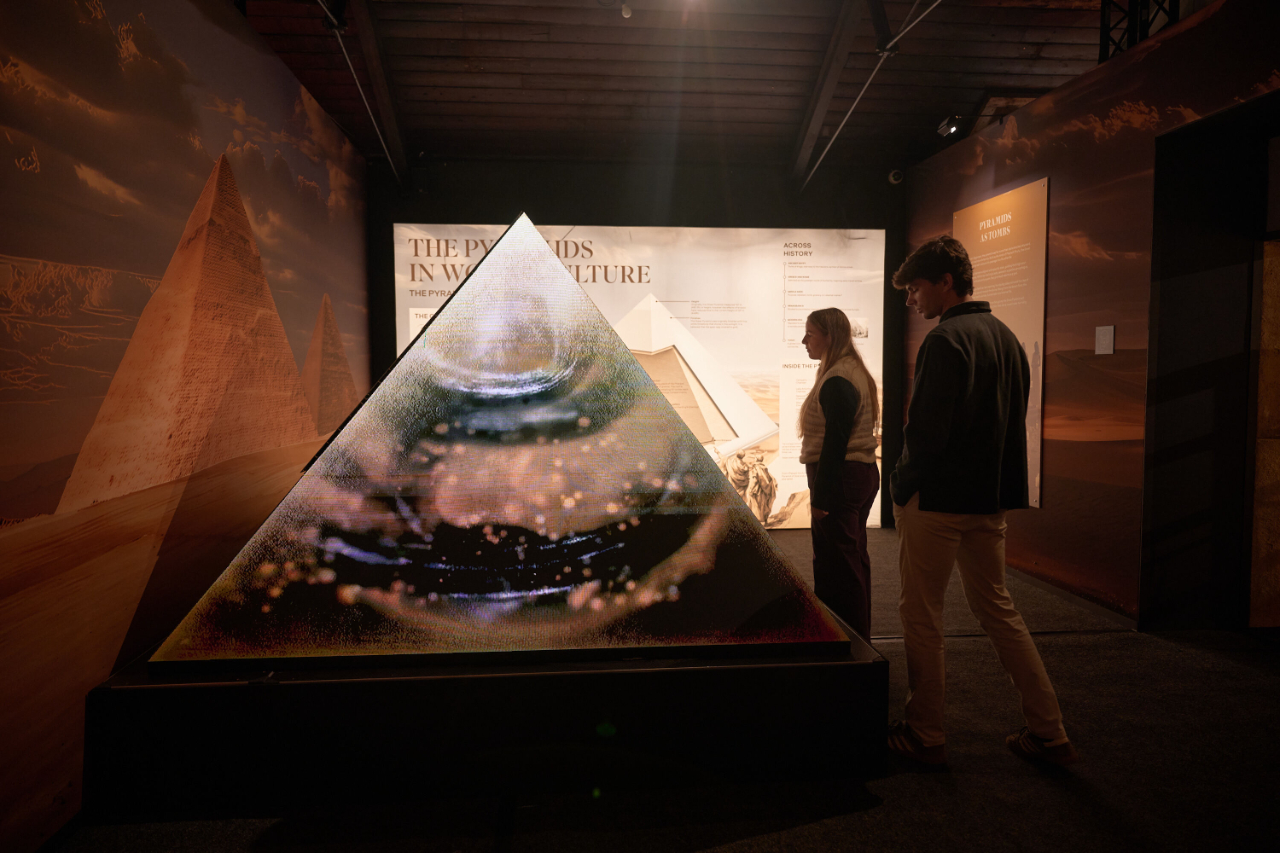


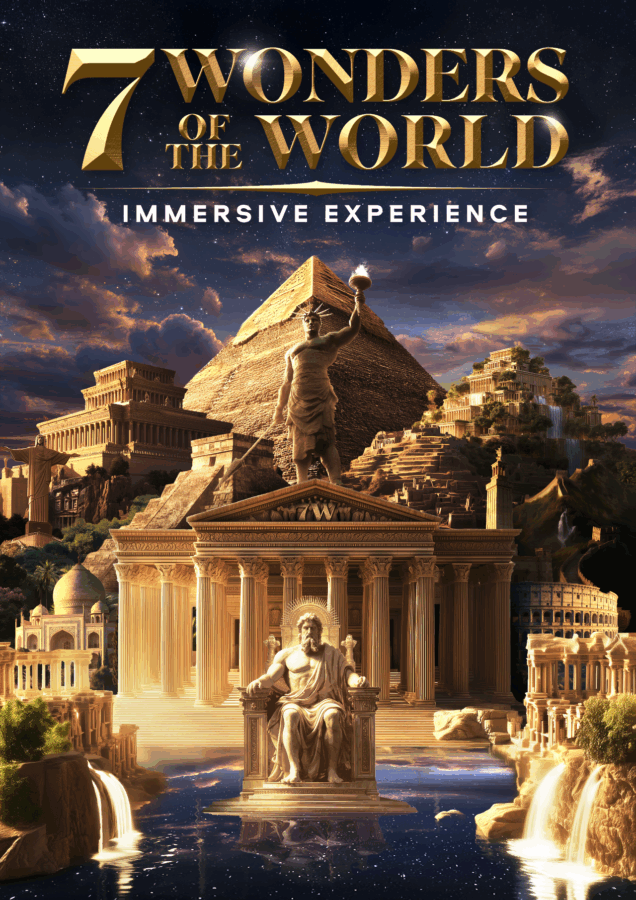
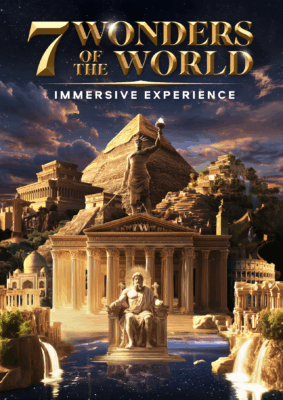
Behind monumental doors on Commercial Street lies a passageway to the latest project brought to London by the Exhibition Hub – the same curator and distributor behind productions such as The Art of Brick and Van Gogh. Intended as an immersive experience on the discovery of the Seven Wonders of the World, the exhibition fails to impress, offering only a thin illusion of immersion, one that even the LEGO bricks display managed to deliver more effectively.
The itinerary begins with a video explaining the origins of why and how the list of the world’s wonders came to be, concluding with a series of quotes spanning centuries. The animation has a strangely AI-generated feel, and the script comes across in much the same way. The text on the boards along the route does not provide a great deal of information; instead, it skims over and repeatedly emphasises the idea that each of these majestic structures of the past (of which only one has resisted natural and human destruction and still stands today) carries meaning beyond its engineering genius, extending even to their names entering everyday vocabulary (like Colossus, Mausoleum and Pharos). Nearly two rooms are devoted to the Pyramid of Giza, while further on, the Colossus of Rhodes, the Temple of Artemis and the Statue of Zeus at Olympia are all crammed into a single space. While attempting to listen to the audio accompanying the repeated three animations of the LED Pyramid, visitors can find themselves overwhelmed instead by the thundering soundtrack from the very first video on the origins of the landmarks next door. The recreation of a section of a columnade from the Hanging Gardens of Babylon is pleasant, but very short; given the mystery surrounding this particular wonder, it feels like a missed opportunity not to have allowed a greater installation.
There are several cabinets containing elements that should further illustrate the kinds of objects found in Greek temples or the burial artefacts of a pyramid, but the replicas are clumsy, accompanied by tags lacking dates or archaeological details that might have sparked enough curiosity to seek out the originals in a museum or online. For the Colossus of Rhodes, visitors can hold a tablet and direct it towards the foot in order to see the figure being constructed so as to convey the sheer enormity (a colossus, true to its name) of the landmark, but with such limited space to move around, the guests are left seeing little more than a knee. Other VR goggles are similarly restricted in the scale of their projections.
An audio guide is available to download on your phone, but as there were no instructions provided on the ticket, this writer hadn’t brought headphones, and no alternatives were provided. Perhaps the accompanying audio would have significantly enhanced my walk-through.
Descending the stairs from the first floor, there are three possible routes. On the right is the virtual reality experience: a full, head-to-toe immersion into the actions and ever-changing settings surrounding the seven wonders. This activity, however, is not included in the standard ticket: it comes as part of the VIP package or can be added on site. On the left is a short route introducing the contemporary Seven Wonders of the World, as voted for by millions of people in 2007. Each station consists of a 3D reproduction (behind glass) and a text panel. Short and sweet, but even less enriching than the first-floor section. Finally, a 360-degree projection: a room where a long video on loop allows visitors to walk through, fly over and turn around the landmarks. What is missing is a clear rationale or narrative thread for the voiceover; the random approach to the various segments is confusing, and the journey might almost be more enjoyable with only “natural” sounds.
If the exhibition is meant for a younger audience, the few games scattered throughout do little to signal that direction. If there is less AI-generated content than the initial impression suggests, more effort could have been made to personalise the visual style (particularly at a time when everyone is experimenting with image generators). With so many state-of-the-art digital exhibitions currently on, any display promising an immersive experience needs to raise its game.
Cristiana Ferrauti
Photo: Courtesy of 7 Wonders of the World
7 Wonders of the World: An Immersive Experience is at 106 Commercial Street, London, E1 6LZ, from 4th December 2025. For further information or to book, visit the exhibition’s website here.















Facebook
Twitter
Instagram
YouTube
RSS