
All of a Sudden
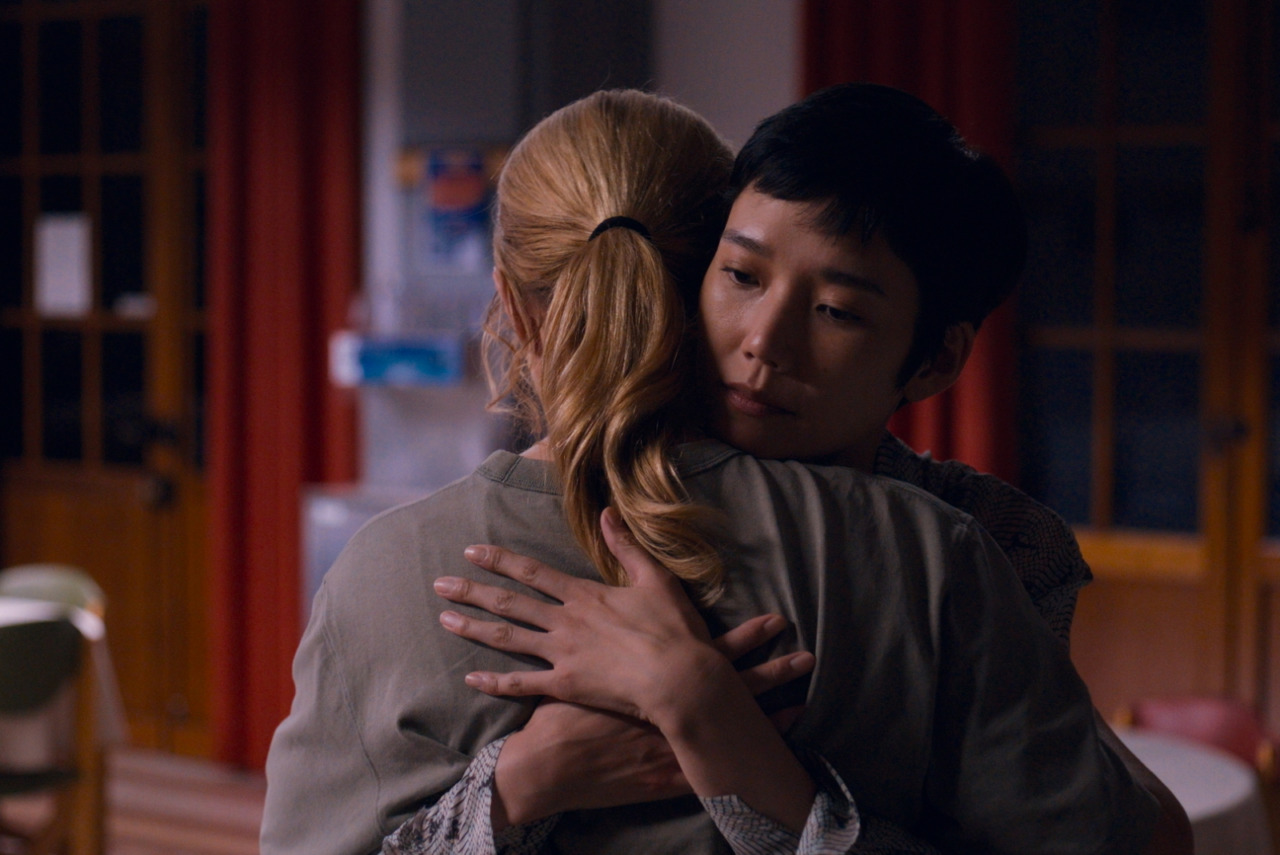


Adapted from You and I – The Illness Suddenly Get Worse by Makiko Miyano and Maho Isono, Hamaguchi Ryusuke’s latest feature opens out the book’s meditative correspondence on love and mortality into a drama split between Paris and Kyoto. The film follows Marie-Lou (Virginie Efira), director of a care facility for the elderly, attempting to implement a humanitarian approach to care centred on preserving the autonomy and dignity of the sick. A chance encounter with Mari (Tao Okamoto), a Japanese theatre director living with cancer, quickly develops into an intimate friendship.
All of a Sudden has a fair approach towards Marie-Lou’s ideas, which is met with immediate scepticism from the nurses and aides who actually run the facility day to day, and the picture is smart enough to recognise that their resistance does not come from a place of cruelty. Their concerns are concrete: encouraging elderly residents to walk more independently risks accidents, and increased mobility can also trigger government funding cuts. The tension between institutional bureaucracy and compassion becomes the film’s strongest thread because it understands how easily idealism can collapse under material realities.
As always, Hamaguchi is at his best in smaller, stranger details. Finger puppets left behind by a resident whose son refuses to collect her belongings become a recurring motif throughout the story. In another feature they might have felt overly whimsical, but here they carry something unexpectedly moving as they appear at the most unexpected moments. Yet for all its thoughtful ideas, the script often struggles to dramatise them naturally. Mari delivers a lengthy monologue on late-stage capitalism – complete with whiteboard diagrams and declarations such as “I believe capitalism is inherently self-destructive” – that is framed as revelatory for Marie-Lou, who mentioned completing a master’s degree in anthropology less than 20 minutes earlier. Too much dialogue arrives in similarly stiff, explanatory bursts. Conversations about language transitions or international educational backgrounds feel written to reveal information and not character, and entire scenes linger on details that could have been conveyed in a sentence.
Still, the two lead actresses remain compelling presences even when the writing falters. They communicate tenderness and exhaustion beautifully through gesture and silence, which only makes the film’s reliance on overextended monologues more frustrating. All of a Sudden is most affecting when it doesn’t succumb to overexplanation.
Christina Yang
Read more reviews from our Cannes Film Festival 2026 coverage here.
For further information about the event visit the Cannes Film Festival website here.





















Facebook
Twitter
Instagram
YouTube
RSS