
Gentle Monster
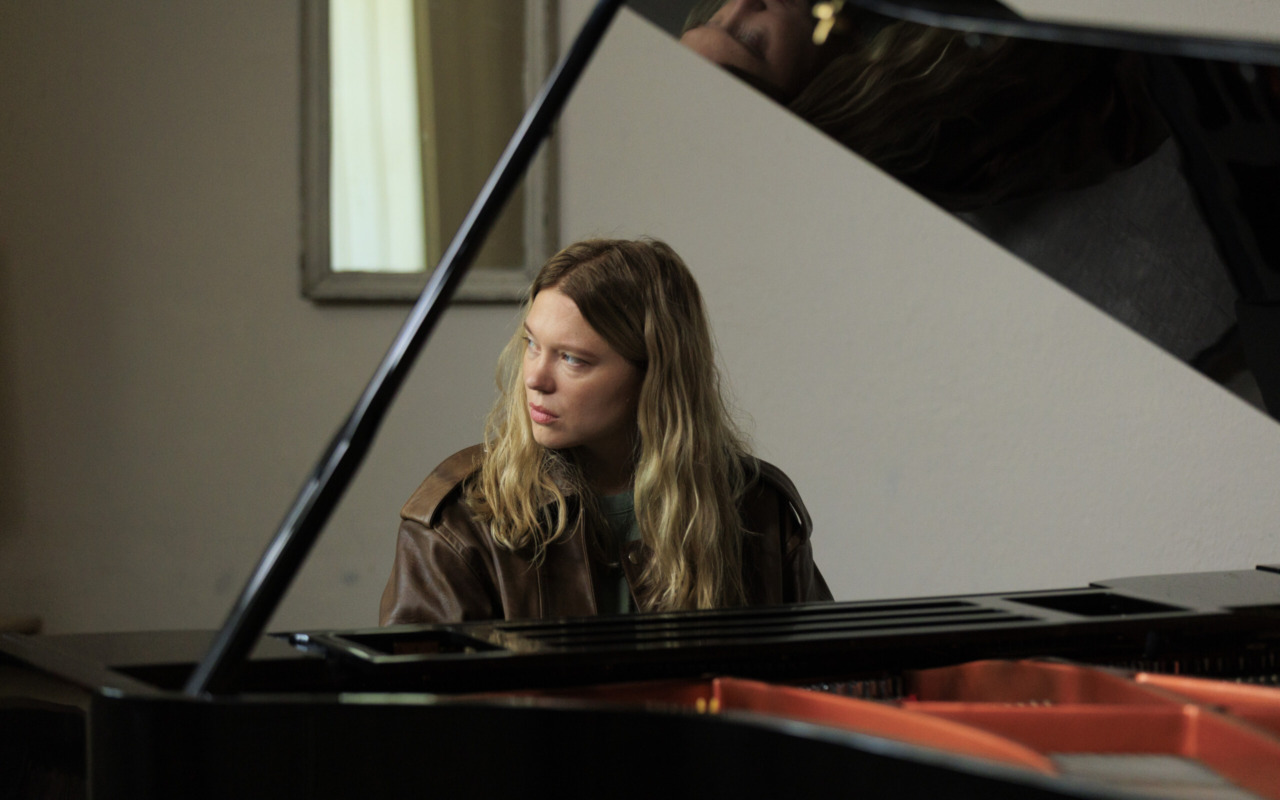


When films deal with abusive or predatory men, the focus usually settles on revelation, guilt or punishment. The women around them – wives, mothers, daughters – are often reduced to bystanders within stories that still fundamentally belong to men. Marie Kreutzer’s Gentle Monster shifts that perspective, focusing instead on the slow destabilisation that comes from sharing a life with someone whose behaviour suddenly becomes impossible to fully understand.
The picture follows Lucy (Léa Seydoux), a pianist living in Munich with her Austrian husband Philip (Laurence Rupp), an unsuccessful documentary filmmaker, and their young son. Their domestic routine fractures when police arrive at the apartment with a warrant demanding Philip’s computers and phones. Kreutzer stages the scene with remarkable restraint. There is no dramatic confrontation, only the creeping horror of watching someone refuse to explain themselves. Seydoux carries the feature with a stellar performance built on small fluctuations in behaviour rather than dramatic breakdowns. Lucy spends much of Gentle Monster trying to maintain normality while gradually realising how fragile that normality always was. Kreutzer uses her musical performances as extensions of that emotional instability. Seydoux’s playing is just adequate, but that works in the film’s favour: the performances feel raw rather than polished. Like Cate Blanchett’s Lydia Tár, she turns performances into emotional crescendos that mirror her increasingly fragile state. Lucy exclusively performs love songs written by male musicians, a detail that initially comes across as contrived before revealing a sharper irony: she has spent years emotionally dissecting the manipulative words of men while failing to recognise the lies shaping her own relationship.
The story’s most compelling counterpoint comes through detective Elsa (Jella Haase), who investigates Philip while privately dealing with her father’s dementia and his sexually inappropriate behaviour towards caregivers. Haase plays Elsa with cool precision, her rigid posture and tight ponytail sharply contrasting with Lucy’s increasingly dishevelled, bohemian look. The parallel between the two women gives the story much of its weight: both are trapped negotiating the emotional consequences of male behaviour while being expected to remain composed and functional. Even Catherine Deneuve’s brief appearance as Lucy’s celebrated classical musician mother deepens the film’s interest in compromise and self-preservation. Her observations about female artists are perceptive, though she proves far less insightful about her daughter’s marriage.
Ultimately, what makes Gentle Monster so unsettling is its refusal to provide answers or revelations. Rather than building towards a conventional moment of catharsis, Kreutzer focuses on the exhausting uncertainty of suspicion itself – the slow collapse of trust while everyone waits for something that never fully arrives.
Christina Yang
Gentle Monster does not have a release date yet.
Read more reviews from our Cannes Film Festival 2026 coverage here.
For further information about the event visit the Cannes Film Festival website here.




















Facebook
Twitter
Instagram
YouTube
RSS