
We Are Aliens
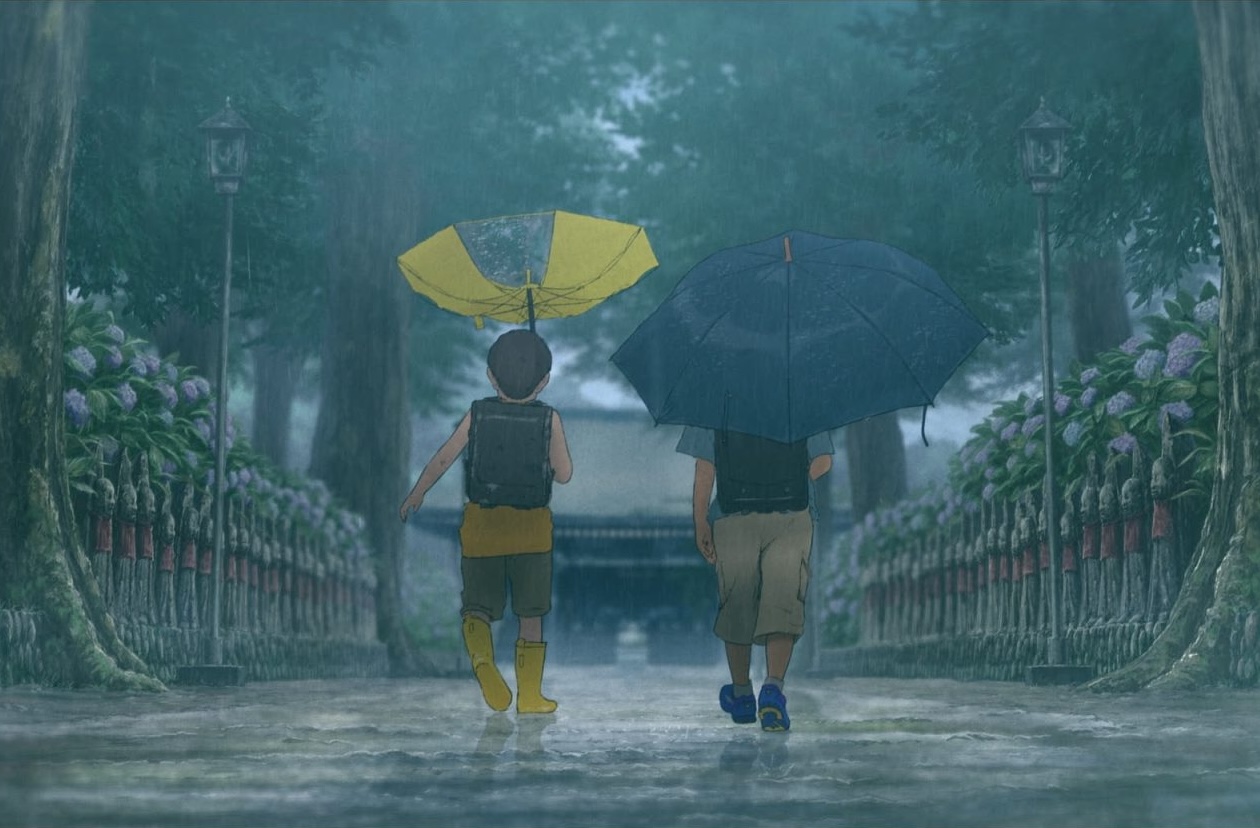


Kohei Kadowaki’s feature debut follows more than two decades in the lives of Tsubasa and Gyotaro, charting their relationship from primary school into their thirties. Despite running just under two hours, We Are Aliens is so sprawling in scope and tone that it becomes strangely difficult to categorise: part coming-of-age drama, part psychological horror, part surreal character study. Its restless visual style reflects that instability. One moment there are Junji Ito-style bulging eyes and abrupt jump scares; the next, the screen fills with glittering golden leaves or close-ups of a rainbow windmill turning softly in the sunlight.
The title refers to a childhood fear of Tsubasa’s, an imaginative projection of the resentment and alienation slowly growing inside him towards his closest friend. Kadowaki’s strongest material comes early on, when the picture roots itself firmly inside Tsubasa’s perspective as a child. Introverted and sensitive, he is initially fascinated by Gyotaro’s outgoing, careless persona, only for admiration to gradually harden into resentment. The film captures the strange emotional intensity of childhood friendships with unusual precision: small humiliations and misunderstandings take on enormous significance, until eventually a broken umbrella and a single incident transform Gyotaro from class clown into class pariah.
From there, the boys’ lives continue less as intertwined stories than as parallel ones. Tsubasa grows older carrying resentment, guilt and fascination in equal measure, while Gyotaro reappears only intermittently over the years, often in glimpses that are by turns melancholic and quietly frightening. The unpredictability of the first half is what makes it so compelling. Kadowaki constantly wrongfoots expectations, resisting easy sentimentality while allowing the feature’s stranger visual and psychological impulses to emerge naturally from a child’s perspective.
Unfortunately, much of that momentum disappears around the halfway point, when the narrative shifts into Gyotaro’s perspective and begins partially retelling events already seen. In trying to explain Gyotaro too directly, the story loses much of the mystery that had made him compelling in the first place. A one-dimensional female character, who exists largely as the object of Gyotaro’s lifelong infatuation, further weakens the latter half, while the attempt to provide Gyotaro with a tragic social outcast origin story feels overly familiar in a post-Joker (2019) landscape. Some of the later twists remain interesting, and the ending lands on a bittersweet note that largely works. But We Are Aliens is ultimately most effective when it embraces ambiguity, allowing childhood fears and resentments to remain strange, unknowable and unresolved.
Christina Yang
Read more reviews from our Cannes Film Festival 2026 coverage here.
For further information about the event visit the Cannes Film Festival website here.






















Facebook
Twitter
Instagram
YouTube
RSS