
Where to find abstract painting outside the blue-chip galleries
 17 August 2026
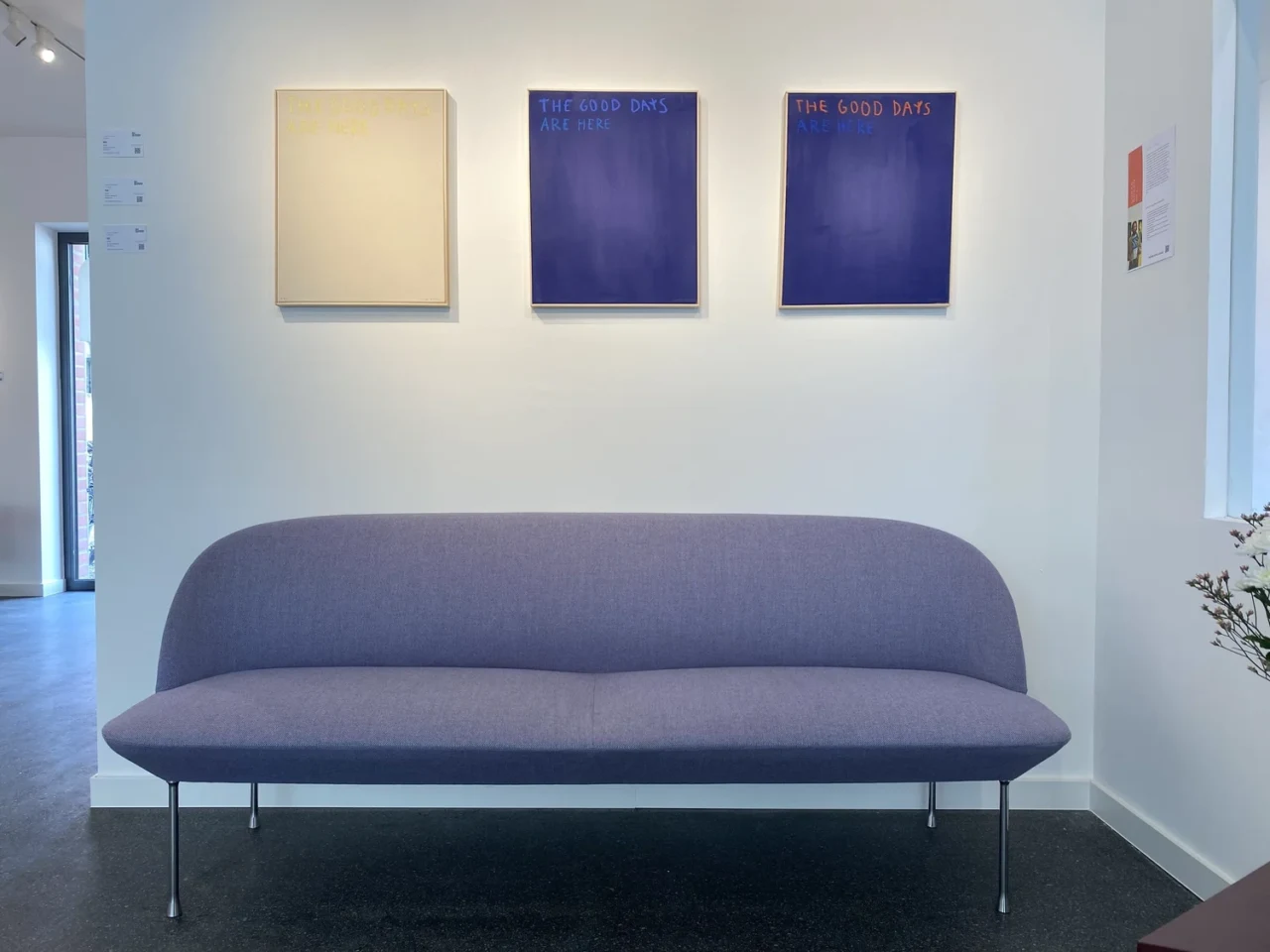
Abstraction has an access problem that has very little to do with the work itself. Walk into a Mayfair gallery showing large-scale abstract painting and the prices are on a printed list you have to ask for, which is a fairly efficient way of telling most visitors that they are here to look rather than to buy. Yet the same city produces several hundred abstract painters every year, most of whom sell directly and price their work in the hundreds rather than the hundreds of thousands. Finding them is a matter of knowing where to stand.
1. Start with the degree shows
Between late May and early July, every art school in London opens its studios to the public for free. The Royal College of Art, the Slade, Goldsmiths, Camberwell, Chelsea and the Royal Academy Schools all run end-of-year exhibitions, and abstraction is consistently well represented in the painting departments. The work is finished, it is hung properly, and in most cases it is for sale. What is unusual about this context is that the artist is normally standing a few metres away and can tell you exactly what is in front of you – which surfaces were sanded back, what the underpainting was, why the picture stopped where it did.
Two practical notes. The private view is the worst time to look and the best time to be seen looking: go back on a quiet weekday afternoon if you actually want to decide something. And bring a tape measure. Degree show spaces are cavernous, and a canvas that reads as modest against a twelve-metre wall will not read as modest in a Victorian terrace. If the dates have passed, Studierenden-Kunstmarkt carries the same graduating cohorts year-round, which removes the seasonal problem entirely.
2. Open studios, where the prices are already on the wall
Studio providers across east and south London run open weekends through the autumn, and these are the least intimidating buying environment in the city. Nobody is performing gallery etiquette. The work is usually priced on a card taped beside it, the artist is making tea, and there is no expectation that you know anything. It is also the best way to see a body of work rather than a single piece, which matters more with abstraction than with almost any other kind of painting: one canvas tells you very little about whether an artist is actually working something through.
3. Artist-run and project spaces
The layer between degree show and commercial gallery is made up of spaces run by artists themselves, often on short leases in unfashionable postcodes, usually with a programme that changes every few weeks. They rarely advertise beyond a mailing list and an Instagram account. The advantage is curatorial rather than financial: these shows tend to be assembled by people who are looking at a great deal of work, and the selection is frequently sharper than what appears in spaces with rent to justify.
Prices in these spaces are usually set by the artist rather than by a commission structure, which means they are lower and rather more variable than in a commercial gallery. There is no standard etiquette for asking, because there is no standard. Asking directly is normal and expected, and it is worth doing early rather than after twenty minutes of circling.
4. The unfashionable end of the art fairs
Large fairs are exhausting and mostly not aimed at first-time buyers, but the smaller stands at the perimeter – the ones taken by galleries you have not heard of, or by artist collectives sharing a booth – are a different proposition. This is where abstraction below four figures actually surfaces at a fair, and where the person on the stand has time to talk because they are not managing a queue.
It is worth going late on the final day, when the stands are quieter and the people staffing them have stopped pitching. Anything unsold at that point is going back into a van, which changes the conversation more than most first-time buyers realise.
5. Online, with the right filters
Buying painting from photographs is imperfect and always will be – scale and surface are the two things a screen reliably misrepresents. It is nonetheless where most people start, and the platforms that specialise in work by students and recent graduates make it considerably easier to filter abstract paintings by size, technique and price bracket than any gallery website will. The rule worth keeping is to ignore anything without a detail photograph of the surface and a stated dimension in centimetres. If a listing will not show you the texture, there is usually a reason.
6. Three questions worth asking before you commit
Whichever route you take, the same handful of questions separate a considered purchase from an expensive impulse. They are not technical, and no reasonable artist will mind being asked.
Is this a unique work or part of an edition?
An original abstract painting is unique and the artist will say so plainly. Anything described as a giclée, an open edition or a print is a reproduction, however well produced. Both are legitimate purchases, but they are not the same purchase and should not carry the same price.
What is it painted on, and has it been varnished?
Canvas, board and paper age very differently, and an unvarnished acrylic surface will attract dust in a way a varnished one does not. The answer also tells you how much the artist has thought about the work outliving the exhibition.
Can I see it in daylight?
Gallery lighting flatters almost everything. Abstraction in particular can shift substantially between spotlights and a north-facing room. If you are buying in person, ask to move the work towards a window before you decide.
The editorial unit














Facebook
Twitter
Instagram
YouTube
RSS