
London’s games-bar boom has no room for card tables

 14 October 2026
Walk through Holborn on a Thursday night now and office workers can be found three deep at shuffleboard tables, queuing for crazy golf or heckling each other over a game of darts. Roxy Ball Room’s third London site opened at Little Turnstile in late August, a 12,000 sq ft games venue that joins a growing list of brands confident that Londoners want to play, not just drink. It is working. Bookings are up, queues form before 7pm and every table has a waiting list at weekends.
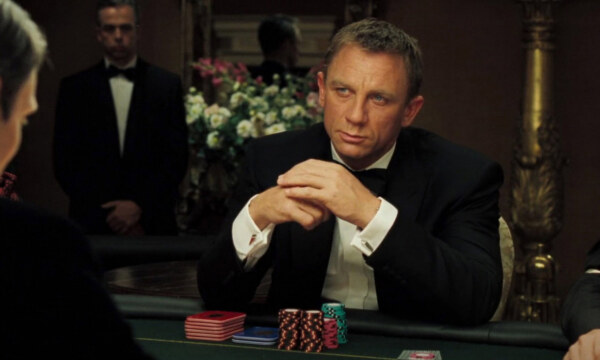
What none of these venues offer is a deck of cards, or even a battered board game box.
Competitive socialising has expanded into ping pong, mini golf, axe throwing, bowling and something called immersive darts. It has not expanded into the classic tabletop games. That is strange, because card and board games are arguably the original social games, built around reading the people across the table, and London used to have plenty of cafés and clubs where a long game of rummy, gin or Monopoly could run all evening. Something has been lost in translation as the format has scaled, and it is worth asking what. Anyone missing that around-the-table energy can still find somewhere to sit down and play. The PokerTube site is one starting point for tracking where those tables still exist, alongside listings, event calendars and the rest.
Why bars picked shuffleboard over card tables
The economics explain most of it. A shuffleboard table takes up floor space, generates noise, photographs well for Instagram and turns over in 45-minute booking slots. A proper card or board game table needs someone to explain the rules, a quiet corner, hours of uninterrupted play and staff willing to chase missing pieces, none of which a crazy golf course requires.
According to trade coverage of the sector, competitive socialising venues have been growing at unparalleled levels across the UK, with operators chasing formats that are fast, social and easy to franchise. A long game of Monopoly fits none of those three boxes neatly. A session of bridge can run for hours. A family-sized strategy game can run longer. Try explaining that turnover model to a landlord charging London rents.
There is also a practical wrinkle. A darts lane or bowling alley sells a flat-fee slot with a clear start and finish, whereas a card or board game has no natural end point and depends on everyone knowing the rules before the first move. It is not impossible to manage, London’s board game cafés have done it for years, but it adds friction that a shuffleboard bar simply does not encounter. Friction kills expansion plans. Roxy Ball Room can open a third site in eighteen months. A board game café cannot move that fast.
The old card rooms problem
London has actual history here, and it is not encouraging. Several of the city’s long-standing clubs built around bridge, chess and cards have closed or shrunk, and coverage of table games in the national press has charted that slow decline over the years. That is not a competitive socialising story exactly, these were always quiet members’ rooms rather than bar hybrids, but it says something about the direction of travel. The venues built specifically around card play in this city are shrinking. The venues built around darts and mini golf are multiplying.
Meanwhile pub culture itself is shifting under the same pressure. The Morning Advertiser has tracked how competitive socialising formats are eating into traditional pub trade, forcing operators to add games or lose footfall entirely. Card and board games never got invited into that conversation. Nobody bolted a games library onto a Wetherspoons. They bolted on darts screens.
Gen Z wants games, just not these ones
Here is the uncomfortable bit for tabletop fans. The audience driving competitive socialising is exactly the demographic classic card games should theoretically be winning over. Research cited by hospitality analysts shows Gen Z is choosing competitive socialising over the pub specifically because it feels active and social rather than passive. That is the entire pitch of a good card game too. Reading the table, a sly move in Uno, the slow build of a winning hand of rummy. It should translate perfectly.
It hasn’t. Younger drinkers gravitate towards formats with instant, visible skill. A dart either hits the board or it doesn’t, and everyone in the room sees it happen in real time. The skill in a card game is invisible to spectators and slow to reveal itself to players. A beginner at shuffleboard can compete after two frames. A beginner at bridge struggles for an hour before anything clicks.
There’s also the confidence gap. Walking up to a table of strangers and asking to join a game of cards carries a social risk that darts simply doesn’t. Nobody feels embarrassed picking up an axe to throw at a target. Plenty of people feel embarrassed admitting they have forgotten the rules of whist.
What the data actually says about the format
A CGA by NIQ report on the sector put it plainly: experience is everything when it comes to what is pulling consumers towards these venues over standard bars. Sensory, immediate, shareable. Card and board games can be all three, as anyone who has watched a tense final turn of a strategy game on a livestream will know, but they need production value that a bar floor doesn’t naturally provide. Twitch and YouTube solved that problem for tabletop games years ago with overhead cameras and on-screen graphics. No competitive socialising brand has bothered translating that broadcast trick into a physical room.
That’s the gap. The audience for slow-burning tabletop tension exists. The format for delivering it in a bar setting simply hasn’t been built yet, or nobody has tried hard enough.
So where does that leave London’s card-game crowd
Probably exactly where it has been for a few years now: online, at home around the kitchen table, or in the handful of clubs and cafés still running regular game nights. That’s not nothing. Sites listing where to play, alongside event calendars and community groups, give London-based fans a way back into the game at a level bar culture was never really built to replicate anyway.
Maybe that’s fine. Not every game needs a bar version. Darts translated because darts was always a pub game first. The natural home of Monopoly, Scrabble and a well-worn deck of cards was the kitchen table and the club room, and competitive socialising brands chasing rapid turnover were never going to be the ones to rebuild that.
FAQ
Why haven’t competitive socialising bars added card and board game tables? Mostly economics and practicality. Long tabletop games need uninterrupted playing time, quiet space and players who know the rules, unlike quick flat-fee games such as darts or shuffleboard, which makes them harder to fit into a bar model that depends on quick table turnover to hit revenue targets.
Are card games becoming less popular in London generally? Not exactly. Dedicated venues have declined, as the closure of older card and bridge clubs shows, but online play and streamed tabletop games have a large and active following. The decline is specific to physical bar-style venues, not the games’ popularity overall.
What is driving the competitive socialising boom in the first place? Industry research points to consumers, particularly younger drinkers, wanting active, social, shareable experiences rather than a standard night at the pub. Formats offering instant, visible skill payoff have scaled fastest.
Could card tables make a comeback in London’s bar scene? It’s possible if a brand solves the production and pacing problem, making games feel faster and more spectator-friendly. Nobody has cracked that yet, but the audience for tabletop tension clearly still exists elsewhere.
Where can Londoners still find live card and board game nights? Clubs and cafés still run scheduled sessions, and dedicated sites let fans compare where to play and keep track of upcoming events, for those who want that around-the-table atmosphere without needing a physical bar to host it.
Games are best enjoyed in moderation. Take regular breaks, keep an eye on time spent playing and choose friendly, well-run spaces, whether online or in person.
London will keep opening games bars. Darts, shuffleboard, mini golf, whatever fills a 12,000 sq ft unit fastest. Card tables just aren’t going to be among them anytime soon, and the safest prediction at this point is that the classics will carry on thriving somewhere they never left.
The editorial unit






















Facebook
Twitter
Instagram
YouTube
RSS