
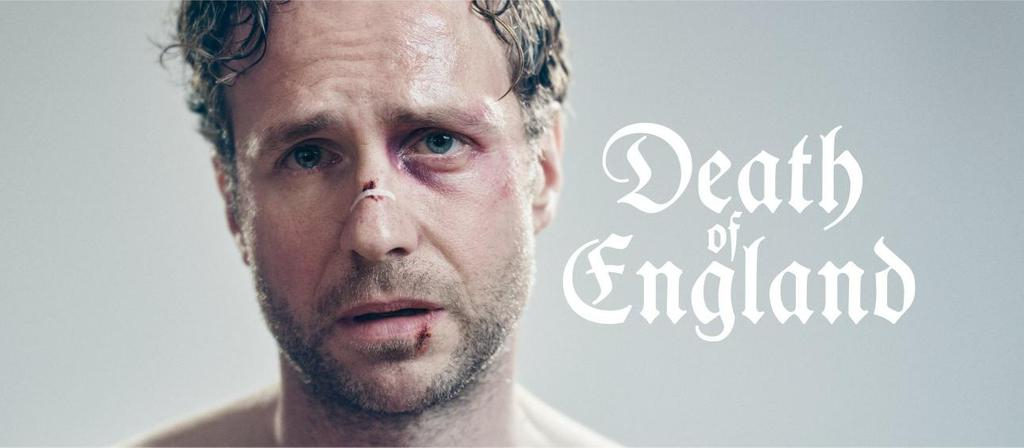
Death of England at the National Theatre


Michael’s dad is dead. Beloved flower seller. Leyton Orient fanatic. Englishman. Someone who believed there was a “time and place.” A time for covered ears as fans throw bananas on the pitch, and a time for racist jokes at the dinner table. A place to question and challenge, and a place to puff up your chest with nationalist bravado. A time to stand for something, and a time to keep schtum so you don’t offend the regulars.
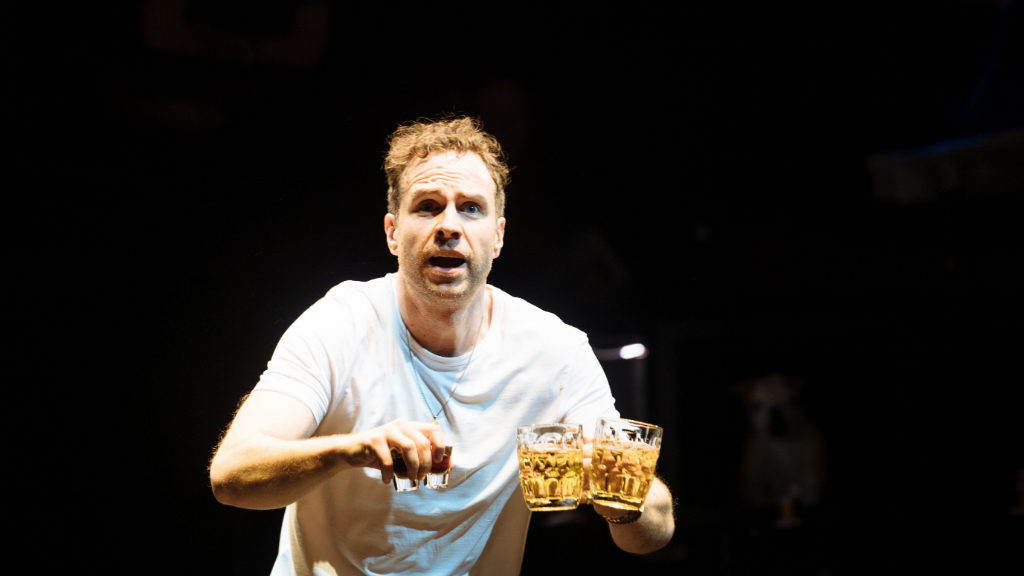
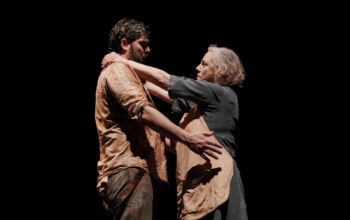
For Death of England’s 100 minutes, Rafe Spall doesn’t stop. His performance shares its relentless intensity with that of Adam Sandler in Uncut Gems. Coked-up, with vodka and gin coursing through his veins, Michael is never still, as if he could sweat out his confusion and grief. It’s certainly committed. In the early sections, it’s charismatic and free, interacting and improvising with the audience. Then the tempo is ratcheted up and up, Spall frothing with furious anger at a man he didn’t know well enough and a country that pays lip service to his kind.
It is a parody of a specific white Englishness, a caricaturist’s picture of working-class male England brought to life. Cheeky, boozy, small-minded, football-obsessed, Essexian, loves a scrap, pro-Leave, balks at accusations of racism but wants his country back. Refuses to acknowledge a heritage of hate. Fosters an environment that allows black friends but constantly lets them know they ain’t welcome. Michael wants to be different to his father; he just can’t work out how.
Not an unfair depiction of a nation that voted for Brexit, drove a black princess out of the country and routinely installs Tory, Etonian overlords. However, the way the play tries to go about exploring the contradictions that are found in its characters is clunky and lacking. At one point the narrative pivots to a poorly worked revelation of how little Michael knew his father, a man with Owen Jones and Akala on his bookshelf and a Tommy Robinson donation on his laptop. Rather than really explore these personal inconsistencies, co-writers Roy Williams and Clint Dyer (who also directs) are content just to stack these symbols next to each other and move on.
That happens a lot – so much so that the show ends with a sort of summoning circle of Englishness created from the props collected via the memory boxes surrounding the St George’s cross stage. It is a visual indication of the tack taken throughout: stating rather than investigating, delivered by a performer who stays at eleven from start to finish. It’s bracing. It also feels like something of a missed opportunity to properly dig into class, race and masculinity in this country.
Connor Campbell
Photo: Helen Murray
Death of England is at the National Theatre from 6th February until 7th March 2020. For further information or to book visit the theatre’s website here.
















Facebook
Twitter
Instagram
YouTube
RSS