
Big Mood Season 2



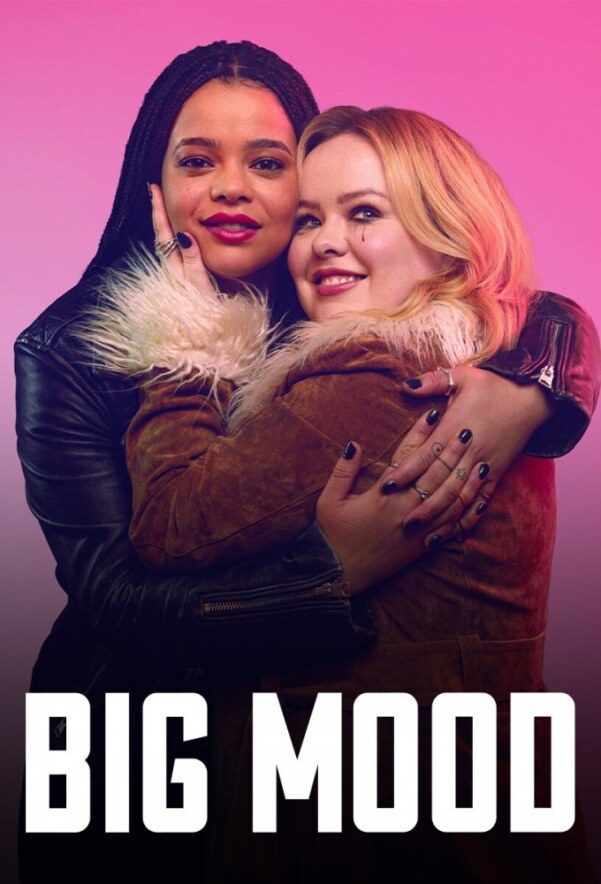
Depictions of mental health in the media often veer between two extremes: mental illness as some intangible concept, usually demonstrated through vague references to anxiety and depression, or caricatures of irredeemably “crazy” individuals, either as objects of ridicule or fear. But Camilla Whitehill’s Big Mood is a worthy antidote to such superficial depictions, looking at life with bipolar disorder through a lens that neither belittles the condition nor undermines its severity.
Nicola Coughlan and Lydia West return as besties Maggie and Eddie, though their friendship has crumbled following the former’s mental deterioration at the end of season one and the latter’s impromptu excursion to California. Now, Maggie is in her “stable girl era”, taking her medication daily, playwriting, and even adopting a skincare routine (she’s on retinol now, she proudly declares to her mother). However, she still lives with two ghosts: that of her former, unmedicated self, and that of her estranged best friend.
While the latter part of the first season shifted more towards dramedy, Big Mood’s second outing is a gag-athon. There’s the hilarious Hannah Onslow as Eddie’s new American BFF, Whitney, the self-professed “healer” and luddite who eschews technology (save for her phone, as she can only heal the world through social media influencing). And there’s Rupert Everett in an unforgettably camp cameo. But there’s still room for the empathetic insights that make Whitehill’s writing so great. She illustrates the stigma of living with bipolar disorder: despite how far Maggie has come – and despite the mood fluctuations of the disorder being out of her control – many still judge her by past actions that were fuelled by mania.
It’s hard to imagine any actors better suited to the lead roles: Coughlan and West genuinely seem like old friends, their chemistry effortlessly radiating from the screen. Likewise, the pair excel at both comedy and pathos. Regarding the latter, it’s the moments in which they share an awkward silence or wistful glance that are perhaps the most devastating, emphasising a seldom-explored topic: female friendship breakups are often as, and sometimes more, painful than romantic ones.
Big Mood is back, and it’s better than ever. In addition to finding humour in the most poignant aspects of living with a mental illness, Whitehill’s series is a reminder that there’s no shame in embracing neurodivergence; rather, Maggie’s struggles prove her strength. As her mother says, “Normal? Who wants to be normal?”
Antonia Georgiou
Big Mood Season 2 is released on Channel 4 on 16th April 2026.




















Facebook
Twitter
Instagram
YouTube
RSS