
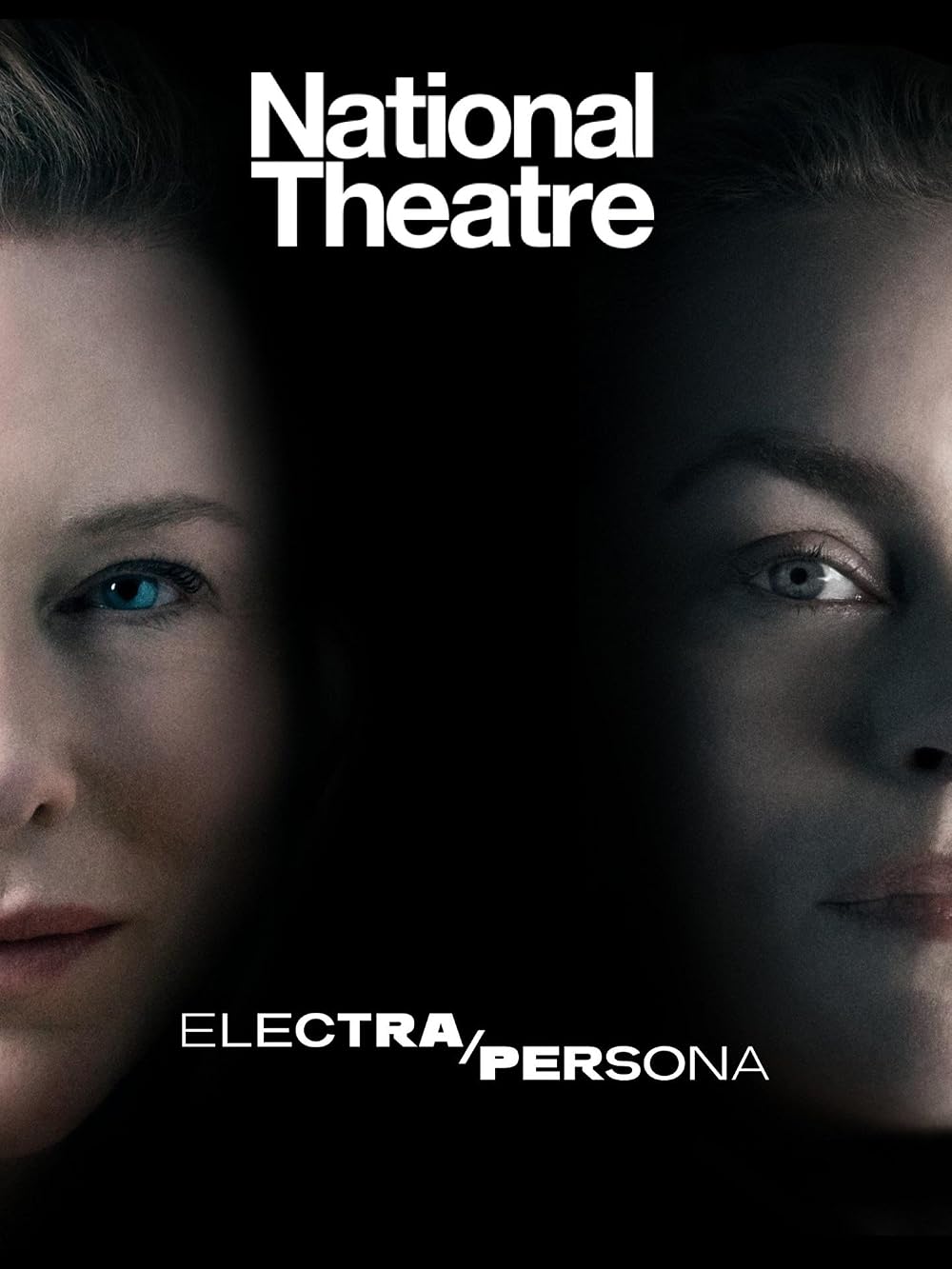
Electra/Persona at the National Theatre


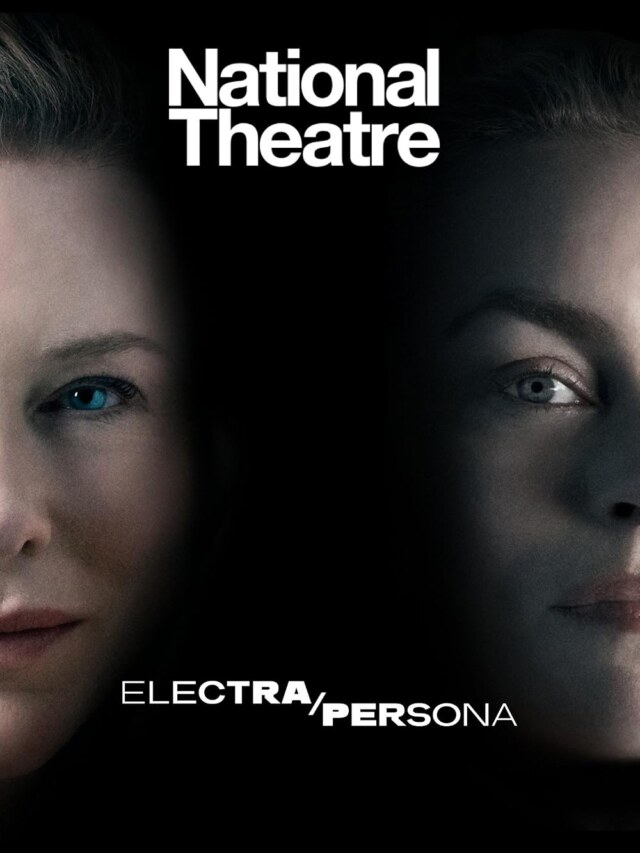
Benedict Andrews’s new production for the National Theatre walks a tough tightrope between being credible and contrived. What really brings together Sophocles’s Greek tragedy Electra and Ingmar Bergman’s 1966 avant-garde film Persona? To what extent is Electra/Persona a play on its own terms, or a vehicle to facilitate the sheer talent of leading actors Cate Blanchett and Nina Hoss? Are certain directorial decisions grounded or gimmicky? Such questions arise from a production determined to draw attention to its artifice and the shared theme of identity and performance that loosely alloys its two sources.
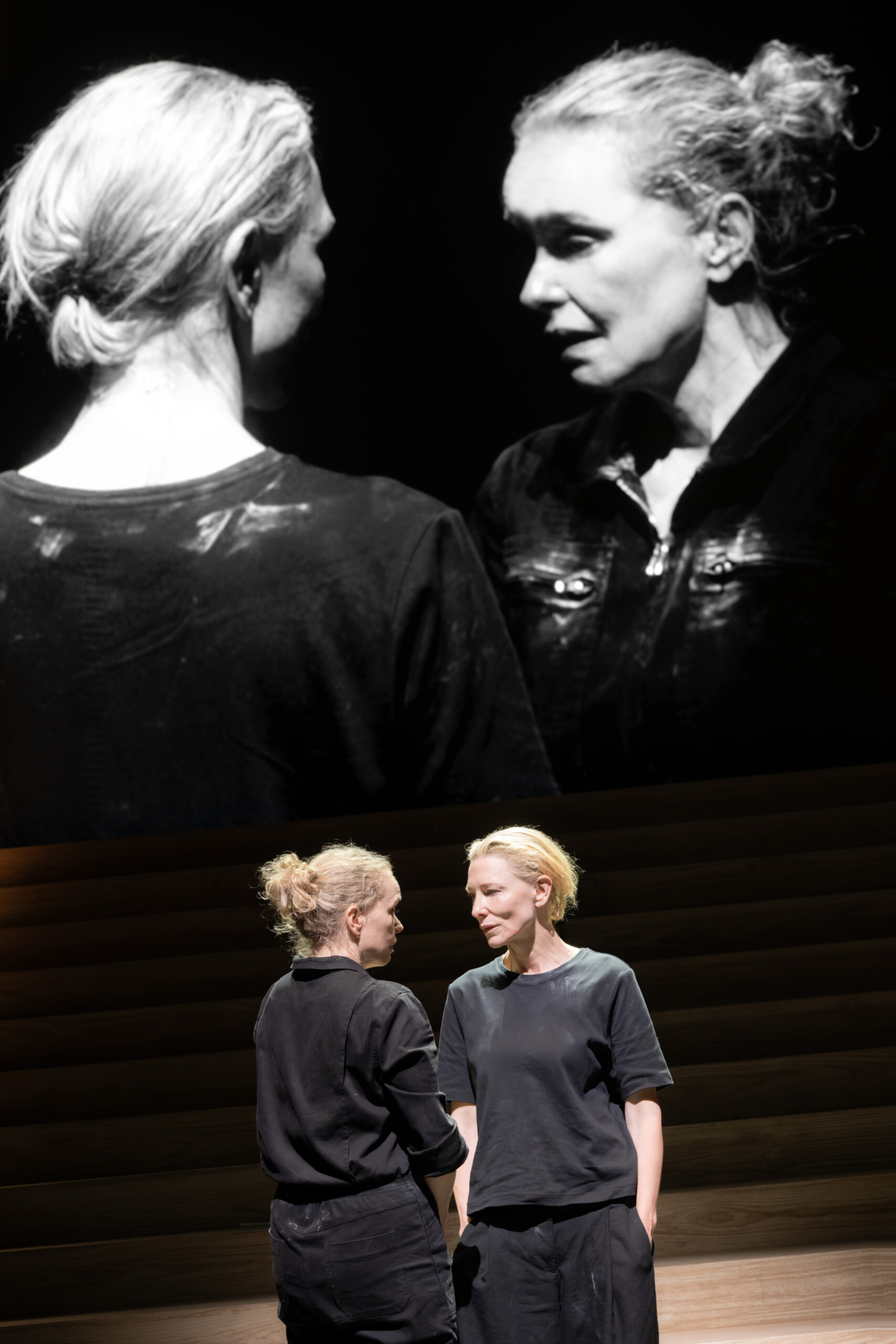
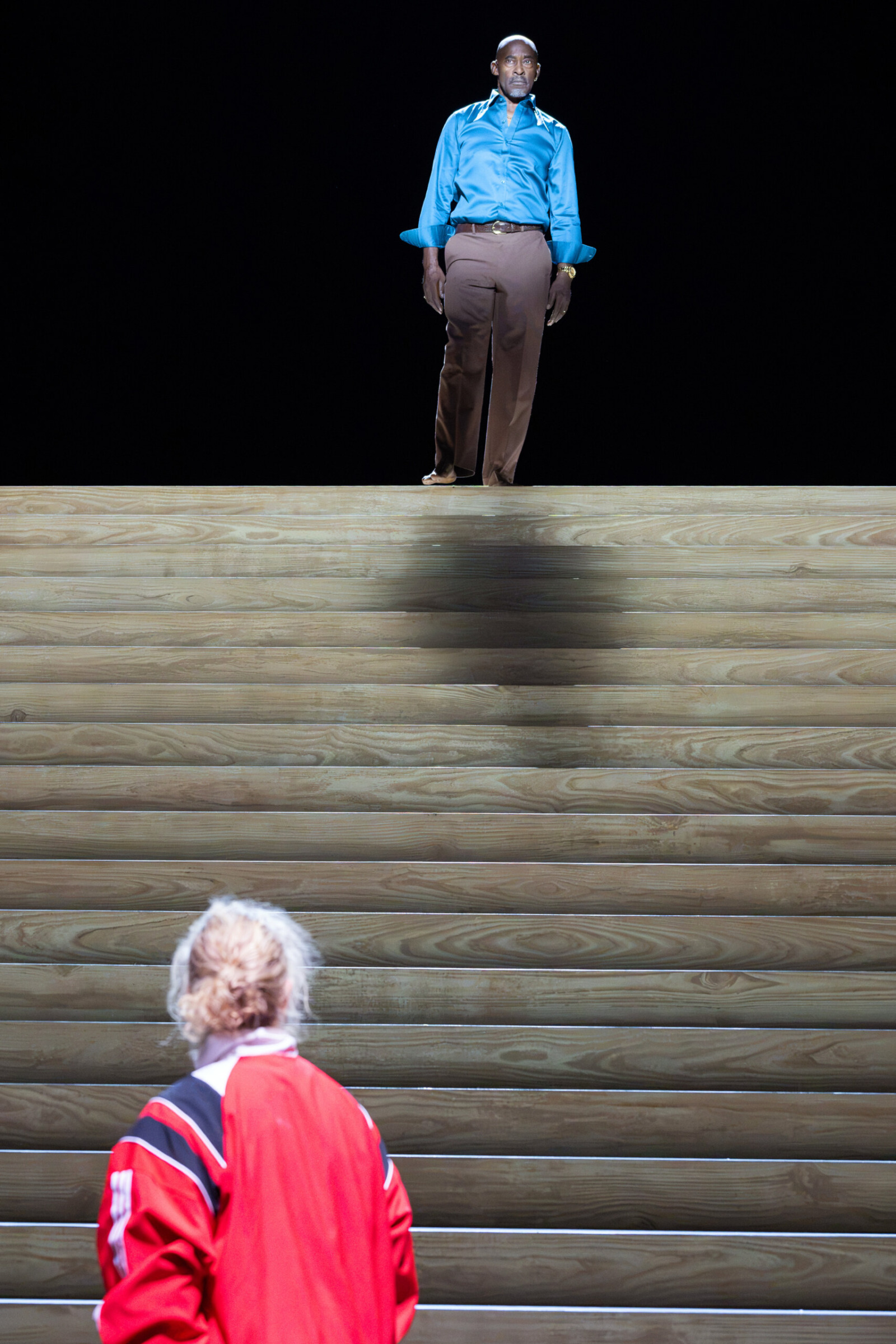
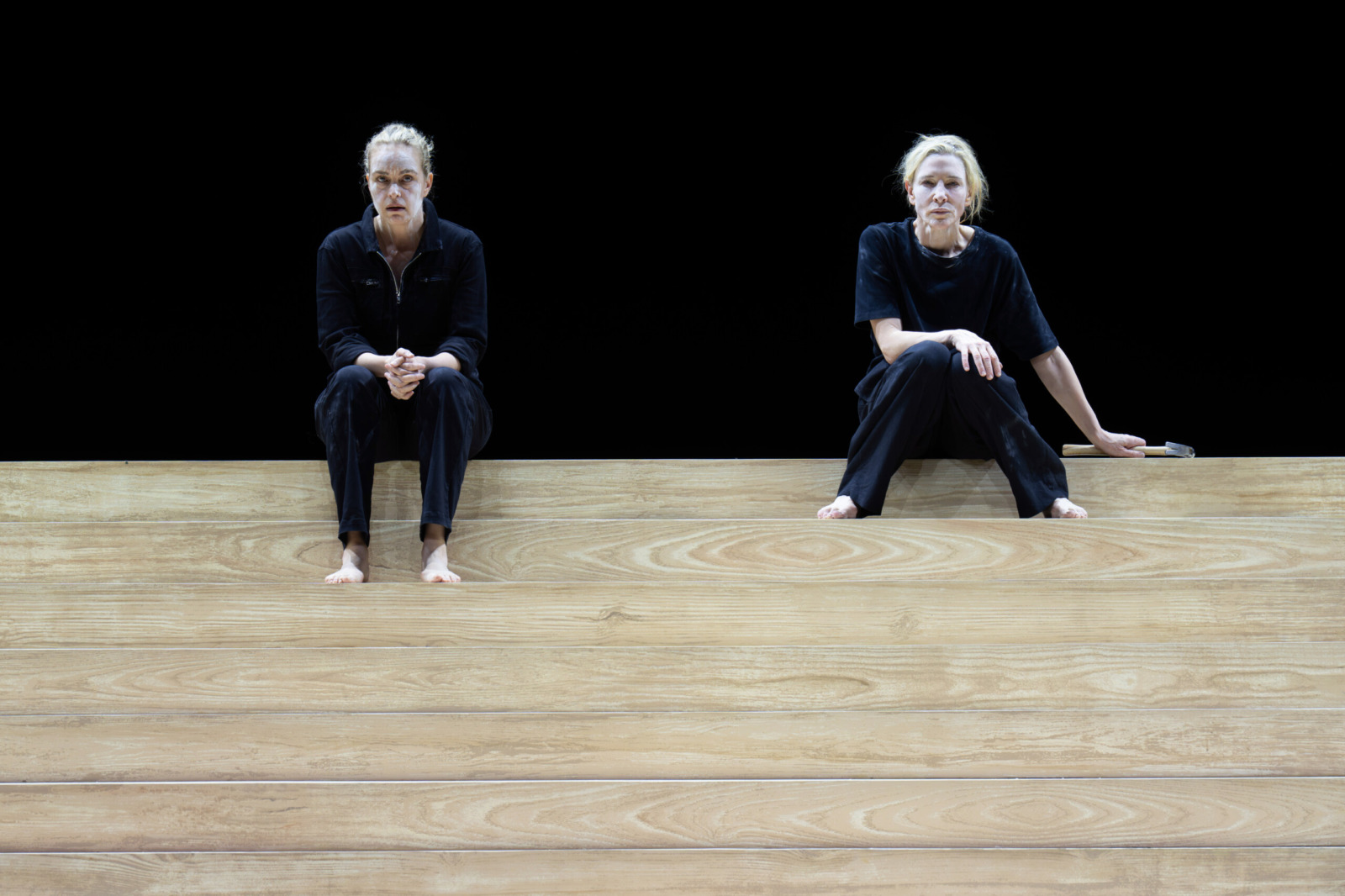
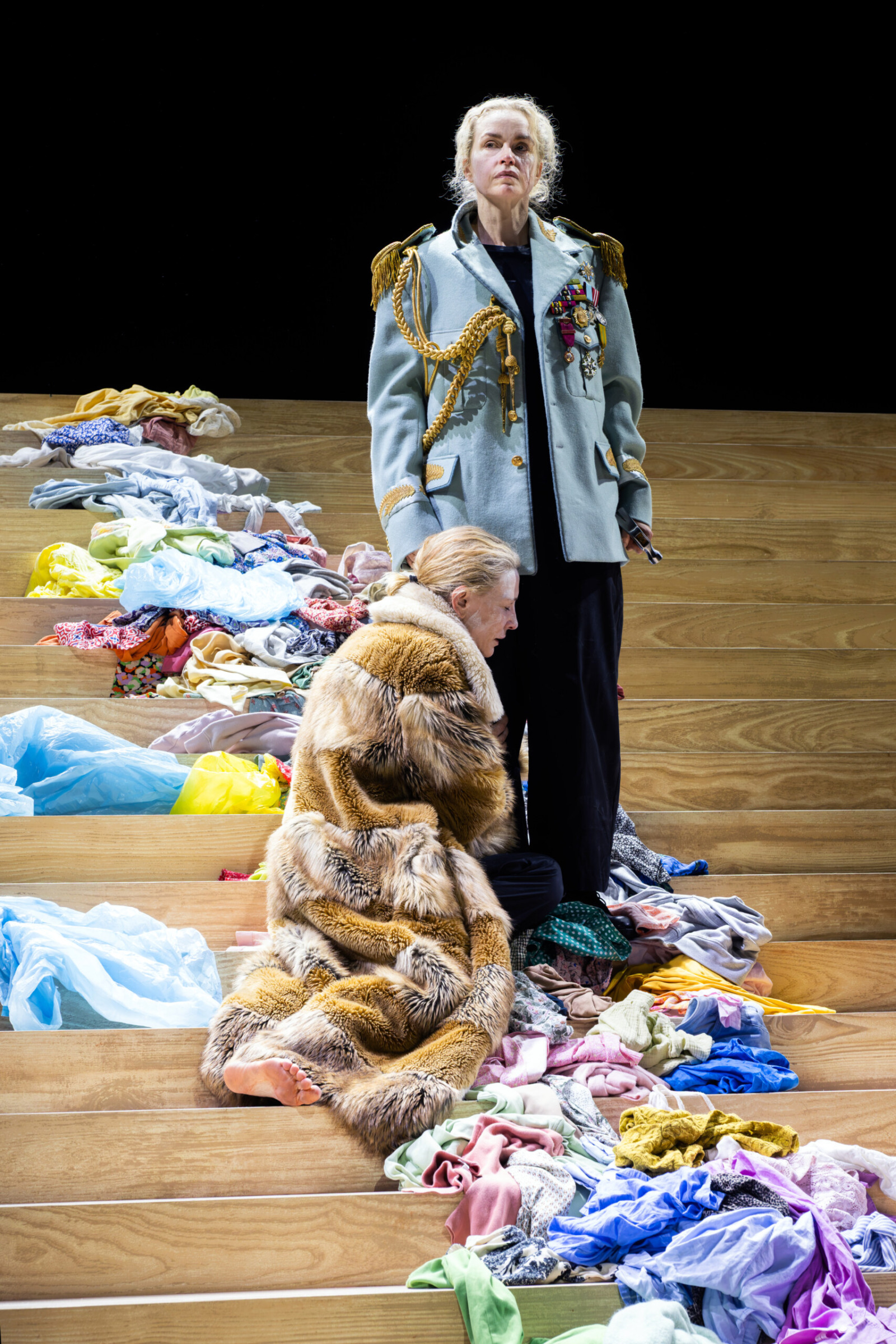
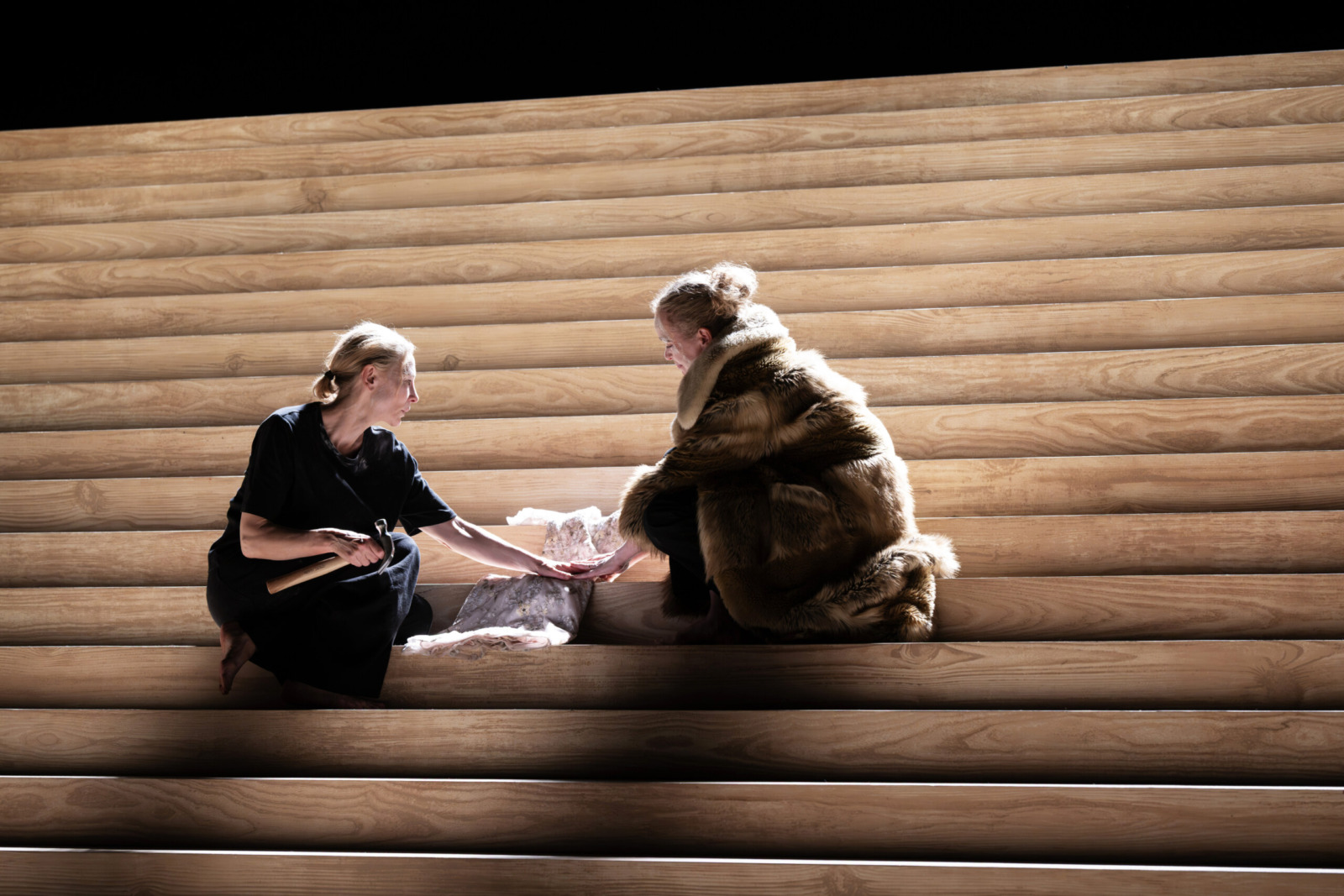
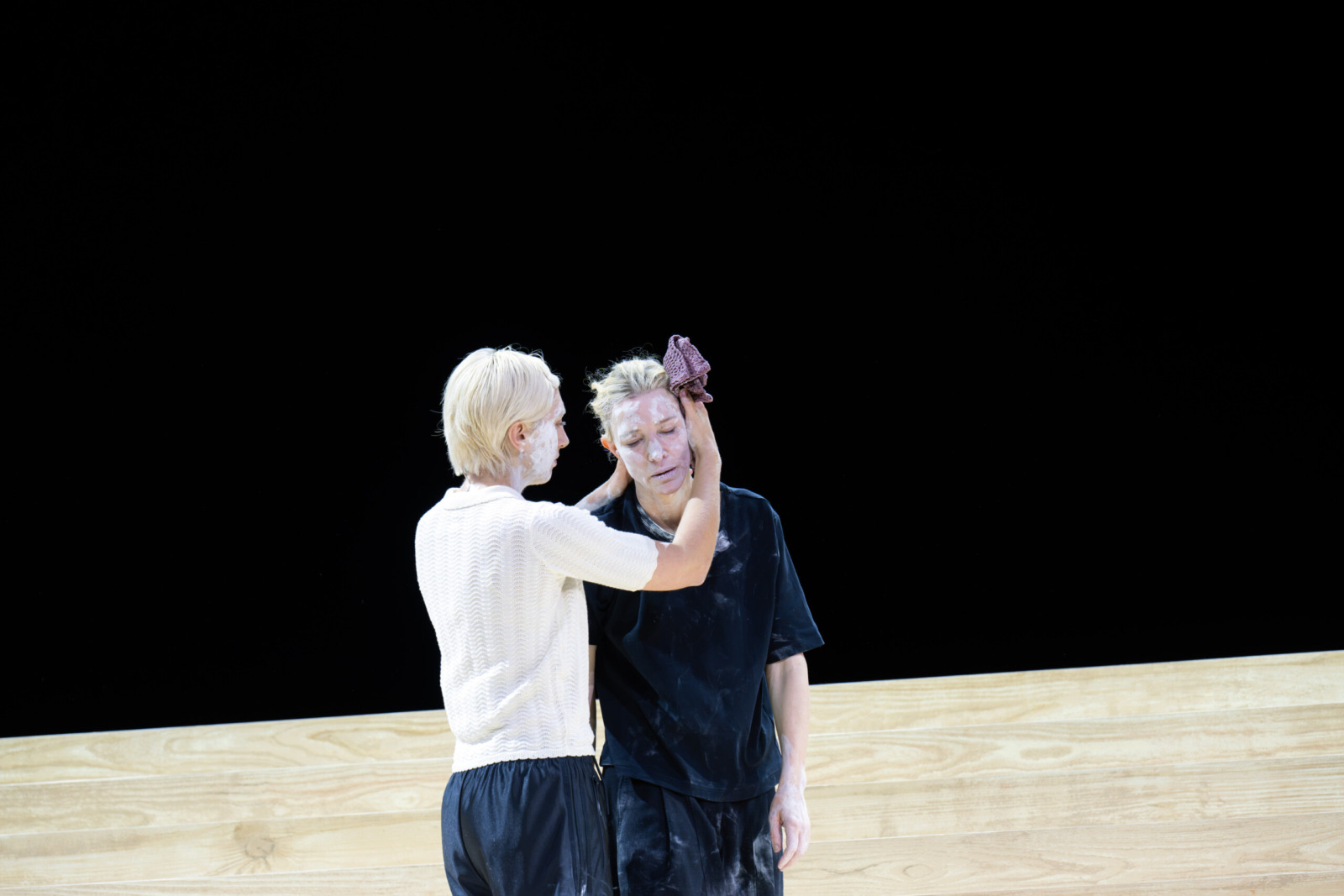
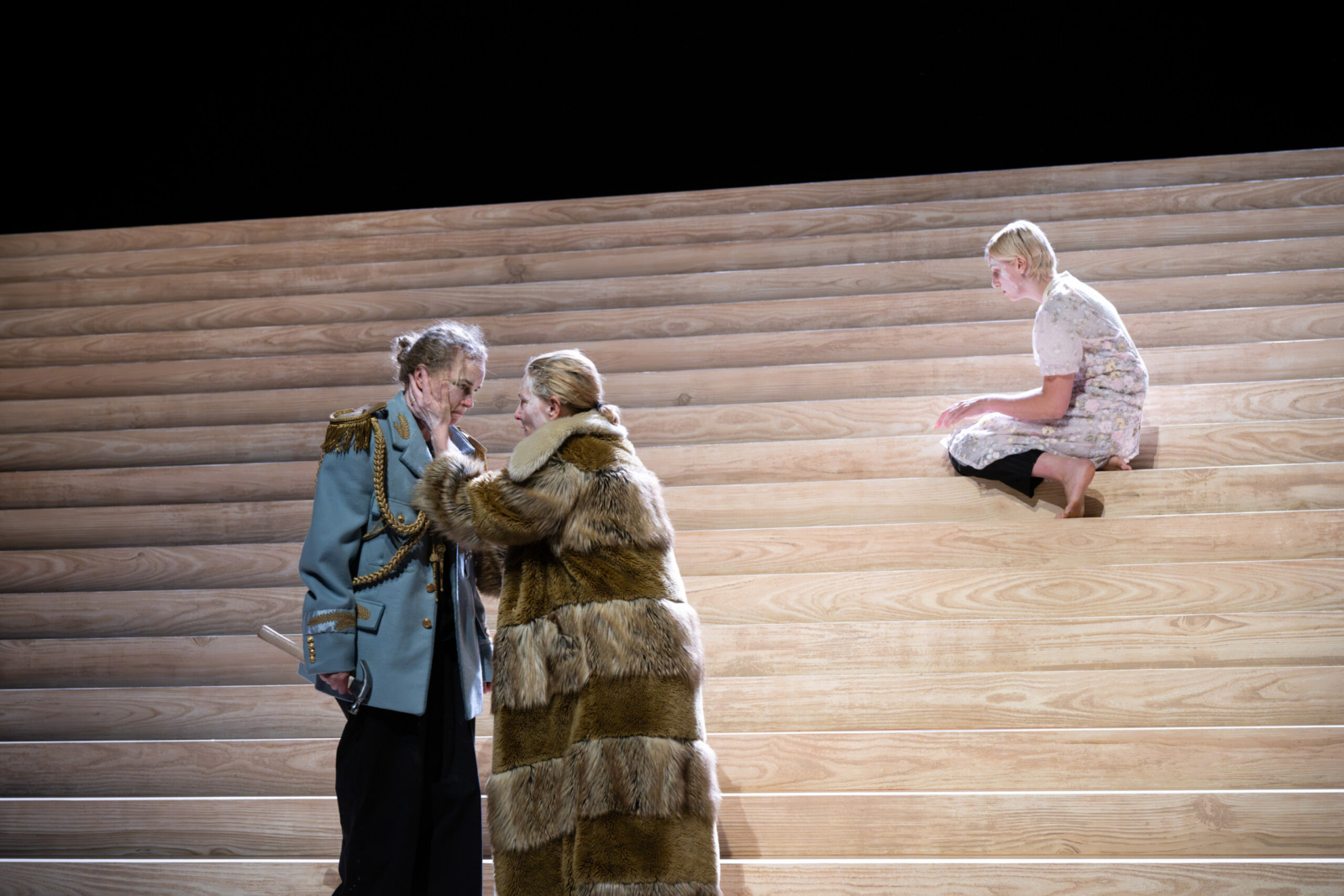
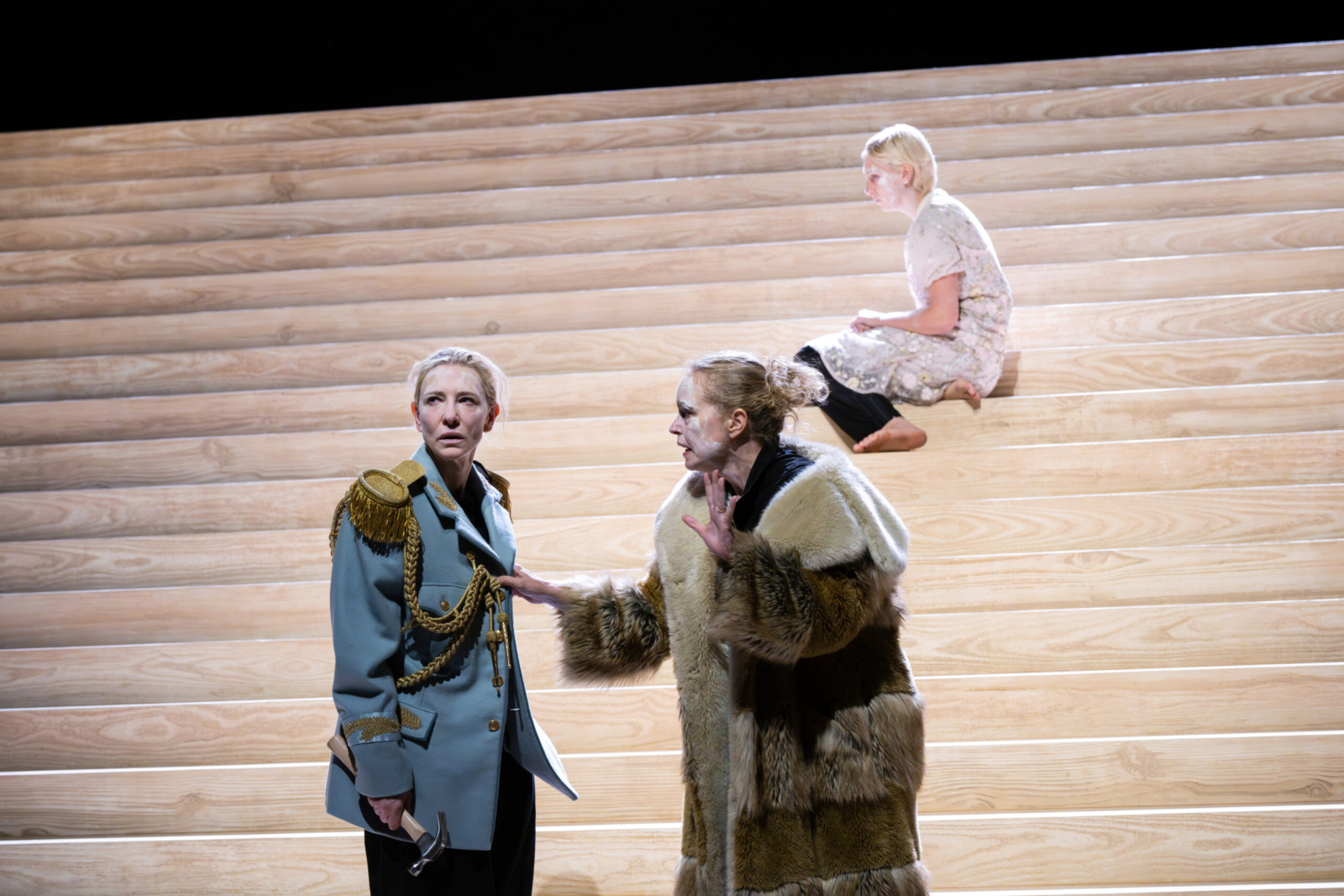
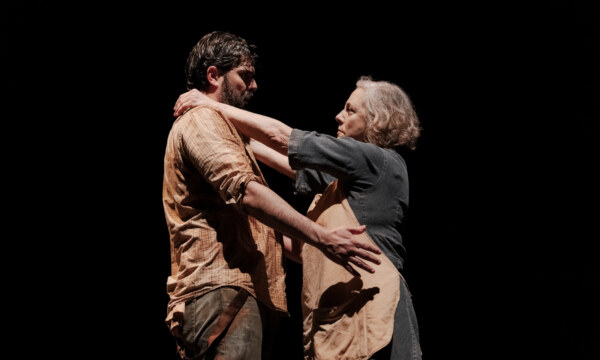
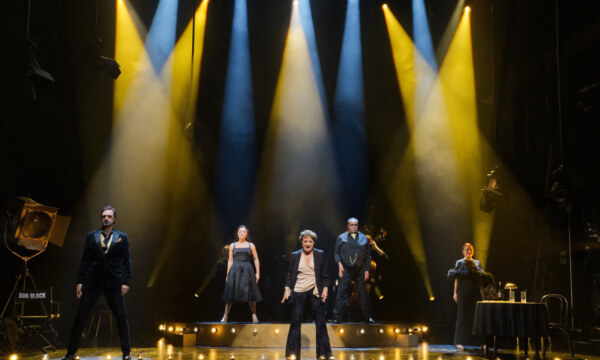
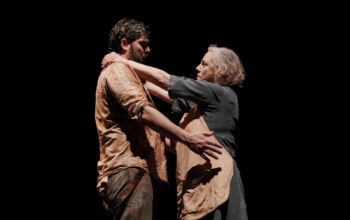
It starts with a coin toss. Blanchett and Hoss are billed as playing either of the leading roles (Electra or Clytemnestra; Elisabeth or Alma), but all this is decided on an innocuous – but classically appropriate – act of fate decided by an audience member. However, knowing another interpretation of these performances exists is distractingly redundant. It isn’t clear how many theatregoers will attend this production twice and, even if that’s the case, there’s no guarantee of seeing the alternate performer. The first half is Electra, a lightly modernised retelling of how the eponymous daughter of Agamemnon killed her mother in revenge for her father’s murder. Here the production is gripping in its starkness, economy and moral dilemma. Hoss (on the press night) excels as Electra, bringing childish vulnerability beneath her stricken ramblings as she scampers and stalks up and down set designer Magda Willi’s crude sweeping wooden stairs. The confrontation between the leads as mother and daughter is affecting, occasionally humorous, but increasingly fraught.
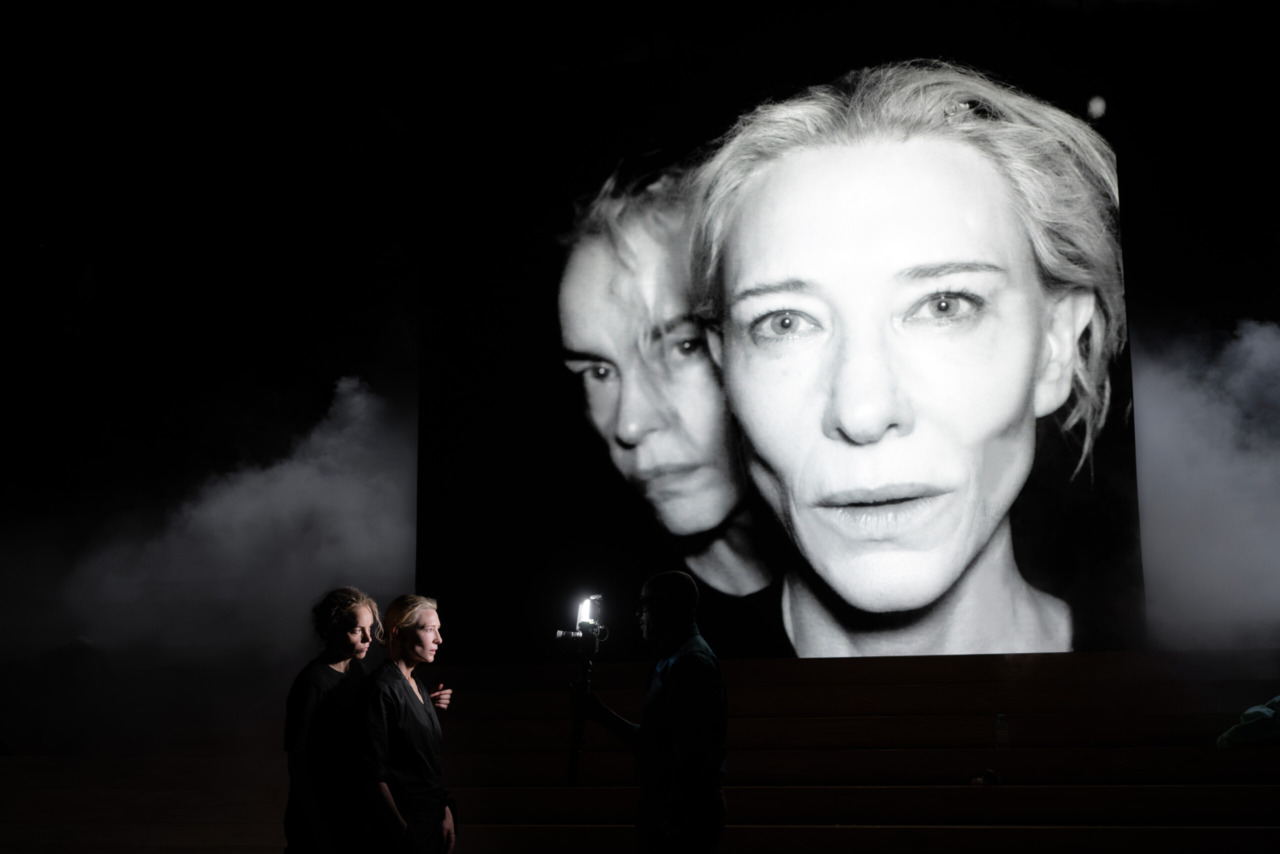
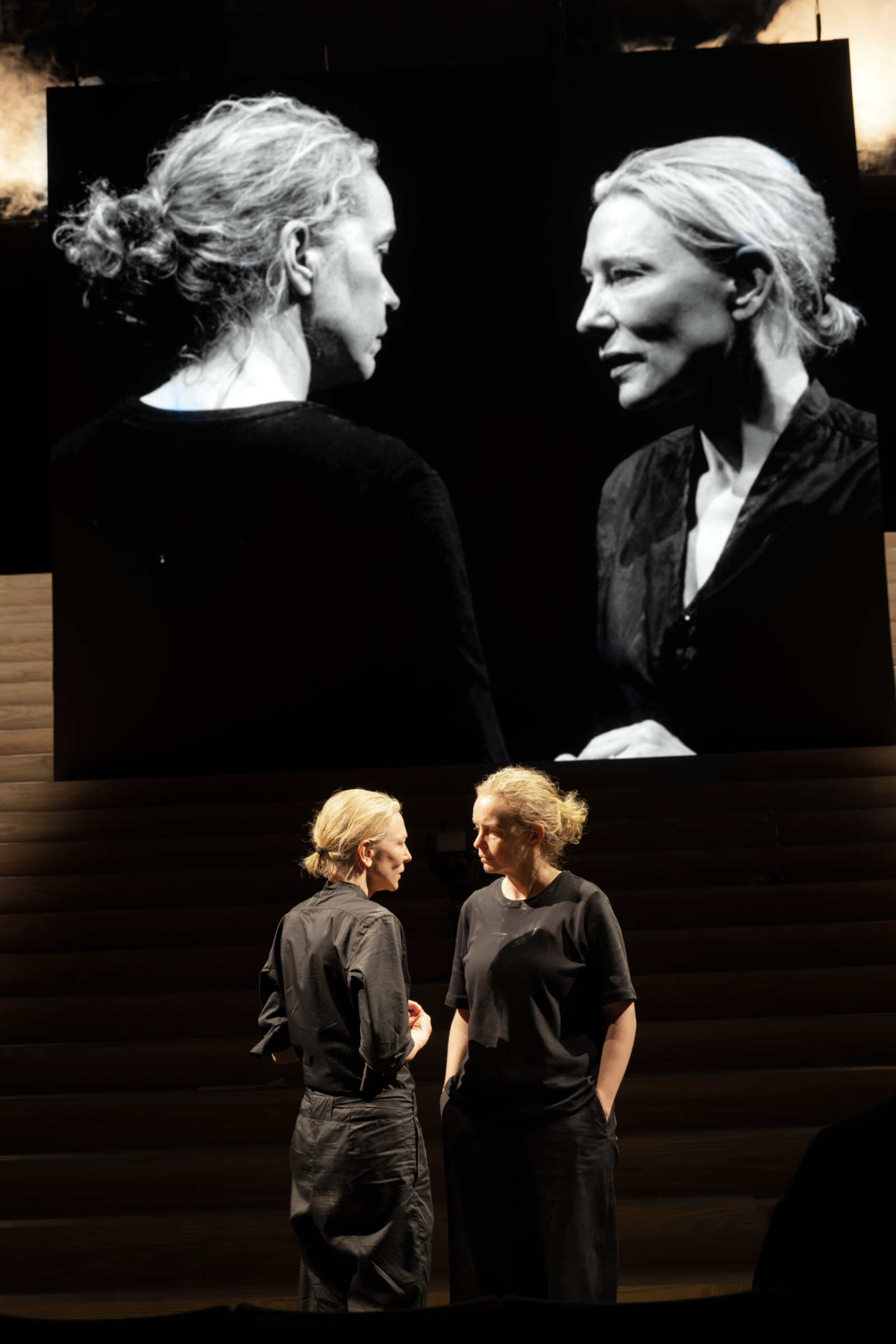
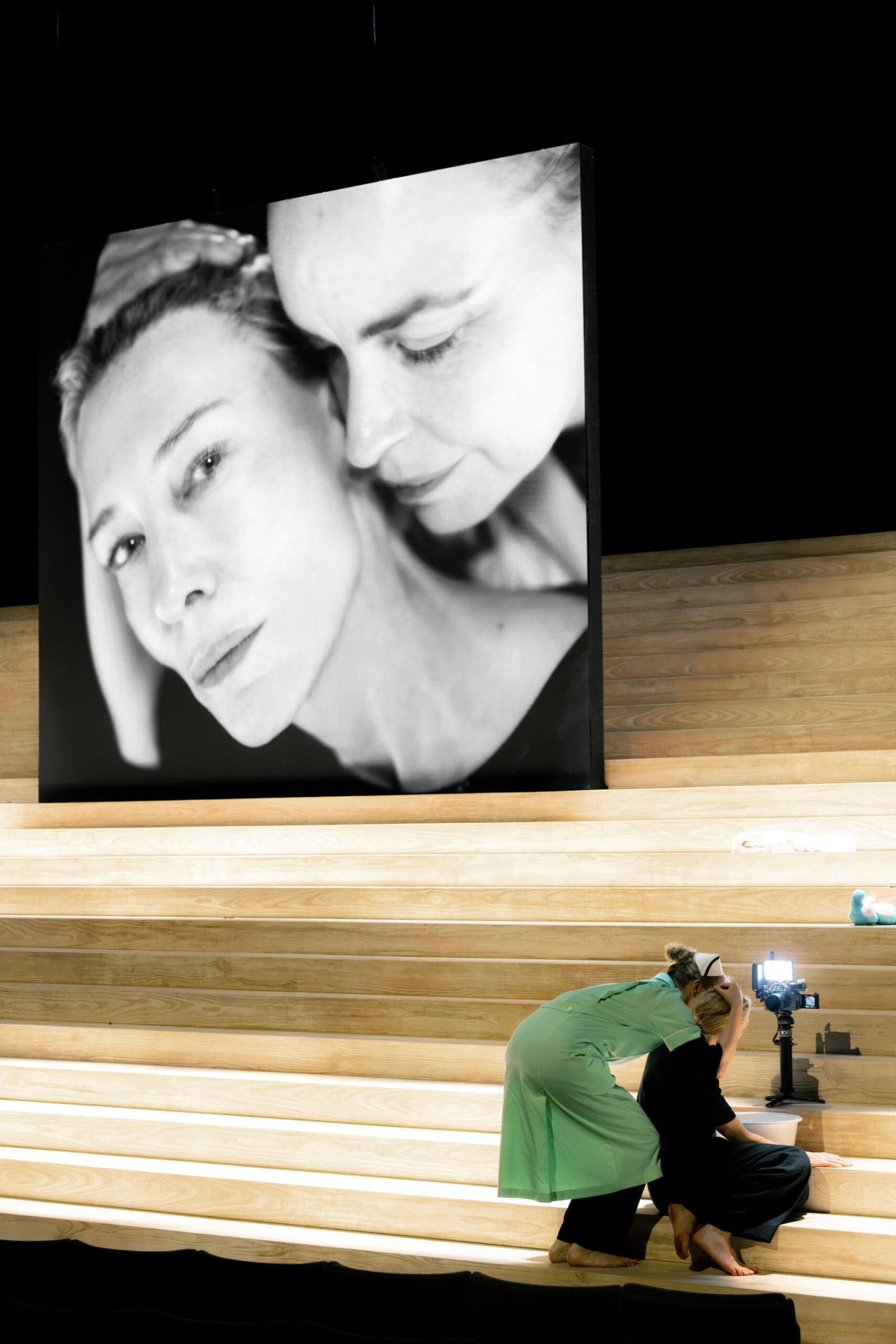
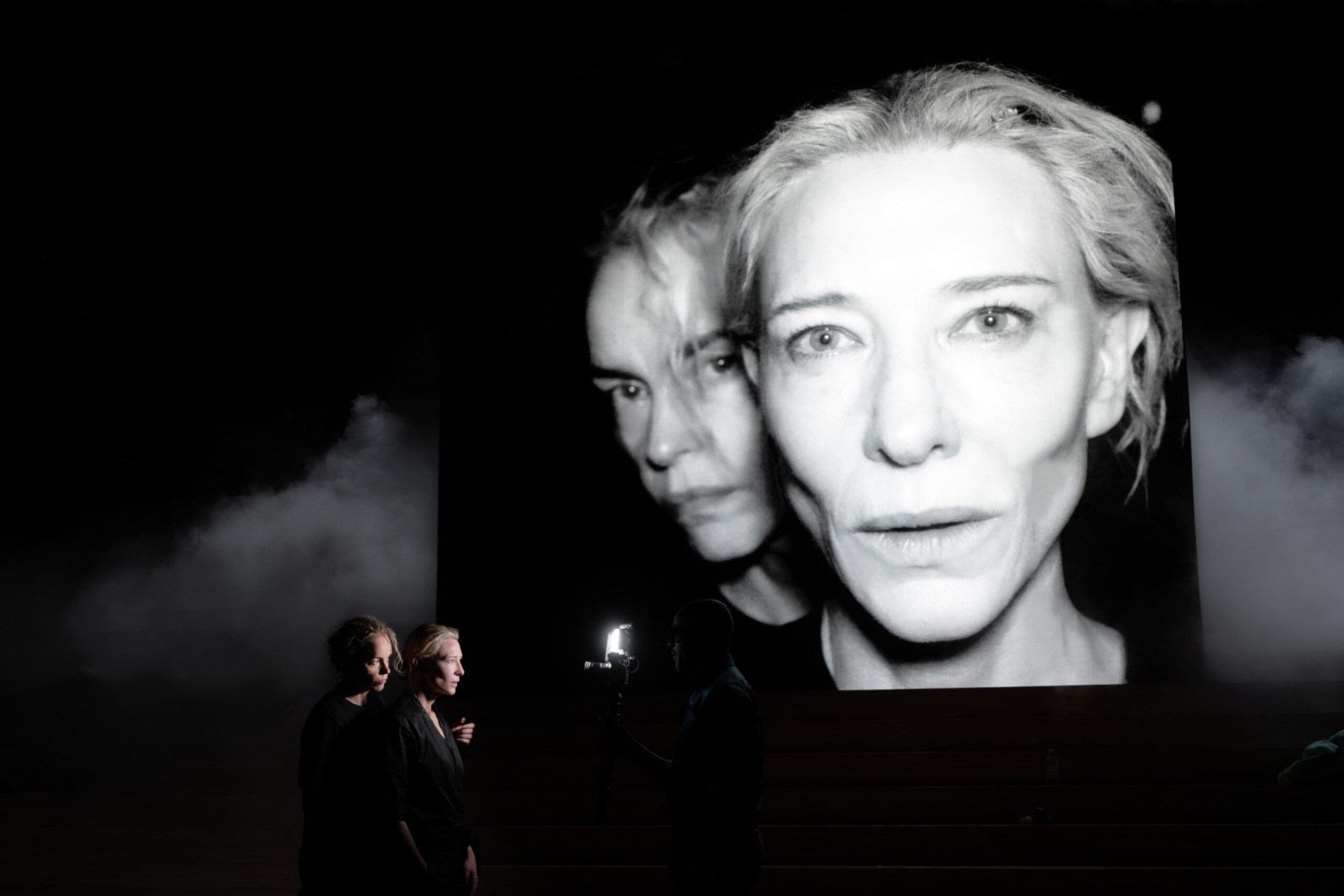
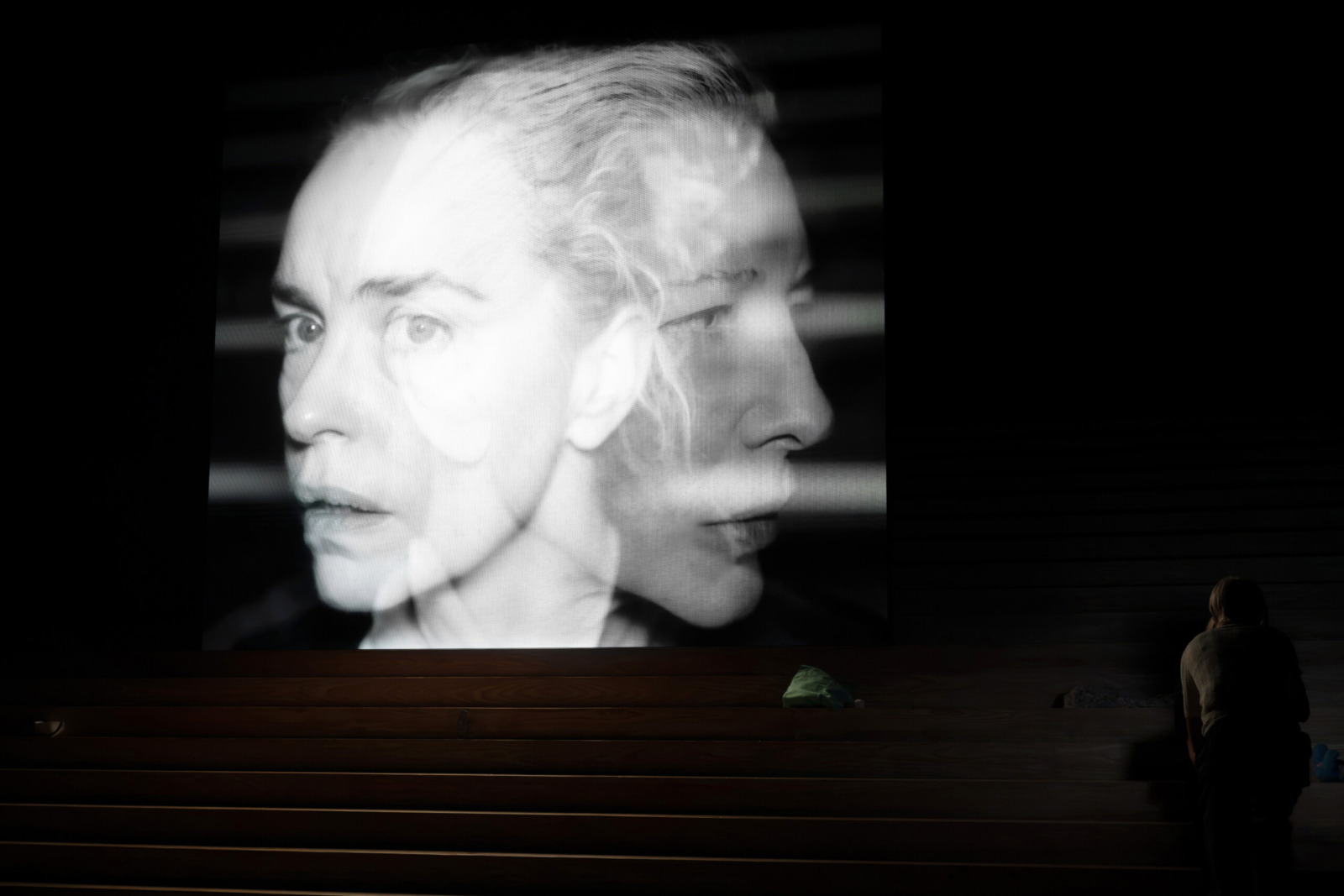
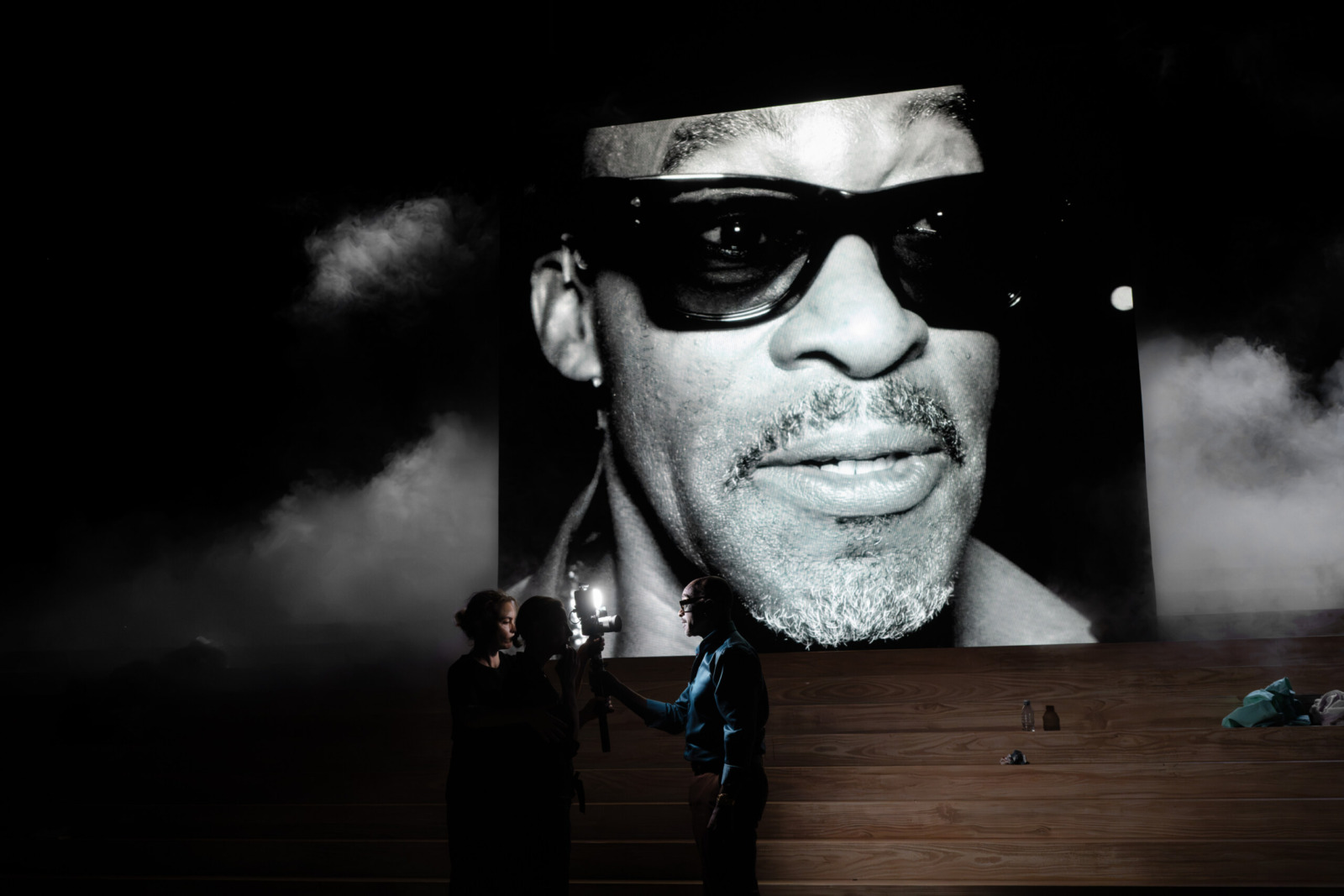
A brief pause, and into the second half: Persona. The bridge is that after playing Electra, the lead actor fell inexplicably and chronically silent, introducing the premise of Bergman’s movie. Sent to convalesce with nurse Alma, the two women unravel themselves slowly to each other. Blanchett (who played Alma) extends her range after the first half, delivering everything from a casual kindliness to a terrific unburdening monologue detailing a private sexual awakening. In the second act, Andrews allows the cinematic to dominate through a hand-held live camera feed relayed via a vivid high-definition screen. Hoss and Blanchett’s faces are held intimately in black and white, and every subtle, revealing, lingering gesture in the actors’ magnetic facial performances is captured. The effect is also oddly sedating, as attendees are constantly diverted between screen and stage, although some of its striking visuals are astonishingly achieved.
However, it’s still an intellectual wrestle as to why Electra and Persona have been brought together. Andrews seems to be probing at the emotional untangling in the female confrontation at each story’s heart. This reveals how rawness breaks to the surface after being buried by societal pressure, tragic loss, or dissatisfaction and how the two lead women struggle to cope with it. It is less a hammering than a haunting of the audience with this theme from one half to the other, but it’s frustratingly slippery to grasp – if indeed this is what the production is driving at. The overall experience of Electra/Persona is elusive, although the moments are delivered masterfully. It might just be worth seeing for the two lead actors at the height of their on-stage and – as this production surprisingly proves – on-screen powers.
James Humphrey
Photos: Monika Rittershaus
Electra/Persona is at the National Theatre from 1st September until 10th October 2026. For further information or to book, visit the theatre’s website here.














Facebook
Twitter
Instagram
YouTube
RSS