
Dora


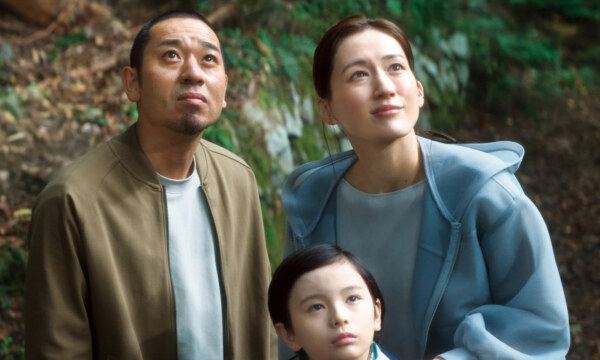
July Jung’s Dora takes its cue from Freud’s notorious 1900 case study of the same name, but shifts the perspective back to the teenage girl who, in Freud’s writing, became little more than a specimen. Jung’s Dora, played by former K-pop star Kim Do-yeon, spends a summer in the countryside with her parents and their family friends: Yeon-su (Song Sae-byeok), a painter, his Japanese wife Nami (Sakura Ando), once a stage actress in Tokyo and now living a strangely withdrawn life on her family farm, and their precocious twin sons who quickly cling to Dora.
Dora is afflicted with an unnamed psychosomatic illness that manifests physically in angry rashes across her skin. The cinematography portrays the condition viscerally. Her condition ebbs and flares alongside her shifting relationships, at times seeming to heal, before erupting into angry boils that burst and scar overnight. There is something fascinatingly blunt about it: psychological distress rendered brutally visible on the body’s surface. It explains what the script doesn’t: her insecurity and her unhappiness back at her high school in Seoul.
Kim’s performance is the film’s strongest element. She avoids the usual brittle vulnerability of the cinematic ingénue. Her Dora is awkward rather than delicate, all long limbs and absent, open-mouthed stares, with the air of someone who has not adjusted into either adolescence or young adulthood. She seems less like a young woman discovering herself than a child stranded inside a body changing too quickly around her.
Around her, though, the feature becomes increasingly difficult to hold onto. The relationships between the adults are murky in a way that feels less mysterious than half-formed, and scenes often escalate with a kind of dream-like logic that can tip into outright confusion. Characters behave irrationally, tensions appear out of nowhere and vanish again, and even the film’s more provocative turns feel unconvincing. Jung clearly aims for the film to move through Dora’s fragmented perspective, but the result is messy rather than disorientating in any meaningful sense.
Still, Dora has a certain pull. Jung keeps returning to the loneliness of being watched, interpreted and spoken for. The movie’s most original and unsettling idea remains that her skin becomes the record of everything she cannot stay, erupting outward when everyone around her insists on misunderstanding what she feels.
Christina Yang
Read more reviews from our Cannes Film Festival 2026 coverage here.
For further information about the event, visit the Cannes Film Festival website here.



















Facebook
Twitter
Instagram
YouTube
RSS