
Ten European events worth planning an entire trip around: Oktoberfest and Christmas markets
 23 July 2026
A city can be a completely different place in January than it is in July. Some prime examples are Edinburgh, which spends August performing for the world, and Munich, which becomes hom to the biggest beer festival on the continent each autumn. And by late November, Christmas markets bring some of Europe’s oldest squares to life. If you’re looking for special occasions to plan your itinerary around, here are ten events happening in Europe that are sure to be the highlight of your trip.
Total solar eclipse: Spain, Iceland and Greenland (12 August 2026)
Most festivals return every year, but a total solar eclipse on this scale may not be more than once in a lifetime. On 12 August 2026, the moon’s shadow will pass across Greenland, Iceland and northern Spain, creating one of the biggest travel moments of the decade. And with accommodation expected to sell out across the best viewing locations, many travellers are already planning well ahead. If you want to experience multiple destinations along the eclipse path, or you’re travelling on a tighter schedule, you might want to opt for private jet travel so you can fly swiftly between northern Spain, Iceland and Greenland, where commercial flight options can be more limited.
Interestingly enough, Spain is expected to attract the largest international crowds thanks to its accessibility and reliable transport links, with cities including Oviedo and Santander sitting close to the path of totality. Even though the eclipse itself lasts only a few minutes, you should be prepared to find city-wide anticipation beginning hours beforehand as beaches, hilltops and promenades fill with people waiting for daylight to fade.
Edinburgh Festival Fringe, Scotland
If the eclipse is about witnessing a rare natural phenomenon, the annual Edinburgh Fringe is about experiencing creative energy on an extraordinary scale. For three weeks in August, almost every corner of the Scottish capital becomes a performance space. You’ll see established actors sharing the programme with first-time comedians, musicians performing in church halls, and theatre productions appearing everywhere from grand auditoriums to converted shipping containers. In fact, many of today’s best-known comedians first gained attention at the Fringe… so you might even spot tomorrow’s headline act in their debut performance.
Notting Hill Carnival, London
The August Bank Holiday weekend in London sees a tremendous change of mood from its everyday beat. Streets that usually carry commuters turn into the route for Europe’s largest street festival, where Caribbean culture takes centre stage through music, dance and food. Steel bands, sound systems and colourful costumes define the parade, while stalls serving jerk chicken, patties and fresh coconut keep crowds fuelled throughout the day. You should keep in mind that Sunday tends to attract families, while Monday draws the biggest crowds, and plan your trip according to what suits you and your travelling party best.
La Tomatina, Buñol, Spain
It’s Spain’s messiest tradition…it’s La Tomatina. And it’s exactly what it sounds like: for one hour in August, thousands of people gather in the small town of Buñol to throw overripe tomatoes at one another in a carefully managed event that has become a global attraction. Most people choose to stay in nearby Valencia before travelling into Buñol early on festival morning. (The inevitable mess also makes goggles a surprisingly sensible addition to your packing list.)
Rock en Seine and Jazz à la Villette, Paris
Paris rounds off the summer with two festivals that appeal to very different audiences but complement each other remarkably well: Rock en Seine and Jazz à la Villette.
Rock en Seine is located at the former royal estate at Saint-Cloud, with major international artists across rock, indie and alternative music performing live. Jazz à la Villette, on the other hand, brings together established performers and experimental musicians whose programmes go well beyond traditional jazz. With both of these events happening around the same time, you can spend the afternoon listening to live music before heading back into central Paris for dinner beside the Seine or an evening walk through the Marais.
La Mercè Festival, Barcelona
In September, you’ll see attention turning from music towards local tradition. For instance, La Mercè celebrates Barcelona’s patron saint with a festival held sacred by its residents. As a visitor, you’ll discover that some of the festival’s most recognisable moments come from the castles, where teams build astonishing human towers several storeys high, and the correfoc, an evening procession where performers carrying fireworks weave through packed streets. Going right alongside these time-honoured traditions are free concerts, open-air performances and art installations spread across the city, giving you a richer, deeper glimpse into Catalan culture beyond Barcelona’s best-known landmarks.
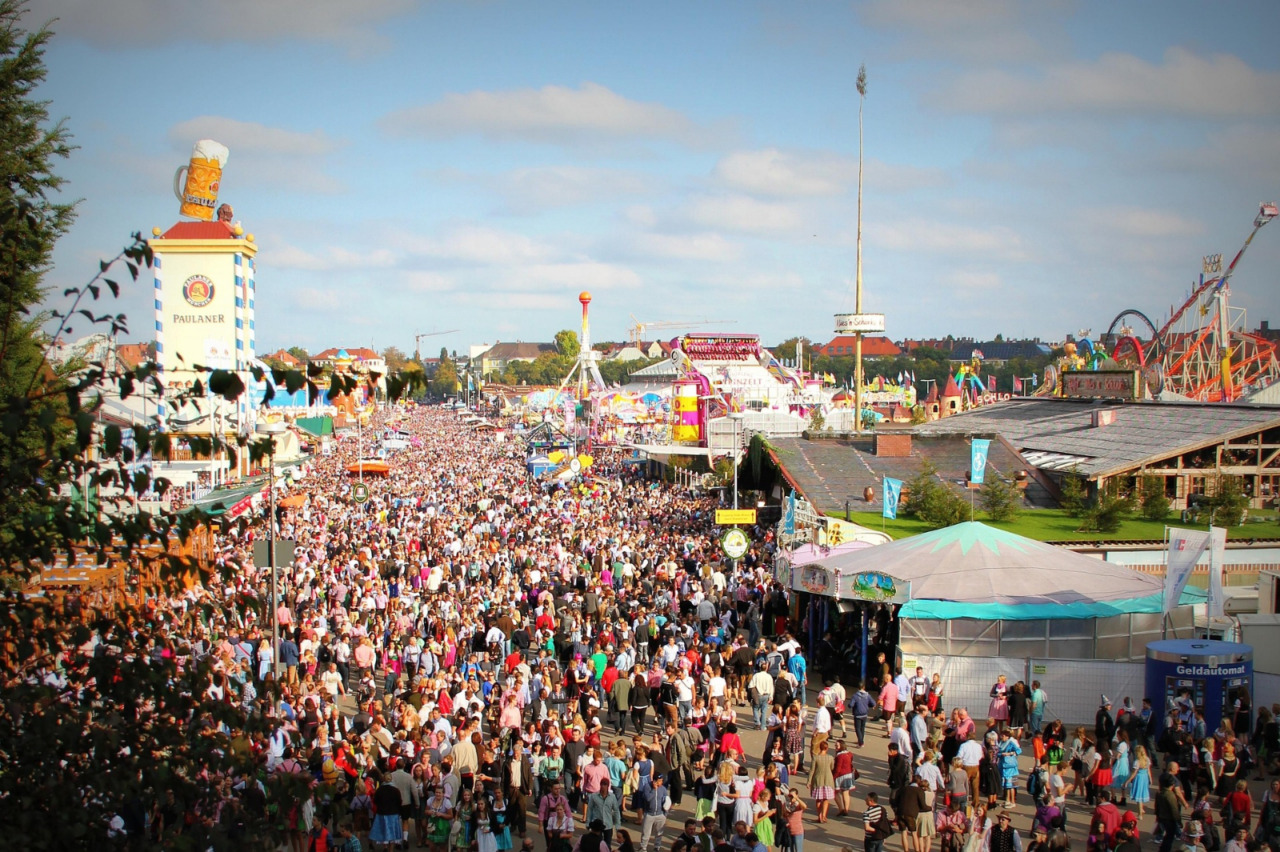
Oktoberfest, Munich
There are few annual events linked as closely to one city as Oktoberfest is to Munich. It began in 1810 as a celebration of a royal wedding, but it’s since grown into Europe’s largest beer festival. Still, many of its traditions do remain firmly rooted in Bavarian culture. For now, only Munich’s six historic breweries are permitted to serve beer inside the main festival tents, each with its own loyal following, distinctive atmosphere and traditional menu. Roast chicken, giant pretzels, weisswurst and apple strudel are almost as popular as one-litre steins.
The sheer magnitude of Oktoberfest can feel overwhelming without a little planning, given that weekends are the busiest, with the largest tents often reaching capacity early in the day. If you can make it on weekday mornings, you’ll have a far more relaxed introduction to the area. There’s lots to see and do here; beyond the famous beer halls are brass bands, historic fairground rides, family areas and processions featuring traditional dress from across Bavaria. And if you go the extra mile and spend a few extra days in Munich, you’ll be able to experience excellent museums, elegant parks, beer gardens and one of Germany’s most walkable historic centres.
Derry Halloween Festival, Northern Ireland
This Derry event is often described as one of the world’s leading Halloween celebrations, the festival transforms the city’s historic walls into the backdrop for projection shows, costume parades, street performances and fireworks. Local folklore plays an important role throughout the programme, giving the celebrations a strong sense of place rather than relying solely on familiar Halloween imagery. The compact historic centre means almost everything is within walking distance.
Christmas Markets, Vienna, Prague, Strasbourg and Munich
It’s one of the continent’s (and, in fact, the world’s) best-loved traditions, and it should come as no surprise that Europe is full of iconic Christmas celebrations. Christmas markets have been part of life across Central Europe for centuries, creating places where local craftspeople, food producers and choirs gather in some of Europe’s most beautiful public squares.
What makes Christmas in Europe special is that each destination has its own character. Vienna’s markets sit against an imperial backdrop, with Rathausplatz providing one of Europe’s most recognisable festive settings. Then there’s Strasbourg, often called the Capital of Christmas, which has hosted seasonal markets since the 16th century and remains deeply rooted in Alsatian traditions. Prague combines wooden chalets with Gothic architecture and one of Europe’s finest Old Town squares, while Munich balances its famous central market with smaller neighbourhood markets where regional food and handmade decorations take priority. If you have the time and budget to link two or three cities by rail, you can create a festive itinerary as colourful as the decorations.
Why timing is as important as the destination
You can see a landmark any time, but experiencing events like this is a more seminal experience. Whether you want to watch daylight disappear during the 2026 Total Solar Eclipse, or join thousands of performers and audiences in Edinburgh; whether you want to share long tables at Oktoberfest or wander through Vienna’s Christmas markets after dark, each moment will give you the chance to experience a different side of Europe. Build your itinerary around the calendar rather than simply the map, and you’ll see the heart of every place you visit.
The editorial unit














Facebook
Twitter
Instagram
YouTube
RSS