
Richard Serra: Trajectory at Alan Cristea Gallery
 11 September 2013
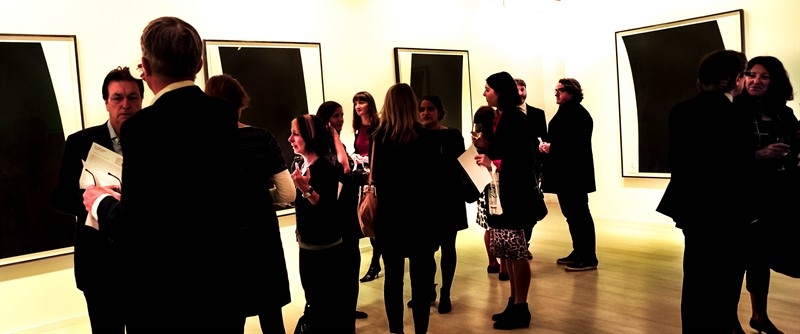
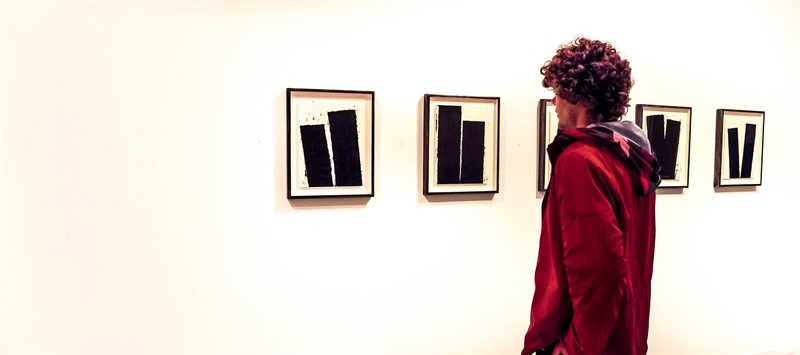
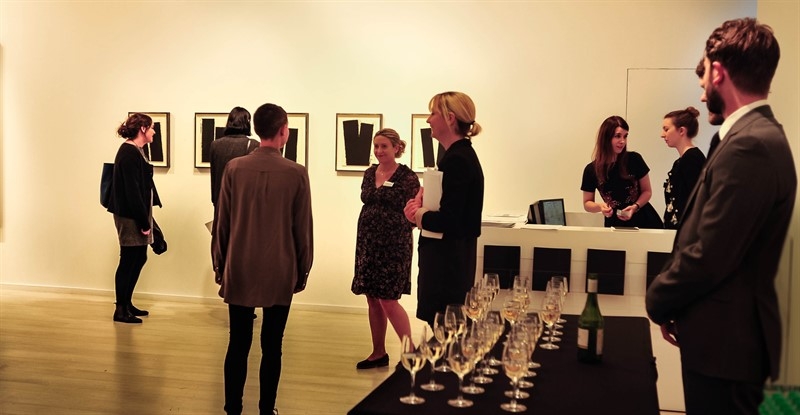
Thick black stripes on white backgrounds, Richard Serra’s prints transform the empty walls of Cork Street’s Alan Cristea Gallery into a kind of recumbent zebra. As one walks into the gallery, one is instantly confronted by an overwhelming sense of flatness. But, this is not the hallmark of 20th-century modernism, in which artists called to attention the monotexture of the painted surface in search of some form of higher truth. In fact, on closer inspection, these printed tar-like stripes take on a textured palpability, a kind of stickiness, which negates the flatness one first sees as he or she initially enters the gallery.
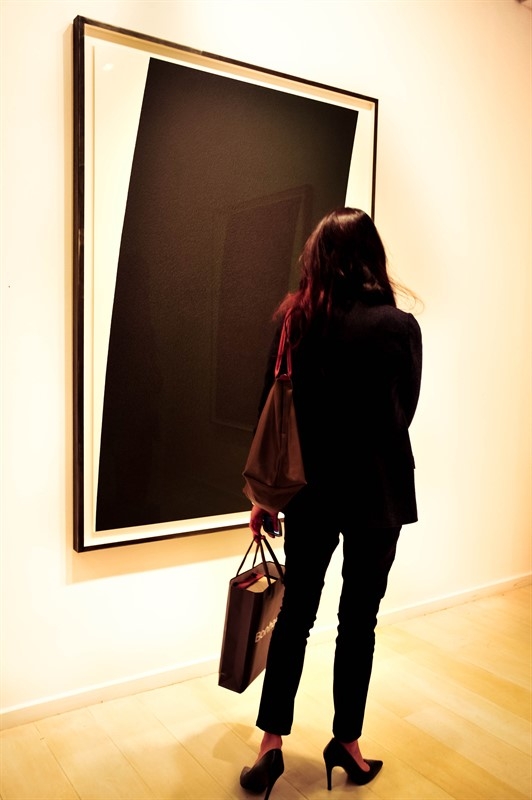
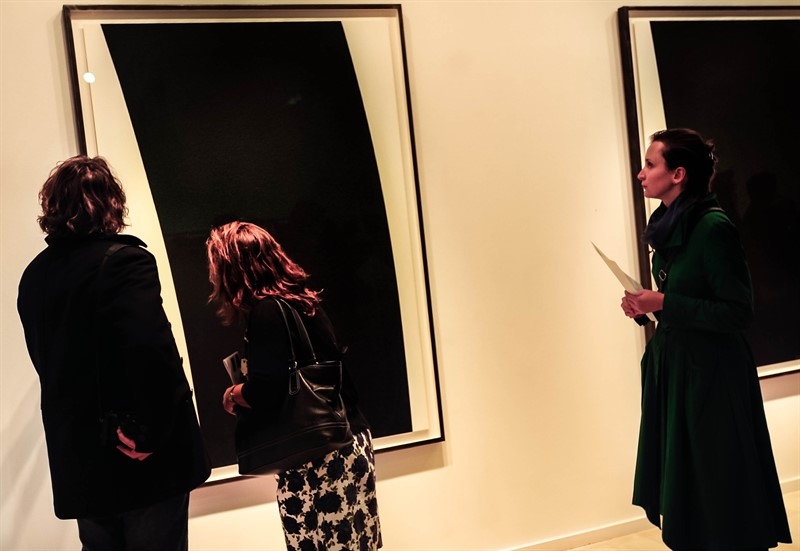
Varying in thickness of stripe and size of print, the exhibition presents three groups of etchings from the past ten years. Ballust (2011), by far the thickest stripe and the largest print in general, is a series that focuses on stability and control, on the weight of a large, black mass, spreading itself up a piece of white paper. Flat from afar, on closer inspection the surface is dappled with textured marks, the result of ink being rubbed onto a “found” surface – an exterior stucco wall.
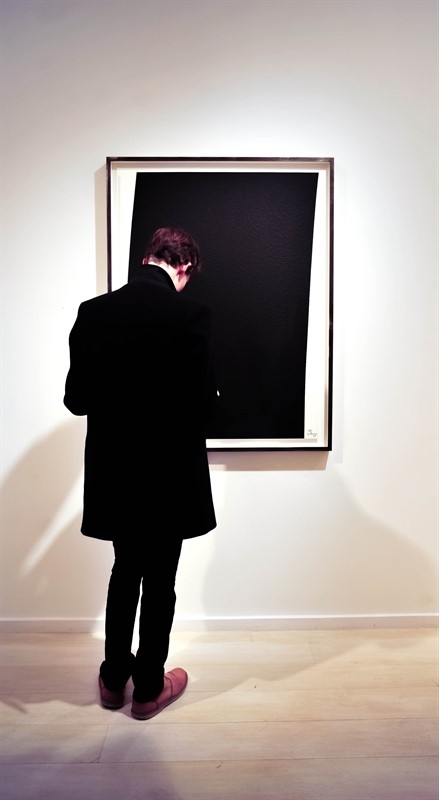
In contrast, Extension (2004) and Trajectory (2004), smaller both in size and in terms of line thickness, deal with movement. Part of the Arc of the Curve (2004) series, the subtle bends of these etchings have a kind of dynamism and lightness that is totally lacking in Ballust. While some bend steeply, others nod towards an arc, an interaction that adds to the overall sense of movement. One feels, though, that for these etchings to work effectively, they need to be seen together.
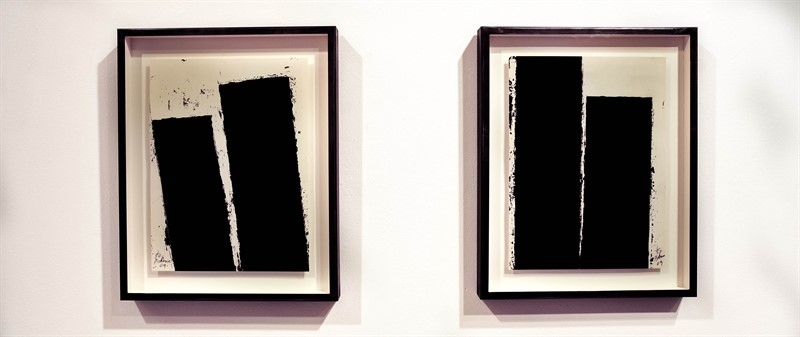
Providing light relief from the gravity of Ballust, Extension and Trajectory, is Serra’s Promenade Notebook Drawing (2009): a series of small prints, marked playfully with two stripes. Splutters of ink and the haphazard directions of the double stripes provide a perfect contrast to the very controlled nature of Serra’s other prints.
Overall, the exhibition highlights a departure from Serra’s usual work – his monumental sculpture – however, the exploration of weight, gravity, and balance remains a constant thread throughout his oeuvre. Nonetheless, it is this shedding of light onto Serra as a prolific printmaker, as opposed to a sculptor, that makes the exhibition engaging (although, there is a slight tendency to feel that once you have seen one Serra print, you’ve seen them all).
The editorial unit
Photos: Andrei Grosu
Richard Serra: Trajectory is at the Alan Cristea Gallery until 8th October 2013. For further information visit the gallery’s website here.









Facebook
Twitter
Instagram
YouTube
RSS