
Collider at the Science Museum

 15 November 2013
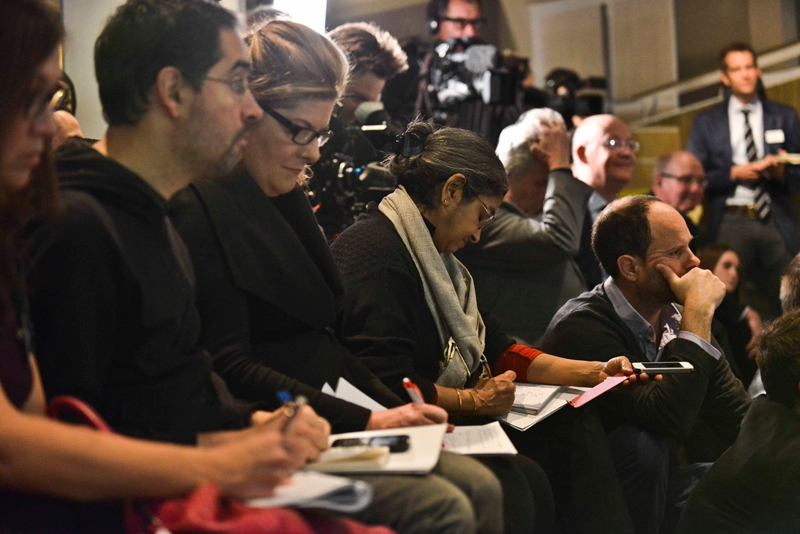
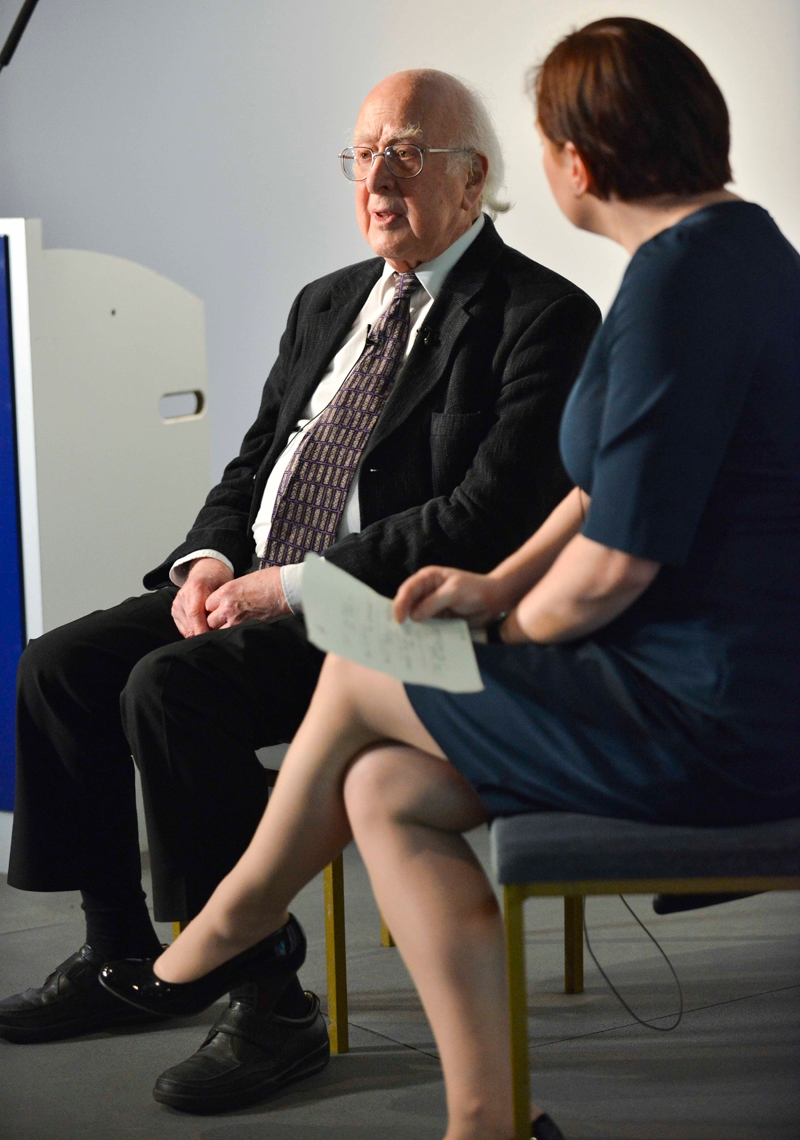
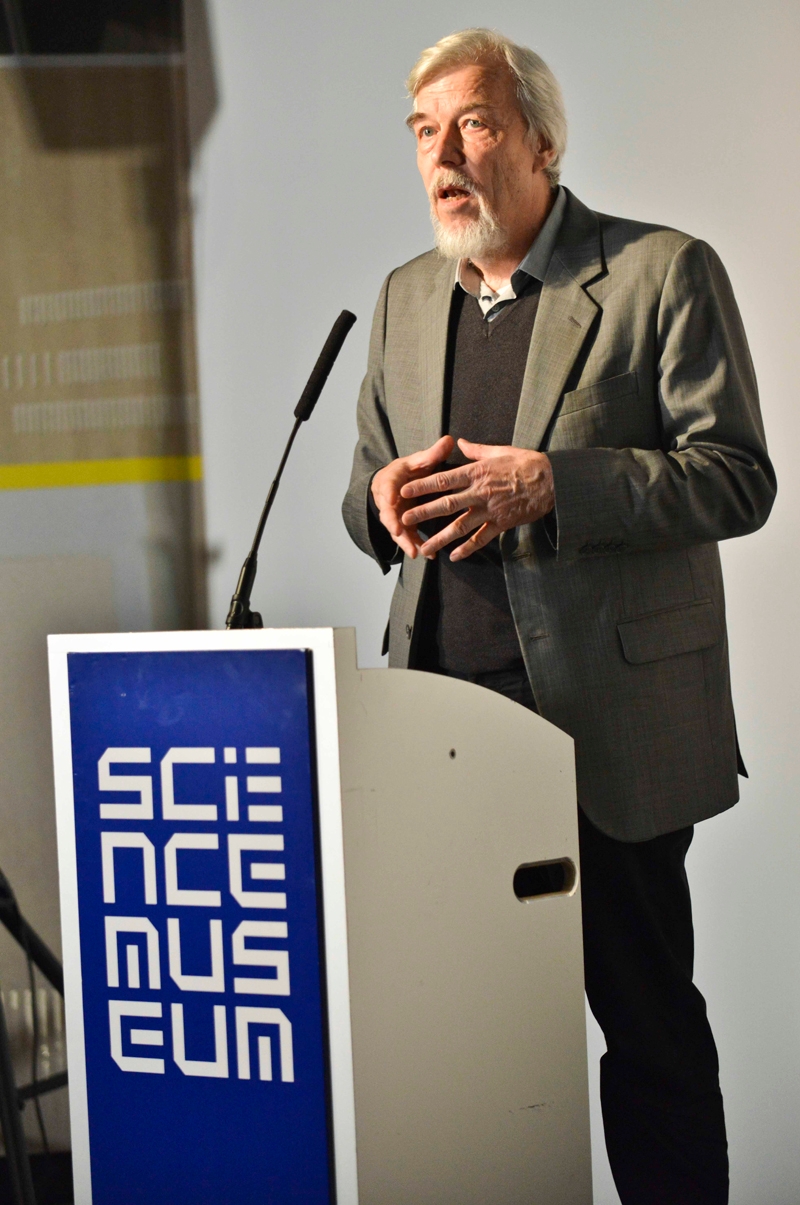
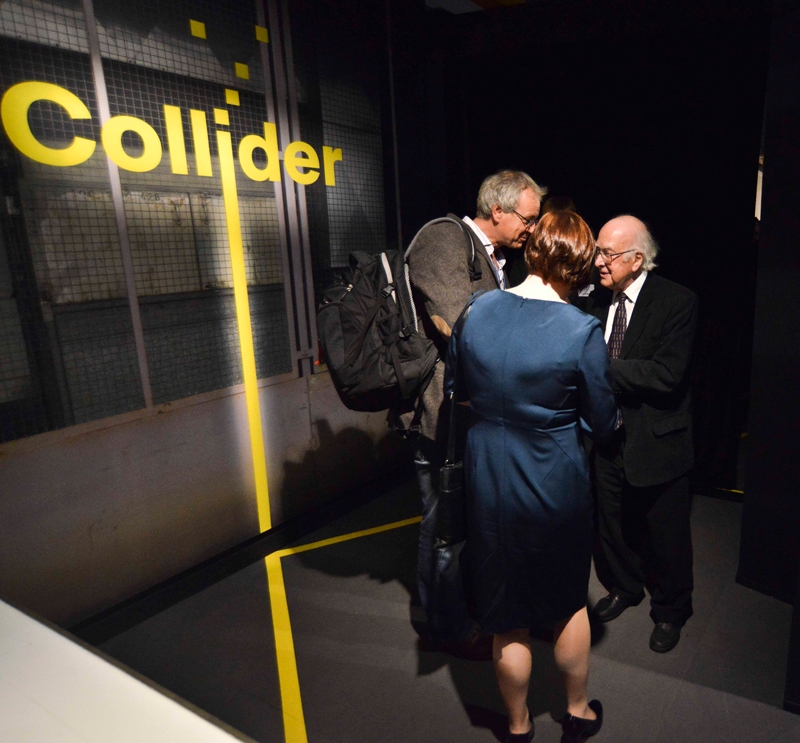
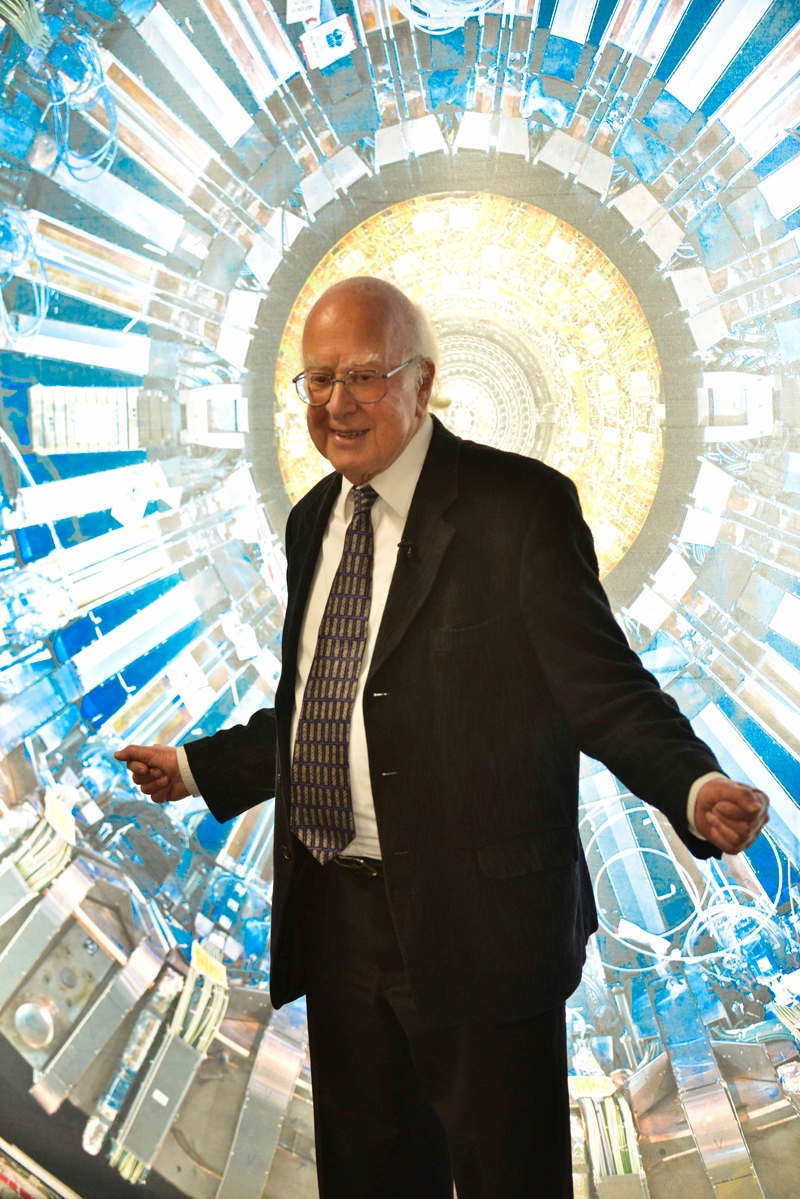
The Science Museum’s ambitious new exhibition Collider is dedicated to one of the greatest discoveries in the history of subatomic physics research. The London press scene were privileged to be able to pose a few questions to the two guests of honour: Professor Rolf Heuer, director general of CERN (the European Organisation for Nuclear Research), and recent Nobel laureate Professor Peter Higgs, author of the now world-famous theory regarding the Higgs Boson, or “God Particle” (“unblinded” by the organisation in the early spring of this year).
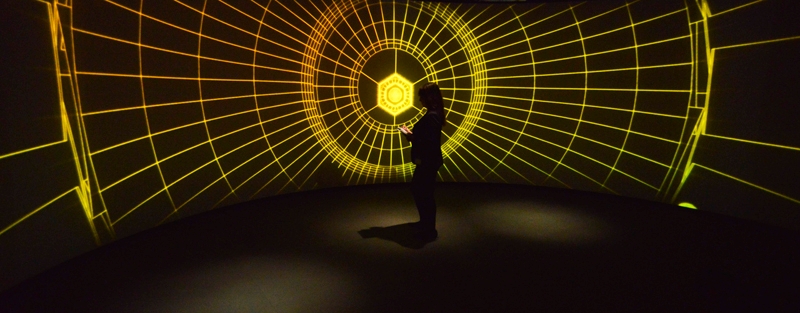
Aimed at a slightly older audience, the exhibition has tried to recreate the atmosphere of dedication and excitement invested in this international experiment. Indeed, Heuer himself commented that he recognised CERN in the way the show had been designed. Prior to entry into the simulated Geneva-based faculty, the show opens with a display of instruments and documents of calculations by the hand of many of history’s most important physicists, from JJ Thomson’s discovery of the electron in 1897, to John Cockcroft and Ernest Walton’s legendary “splitting of the atom” in 1932.
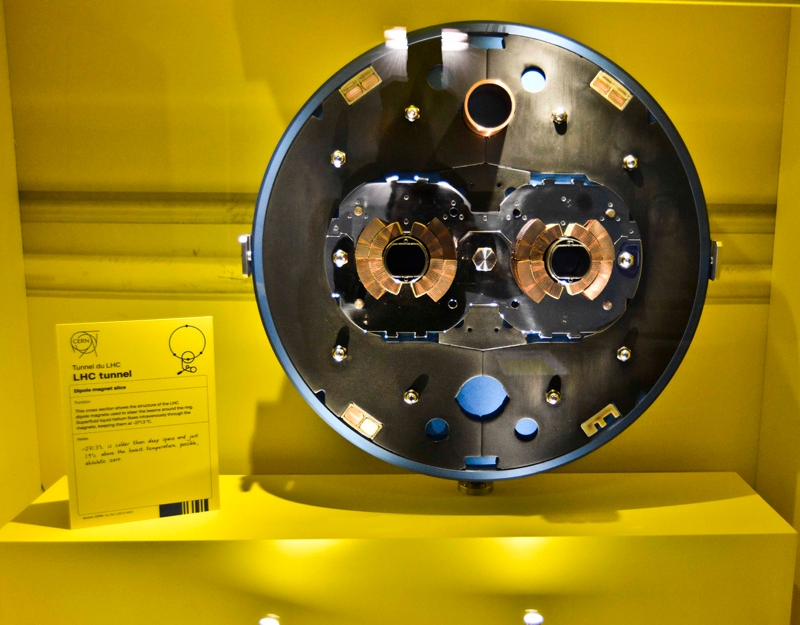
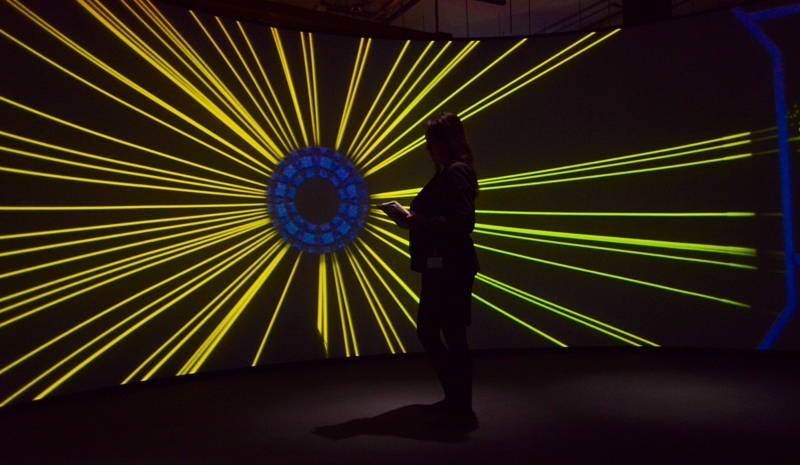
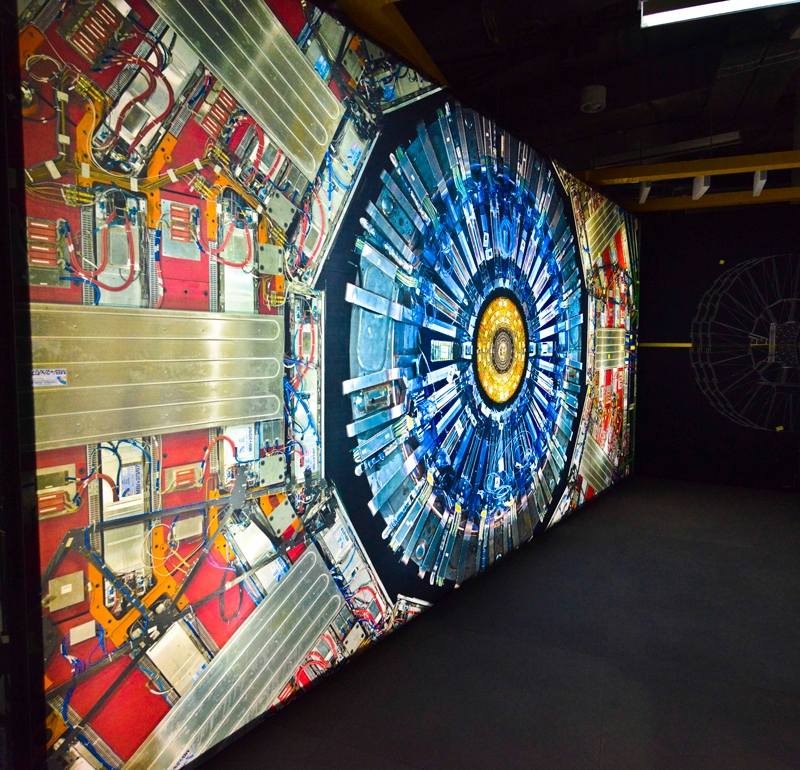
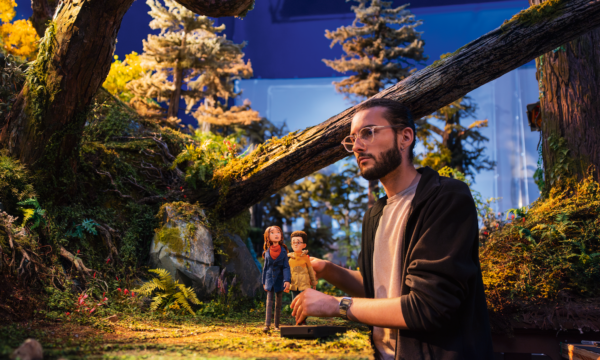
Visitors are then led into a small theatre made to look like a university lecture room, where they can view a short (and somewhat corny) film by Olivier winners Finn Ross and Michael Wynne, with actors playing CERN scientists and PhD students explaining in layman’s terms what the experiment is all about. The film does succeed in reminding the audience of the human element behind the larger-than-life science. Prototypes and actual objects used are presented in a series of rooms that evoke in miniature the enormous 27km circular LHC (Large Hadron Collider) tunnel built by CERN for particle collision. Another movie screen follows, featuring a piece of digital animation that visualises the impact of the electrons as they collide and create new particles, some of which have not existed since the beginning of the universe.
For children, the exhibition might not be immediately popular, but those of us who enjoy pondering the possibilities that will inevitably follow (Higgs tells us that the machine would be utilised in 2015 for the search for dark matter), the Science Museum’s new show is a must.
Mark Sempill
Photos: Adnan Moe
Collider is at the Science Museum from 13th November until 6th May 2014. For further information or to book visit the museum’s website here.





















Facebook
Twitter
Instagram
YouTube
RSS