
The Institute of Sexology at the Wellcome Collection
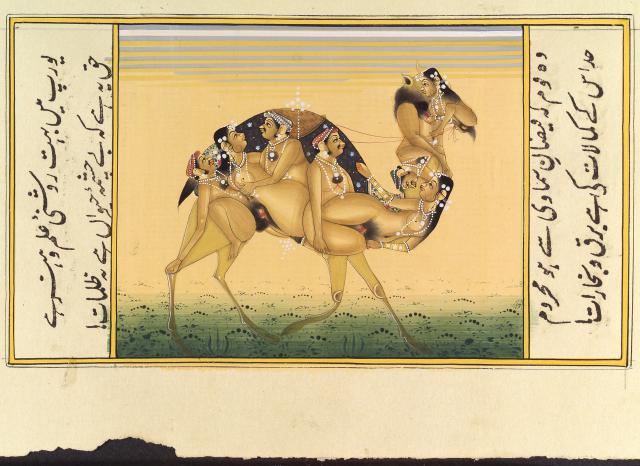


The past was not always as sexually repressed as people believe, something visitors to The Institute of Sexology at the Wellcome Collection are brought to realise.
As visitors enter they are confronted with a cavalcade of cases containing sexual objects, denoting humanity’s relationship with sex over the ages. One can view relics such as a statuette dated pre-664 BC of the Egyptian god Bess – the god of sexual pleasure – to a vibrator from the early 1900s whose box spiritedly notes that it is also known as Veedee, a pun on “Veni, vidi, vici”, or “I came; I saw; I conquered”.
Sex was avidly discussed in the early 1900s, although it was not accepted beyond the bounds of medical textbooks. While we are now more liberated than those in the early 20th century, this exhibition exposes how society has swung from open-minded to prudish across time, as almost universally for ancient cultures there existed a profound connection between sexual symbolism, religion and well-being.
With such provocative objects on show, one would think that they would be the exhibition’s highlight. What is, however, are the stories of the sexologists themselves. The development of sexology as a field of study is represented through the people who challenged prevailing social codes by uncovering the truth about sex. From Sigmund Freud’s contentious psychology to Alfred Kinsey’s study of sexual behaviour, the exhibition explores how sexual research has shaped our attitudes towards sexuality and identity.
While the research has developed, delving deeper into the psychology and physicality of sex, in all ages it was deemed provocative. For instance, Marie Stopes’s book Married Love, an exploration of sexual excitement and contraception, was met with both adulation and outrage in 1918. In a letter displayed at the exhibition one woman declared that “decent English people [were] disgusted at [Stope’s] filthy suggestions” and urged her to “GO BACK HOME”. This was much the case for sexology, praised for its ground-breaking insights by some and repudiated by others.
These scientists shattered the repressed view of sex, bringing us a fraction closer to our liberated selves; nevertheless, one can’t help but feel that all the big questions have not been fully answered. Yes, these great pioneers brought us a huge understanding of the act by poking and prodding at it, presenting us with numbers and statistics, but there are more questions than this small exhibition answers. However, with a ten-month residency and a promise of on-going development, maybe by next year they will be.
Naomi Joseph
The Institute of Sexology is at The Wellcome Collection until 20th September 2015, for further information visit here.















Facebook
Twitter
Instagram
YouTube
RSS