
Maki’la
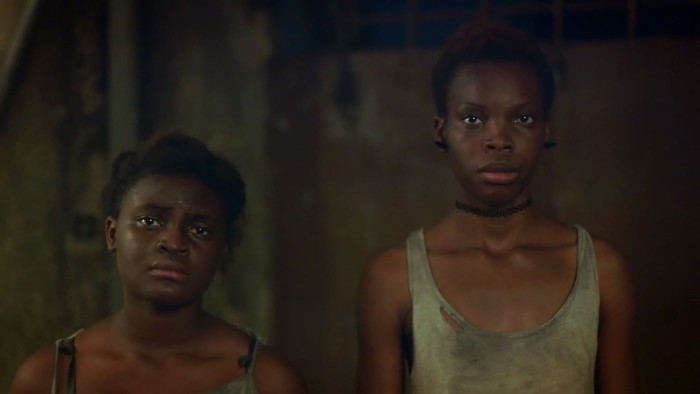


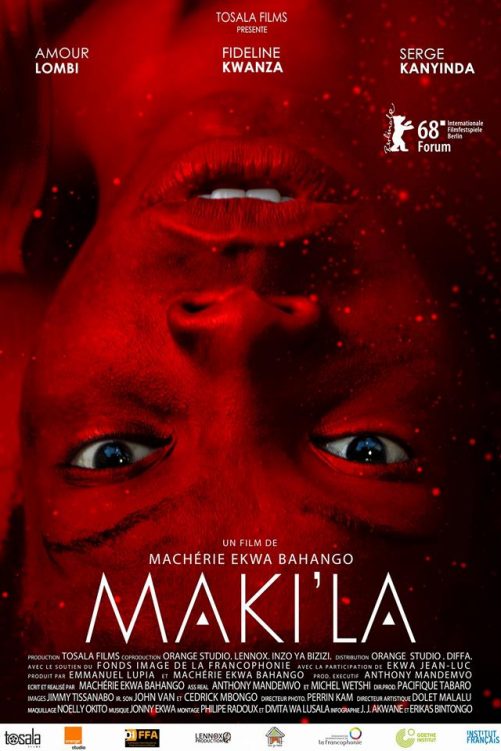
Maki’la is a brutal tale about life on the streets of Kinshasa, Democratic Republic of Congo. The titular heroine (Amour Lombi) has been sleeping rough since her parents died when she was 13. When she meets Acha, a teenage runaway who is caught stealing bread after unsuccessfully begging for money, Maki’la starts teaching her how to endure her newfound homelessness. Life in this world is harsh, and the characters reflect it in the way they relate to each other, but some of the most powerful scenes occur when the barriers are broken down and we see them as young women who are doing what they can to survive.
The camera angles and slightly shaky filming give the illusion of the feature being shot on a smart phone, which makes it feel more real. Some of the close-ups, such as where Maki’la is running in a wedding dress with a huge smile on her face, convey the characters’ emotions to great effect. The music – a mixture of Congolese songs and sinister instrumental tunes – works well with the action on screen.
Director Machérie Ekwa Bahango does not shy away from violence on set, which is important because in this story brutality towards women – such as beatings, verbal abuse and rape – is so common it appears to be normal. It’s not a pleasant thing to see, but it must be seen if the audience is going to comprehend what life is like for some women in 2018.
Maki’la moonlights as a prostitute and one of the most confusing scenes is the one in which she goes to a hotel with a client who apparently wants to turn into a snake and sacrifice her. It’s unclear exactly how real this is – she says he was a sorcerer who offers up poor women in exchange for wealth, yet she somehow manages to get away and leave him for dead – but it does highlight the dangers of working as a prostitute for an uncaring madame in a place where poor women’s lives are not given high importance.
This story isn’t a fuzzy, feel-good romp about empowered women. It is a violent, tragic tale of survival, the depth of human cruelty and the bonds that can form in these harsh circumstances. It is an important tale to tell because it gives a voice to people whom the audience at Berlin’s international film festival will probably never meet or see, and it portrays these characters as complex, strong and capable people doing what they need to survive.
Sophia Moss
Miki’la does not have a UK release date yet.
Read more reviews from our Berlin Film Festival 2018 coverage here.
For further information about the event visit the Berlin Film Festival website here.



















Facebook
Twitter
Instagram
YouTube
RSS