
How sports broadcasting became one of television’s most cinematic spectacles
 16 September 2026
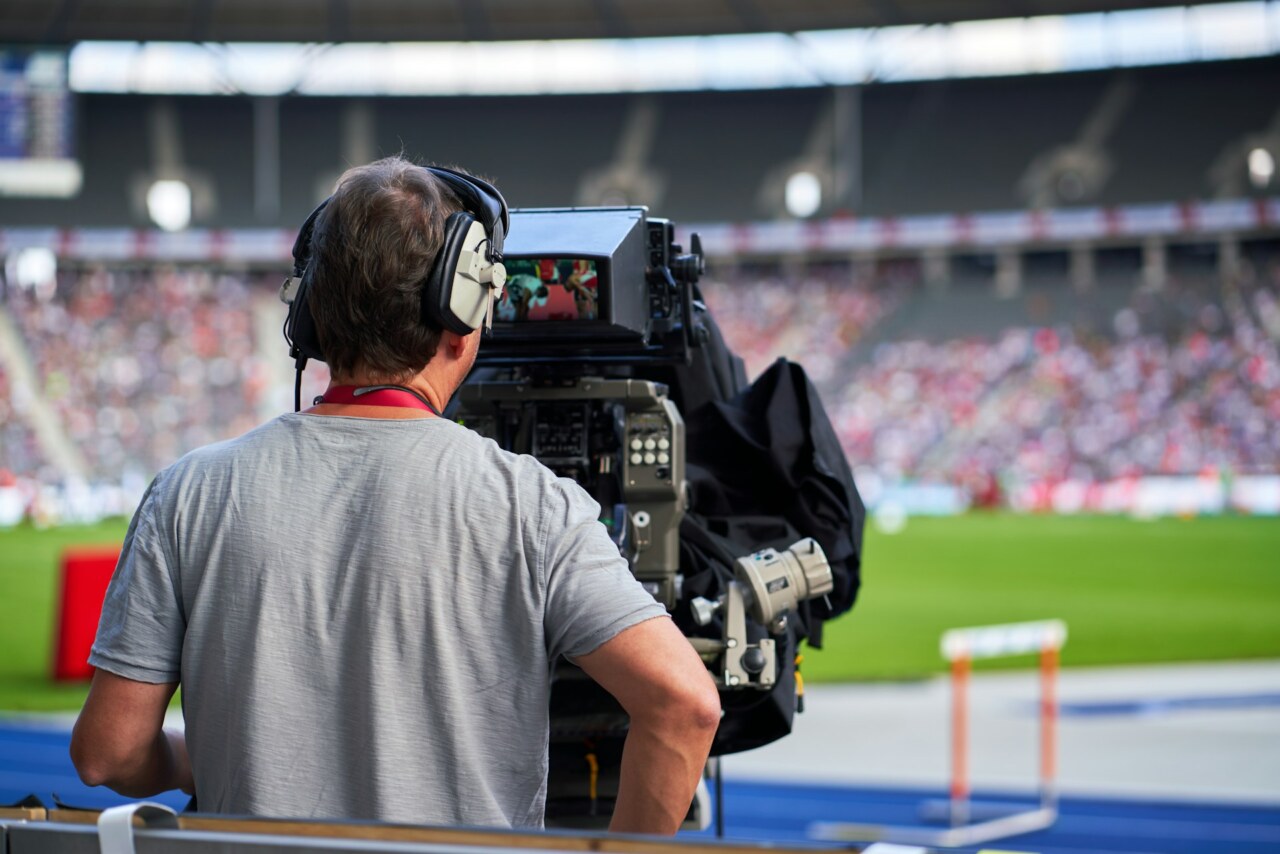
Live sport was once presented with a relatively simple visual grammar: a wide shot of the action, occasional close-ups and a commentator guiding viewers through the decisive moments. Today, watching a major match or race can feel closer to experiencing a meticulously directed film. Sweeping aerial images establish the setting, slow-motion replays reveal barely visible details and cameras follow athletes from the tunnel to the field as though introducing characters in a drama.
This transformation extends beyond the broadcast itself. Viewers now move between television coverage, streaming services, social media and digital entertainment platforms such as Winna, creating a broader screen-based experience around the central event. The match may remain the main attraction, but it now sits within an expanding world of previews, statistics, short-form videos and post-event discussion.
At its best, modern sports broadcasting does more than record who wins. It creates tension, establishes personalities and finds meaning in gestures that might once have disappeared between whistles. The result is a form of live television that increasingly borrows its techniques from cinema.
From observation to visual storytelling
The fundamental challenge of filming sport is unpredictability. Unlike a scripted production, directors cannot request another take or ask an athlete to repeat a dramatic moment. Every decision must be made in real time, often while several important stories are unfolding at once.
Advances in camera technology have given production teams far more ways to meet that challenge. Cable-mounted cameras sweep above stadiums, compact units capture movement from inside vehicles and high-frame-rate equipment slows an instant without reducing it to a blur. Even familiar images, such as a footballer walking towards the penalty spot or a tennis player preparing to serve, acquire fresh dramatic weight when framed closely.
Yet technology alone does not make a broadcast cinematic. The crucial element is selection. A director may cut from a player’s expression to an anxious supporter, then to a manager watching from the touchline. In a matter of seconds, those images establish three perspectives on the same event. No dialogue is required; the sequence tells its own story.
The athlete as a central character
Cinema and television depend on compelling characters, and sports coverage increasingly introduces athletes in similar terms. Pre-match packages provide personal histories, archive footage and interviews designed to explain what is at stake beyond the result.
A final is no longer presented simply as two opponents competing for a trophy. It may also be framed as a veteran pursuing one last title, a newcomer confronting sudden fame or a team attempting to recover from an earlier defeat. These narratives help occasional viewers engage with events even when they have limited knowledge of the sport.
There is a delicate balance involved. A clear storyline can make a contest more emotionally accessible, but reality rarely follows a convenient script. The most effective broadcasts allow the live action to complicate the narrative rather than forcing every moment into a predetermined tale of redemption, rivalry or destiny.
Why the second screen matters
Sports television no longer commands the viewer’s attention in isolation. Phones and tablets have become companion screens, used to check team information, replay a disputed incident or follow reactions from other viewers.
This activity can easily become distracting, but it also reflects a more participatory relationship with television. Audiences are not merely receiving a finished programme. They are discussing it, questioning it and building their own collection of clips, statistics and commentary around it.
That wider digital environment also places editorial material beside commercial messaging. A viewer searching for analysis may encounter broadcaster highlights, supporter channels, merchandise and promotions described with terms such as sport freebet. For media companies, the challenge is to preserve a coherent viewing experience while audiences move rapidly between very different kinds of content.
Sound creates the scale of the spectacle
The cinematic quality of modern sports broadcasting is not purely visual. Sound design shapes the atmosphere just as decisively.
Crowd noise gives an event its scale, while quieter details provide intimacy: the impact of a racket, the instructions exchanged between teammates or the measured breathing of an athlete before a decisive attempt. Broadcasters must decide how much of this natural sound to preserve beneath commentary.
Silence can be equally powerful. When commentators pause before a penalty, serve or finishing line, the absence of explanation allows tension to build. It is a technique familiar from dramatic filmmaking, where restraint often communicates more than a continuous musical score or stream of dialogue.
Music is generally reserved for introductions, montages and closing sequences. Used carefully, it gives a broadcast rhythm and helps separate analysis from live competition. Used too heavily, it can make authentic emotion feel manufactured.
Replays have become part of the drama
Slow-motion replay was introduced to help viewers understand what had happened. It remains an essential analytical tool, particularly when officials and audiences need to examine a rapid or controversial incident.
However, replays now serve an emotional purpose as well. They linger on an athlete’s reaction, isolate a supporter in the crowd or reveal the precise instant when confidence turns into disbelief. Familiar events gain new meaning when seen from another angle or at a different speed.
This creates an unusual relationship with time. Live sport moves forward relentlessly, but television can briefly interrupt that momentum, revisit the past and then return viewers to the present. The technique resembles film editing, except the editor is working while the story continues to unfold.
There are limits. Too many replays can obscure the live action, while repeated images of injury or personal distress risk becoming intrusive. The best production teams understand that access does not automatically justify exposure.
Documentary techniques are entering live coverage
The exchange between sport and cinema works in both directions. Documentaries have long used archive broadcasts to reconstruct famous events, but live coverage now adopts documentary methods of its own.
Cameras may follow teams arriving at a venue, enter changing areas before competition or remain with athletes after the official action has ended. These images create a sense of privileged access and reveal the routines surrounding public performance.
The approach is especially effective during tournaments and multi-stage events. Instead of treating each fixture as a separate programme, broadcasters can develop storylines over several days or weeks. Smaller moments accumulate: an injury managed in private, a tactical adjustment, an unexpected friendship or the gradual pressure of expectation.
This continuity turns a sporting calendar into episodic television. Viewers return not only to discover the next result, but also to see how the people at the centre of the story respond.
Can sports broadcasting become too cinematic?
The desire to create spectacle carries risks. Dramatic editing, persistent music and simplified character arcs can make coverage feel less truthful. Sport is compelling precisely because its outcome is uncertain and its participants do not exist solely as heroes or villains.
There is also a difference between revealing emotion and exploiting it. A camera trained on a devastated athlete or family member may capture a defining image, but it can also intrude upon a vulnerable moment. As access increases, editorial judgement becomes more important.
The strongest broadcasts use cinematic techniques to clarify rather than exaggerate. They help audiences see the speed of an action, understand the pressure of a situation or notice a human detail that would otherwise have been missed. They do not need to manufacture drama because the event already contains it.
The future of the live screen
Emerging technology will continue to change how sport is presented. Personalised feeds could allow viewers to select camera angles, follow individual competitors or choose between technical and conversational commentary. Immersive formats may provide a stronger sense of physical presence, while real-time graphics will offer increasingly detailed information.
Nevertheless, the essential task will remain unchanged. Sports broadcasting must locate the story within an event that nobody can fully predict.
That uncertainty is what separates it from conventional drama and makes it such a distinctive form of television. Cinema can construct the perfect final act; live sport must wait to discover whether one will happen. Modern broadcasters have simply become better at recognising the characters, images and silences that make the wait feel unforgettable.
The editorial unit
























Facebook
Twitter
Instagram
YouTube
RSS