
Brüder Der Nacht (Brothers of the Night)
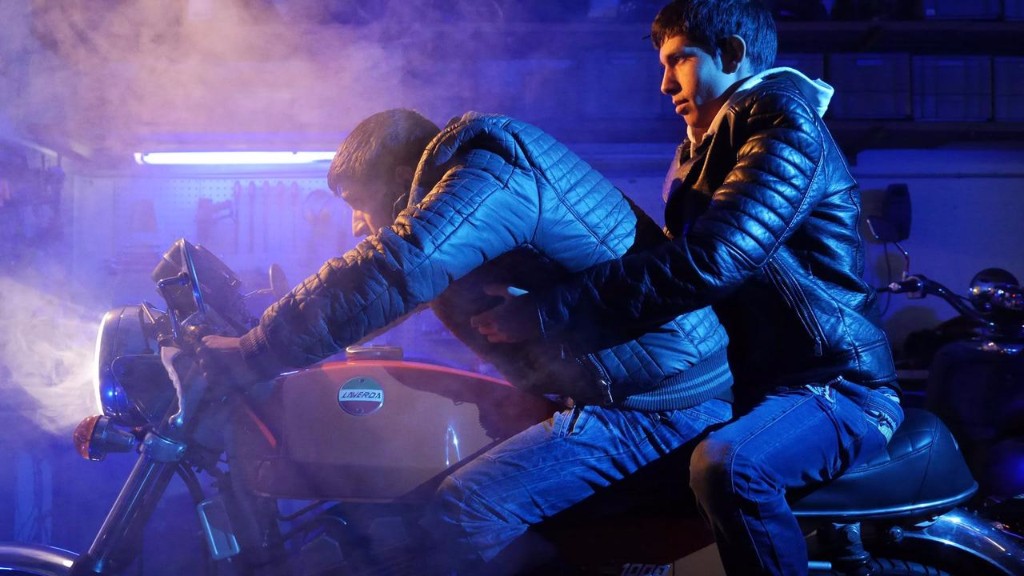


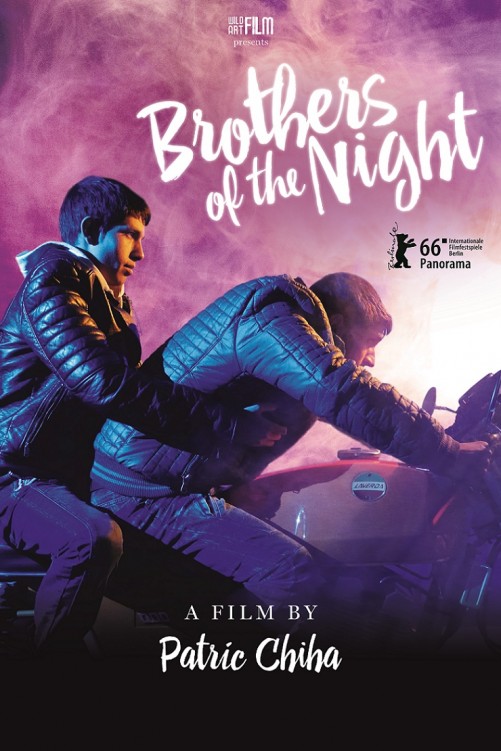
Brüder Der Nacht (Brothers of the Night) opens with a long sequence establishing the setting of the film – the Wien river in Vienna. The rusting, metal ships chugging up and down, combined with the industrial landscape, immediately suggest the desolate, roughness of the story. This isn’t about lovers walking along a river bank in Austria, this is a different side to the famously beautiful city. The music playing in the background is Mahler’s fifth symphony. The beauty of the piece contrasts vividly with the images we’re seeing.
Director Patric Chiha tells the story of a group of young Bulgarian Roma men, who work as prostitutes in Vienna. Their lives should be painful, fraught with memories of their families at home and their inability to make money any other way. Yet their camaraderie and the support they have for each other creates a space in which they can exist happily..
The film’s composition is split in style: half is a dramatisation, half is documentary. The way the narrative flicks backwards and forwards between styles reinforces the seriousness of the subject matter. Interviews explain in shockingly apathetic terms what the characters go through, whilst the dramatisation explores the emotional depth and colour of their experiences.
The film comes across in a remarkably light-hearted manner, considering its narrative. The fraternity shared by the young men creates a sharp juxtaposition from the grittiness and unpredictability of their lives. Most travelled to Austria to find work in an attempt to support their family, one man explains (in perfect German, five years after he moved to the country) that he was fired from his first job because he couldn’t speak the language yet. He began begging and prostituting himself shortly afterwards.
The documentary never tries to preach any kind of ethical message; there’s no overarching voice demonising or elevating the world’s oldest profession here – even the discussions between the men about hustling their customers are presented without judgement. The film needs no all-encompassing moral overtones, it’s simply presenting a stark image of life and of people who have stumbled into something they’d never imagined themselves doing. They are able to get through it because of the bonds they’ve created, much like the rest of us.
Amelia Hopkins
Brüder der Nacht does not have a UK release date yet.
Read more of our reviews and interviews from the festival here.
For further information about Berlin Film Festival 2016 visit here.





















Facebook
Twitter
Instagram
YouTube
RSS