
Murillo: The Self Portraits at the National Gallery


Bartolomé Esteban Murillo is not particularly well-known today, but in his prime he was as famous as his contemporary, Velázquez. Where he is recognised among contemporary circles, it is for his religious scenes and his cheeky and sympathetic depictions of street urchins, not for his portraits.
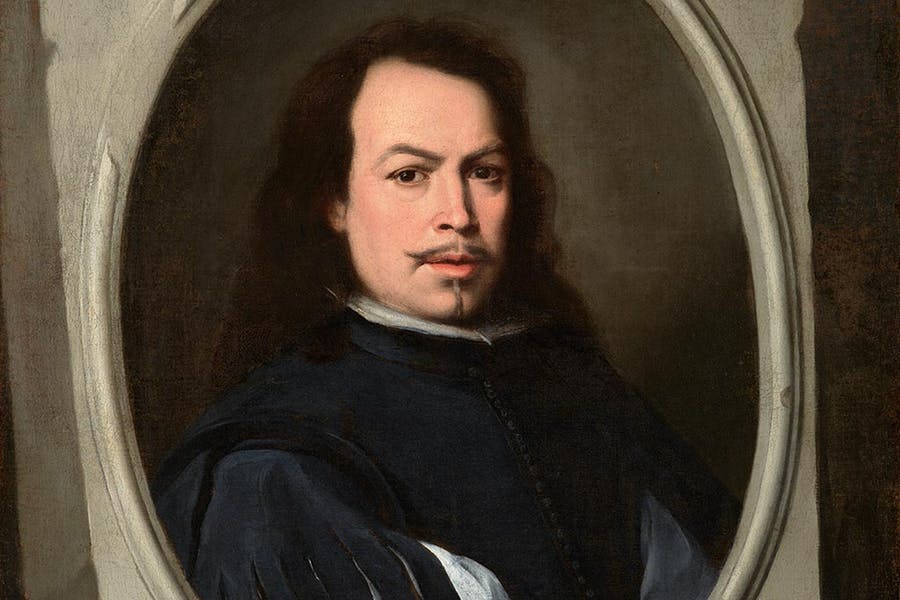
One such street urchin features in the new one-room exhibition of Murillo’s work at the National Gallery, and it is distinctly charming. A sharp contrast, in fact, to the sober, dark portraits that otherwise line the walls. Most of these can be quickly passed over, serving merely as context for the main event: the only two known self-portraits by Murillo, painted around 20 years apart at two very different points in the artist’s life, and reunited for the first time.
What the works have in common is their use of a trompe-l’oeil stone frame, making each a painting-within-a-painting. In the earlier portrait, the stone frame appears chipped, as if the young artist were painting for himself a protective time capsule, or perhaps – more disturbingly – a pre-emptive tomb. The deeply mediated effect is strange and slightly unsettling.
The later painting, on the other hand, is a more confident work, in which Murillo alludes openly to his profession as an artist. The stone frame is also featured here, but it is more architectural than sepulchral. It also features a trick of its own: Murillo’s hand extends beyond the stone frame, subtly reaching out towards the viewer to demonstrate his mastery of his craft.
This is not a foundation-shaking exhibition, but it is a neat example of how an artist’s practice and self-image can change over the course of his career, and offers a previously unseen sign to Murillo’s oeuvre.
Anna Souter
Murillo: The Self Portraits is at the National Gallery from 28th February until 21st May 2018. For further information visit the gallery’s website here.
















Facebook
Twitter
Instagram
YouTube
RSS