
Refik Anadol, Echoes of the Earth: Living Archive at Serpentine North
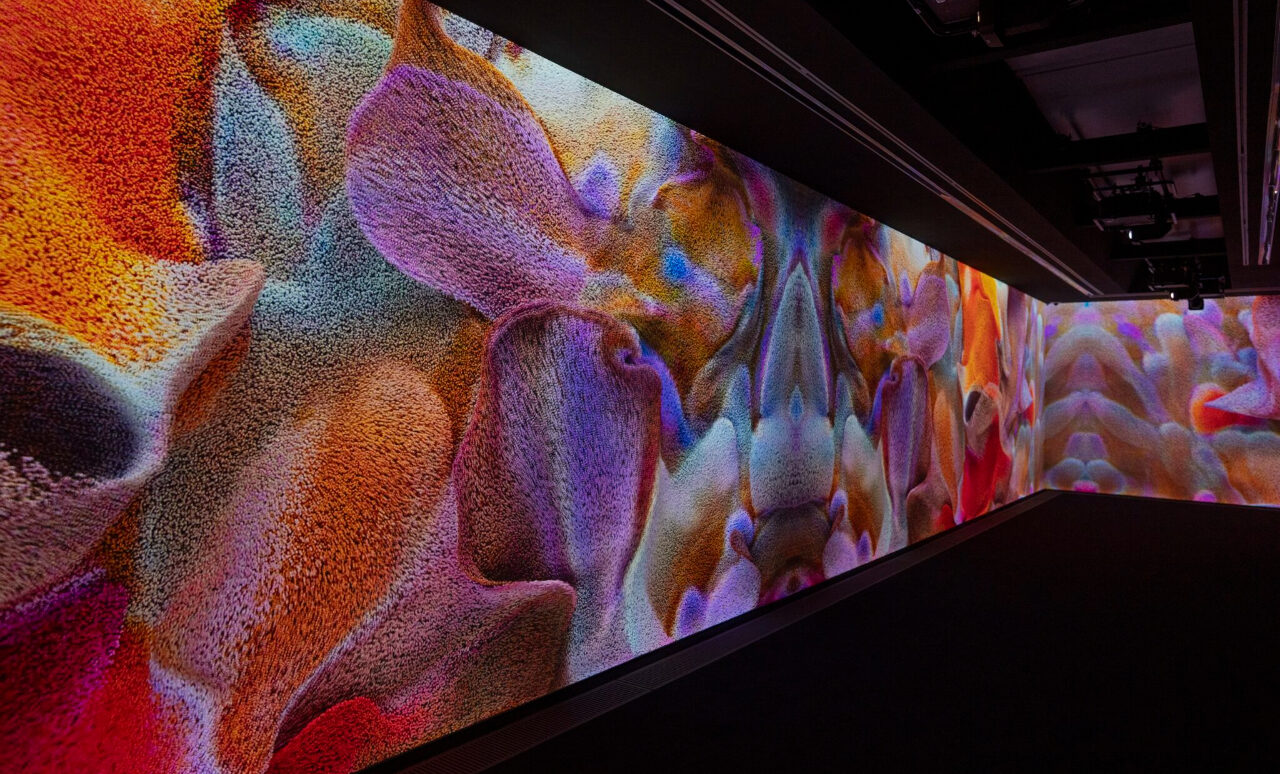


Refik Anadol is an Istanbul-born, LA-based artist, technologist and activist who utilises AI as a collaborator on his projects. He specialises in large-scale public installations and has been working with AI models since 2008, long before it emerged as vividly in the public imagination as it has in the last few years. This free show uses the walls of the Serpentine North gallery as canvases for displays which intersect visual art, science and cutting-edge technology to hypnotic effect. It is his first major solo exhibition at a UK institution and uses sound, visuals and scent to draw attention to the beauty and complexity of nature.
“At the moment, AI research is focusing on human reasoning and how to mimic it, but to me, nature needs a different focus that is very different to our logic,” the artist says, which is an interesting point.
Living Archive: Large Nature Model is a new commission adapted especially for Serpentine North. The AI generates images inspired by data of flora, fauna and fungi collected from 16 rainforests globally, using technology such as LiDAR and photogrammetry. The AI has been trained on literally billions of images of nature to then be set free to use its “imagination”. What emerges are colourful, psychedelic patterns with strange textures and creatures that morph from bear-like to elephantine; parrot-esque birds whose beaks grow and diminish like avian Pinocchios. Visitors are invited to relax on the bean bags and enjoy the immersive experience.
Also presented is Artificial Realities: Coral Reefs, which highlights the importance of reefs in oceanic ecosystems and Artificial Realities: Rainforests, Anadol’s most recent work that uses his Large Nature Model open-source AI to create the longest continuous sequence of generative AI visualisation to date. Intellectually, it’s interesting in the sense of, “Look at what this technology is able to do, look how it views our world,” but it’s an exercise, not art filtered through a human consciousness.
It’s an absorbing show. However, it stumbles into the realm of hubris. AI isn’t yet going to equal the splendour of nature, what you are seeing are images like nature, nature-adjacent sequences, which might be kind of cool but are also just a little bit creepy, especially in the way they move. AI hasn’t mastered smooth transitions so the “animals” judder, sometimes they have wings, then they immediately don’t. They uncannily teeter through their existence and it very much brings awareness to the fact that this is created by a non-human “consciousness”, something completely other. It’s interesting, but is it worth the large carbon footprint that AI produces to draw attention to nature? Doesn’t nature speak well enough for itself?
Jessica Wall
Photo: Hugo Glendinning/Courtesy of Refik Anadol Studio and Serpentine
Refik Anadol, Echoes of the Earth: Living Archive is at Serpentine North from 16th February until 7th April 2024. For further information visit the exhibition’s website here.













Facebook
Twitter
Instagram
YouTube
RSS