
Why GeeGee collection begins every design journey beyond the reach of algorithms
 16 September 2026
The fashion machine has acquired a new intern. It does not sleep, eat, panic before a deadline, or demand a window seat at Paris Fashion Week. Artificial intelligence answers to its name, and it happily serves up a thousand “disruptive” dress concepts before breakfast.
The trouble is that fashion already has enough clothes with the emotional depth of a loading screen.
Rather than chase automation, instant trend forecasts, and algorithmic crystal balls, GeeGee Collection takes the unfashionably radical position that a garment should begin with a person. It does not start with a prompt, a spreadsheet, or a data point scraped from the collective anxieties of strangers doom-scrolling in bed.
Human beings make the first move.
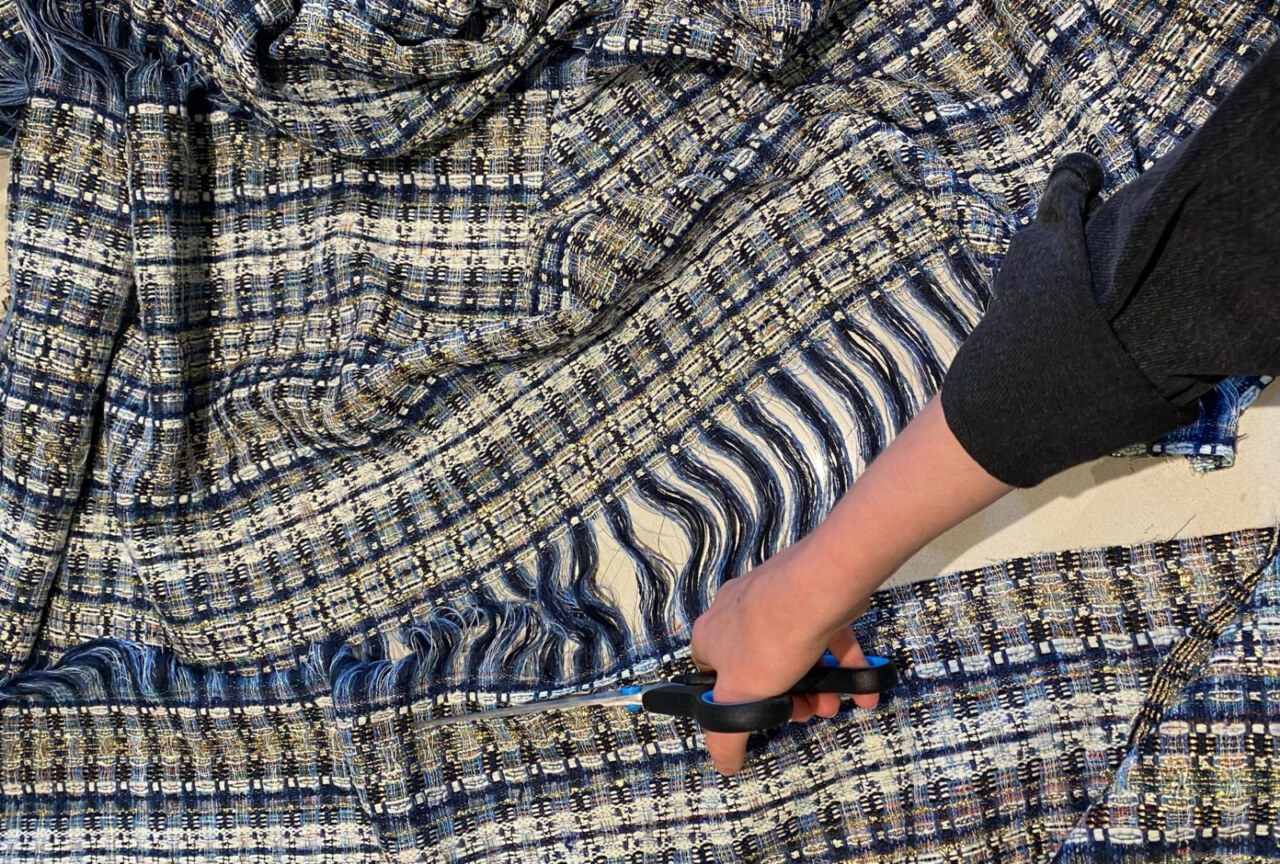
Georgia Crossley’s London label works with hand-designed and handwoven textiles produced by skilled artisans in Italy and France, before craftspeople assemble pieces in the UK and EU. The process moves deliberately and resists the mass-production reflex that has turned too much fashion into a fast-moving landfill with better lighting.
The algorithm has no calluses
Algorithms identify patterns. They calculate which shade of butter yellow may sweep social media. They predict the comeback of a hemline with the confidence of a pundit who has misplaced the polling data.
Yet they cannot weave.
They cannot feel the slight resistance of a thread. They cannot judge a fabric’s character by the way it catches the light or falls against the skin. They cannot inherit a technique from a parent or grandparent and carry it forward through years of practice. They possess no calluses and no memory.
For that reason, the GeeGee proposition carries more force than the usual luxury sermon about exclusivity. The brand sells more than scarcity. It values the labour and knowledge that give scarcity meaning. Its fabrics do not serve as background scenery for an influencer’s mirror selfie. They begin the story.
“The real differentiator is obsession, clarity of mission, and consistency until your people find you,” Georgia has said. Her words offer a useful corrective to an industry that often confuses velocity with vision.
Slow is not a bug
Hand weaving moves more slowly than industrial manufacturing because people move more slowly than machines. Biology explains that fact, not failure.
Heritage crafts also cost more to sustain and prove harder to scale, which makes them inconvenient in a marketplace trained to worship frictionless growth. Still, inconvenience sometimes marks the price of keeping something worth having alive. If every worthwhile human activity had to pass a venture-capital test, Shakespeare would have faced pressure to pivot into branded content.
GeeGee Collection’s use of handwoven textiles gives artisans a commercial reason to continue practising their craft. Cultural preservation cannot survive on applause alone. It needs work, customers, and a market that recognises the difference between a handmade textile and a factory’s imitation of one. Research on traditional weaving reaches the same unsentimental conclusion: skills endure when the people who possess them can earn a living from them.
Consequently, buying a carefully made garment becomes more than an aesthetic choice. It becomes a vote for continuity.
Luxury without the logo shouting
For too long, luxury has confused itself with noise: bigger logos, louder launches, faster drops, and the frantic pursuit of whatever trends between Tuesday lunch and Thursday panic. GeeGee Collection argues for a different definition. Luxury means time. Luxury means skill. Luxury shows the evidence of a human hand where a machine could produce a cheaper substitute.
Its small-run, non-seasonal model does not indulge in nostalgia or offer a sepia-toned fantasy of fashion before Wi-Fi. Instead, it answers modern exhaustion with something tangible. Consumers, saturated with AI-generated images and disposable clothing, seek more than objects. They seek proof that someone made an item with the intention.
That desire makes perfect sense. Digital culture lets almost anything be copied in seconds, so originality has become tactile. It has texture. It may contain slight variations that no quality-control algorithm would celebrate, yet a discerning wearer may recognise those variations as the point.
The human advantage
Georgia’s wager rests on a simple belief: fashion’s future will not belong solely to firms that produce the most clothes at the greatest speed. Brands willing to show how and why they make something may claim a place there, too.
That belief does not reject technology. It rejects amnesia.
The label does not try to beat the algorithm at its own game. It chooses a better game altogether, one where garments carry the imprint of the people behind them and where luxury does not arrive overnight.
Machines may generate the next trend. They still cannot stitch a soul into it.
Ali Brooklyn
Photo Courtesy of Georgia Crossley





















Facebook
Twitter
Instagram
YouTube
RSS