David Maljkovic at Sprüth Magers London Gallery
Original and surprising.


- 1
- 2
Duran Duran at the O2 Arena
Selina Begum
- 3
George Michael: The Faith Tour
Antonia Georgiou
- 4
- 5
Merry Christmas Aubrey Flint
Andrew Murray



Meet Jessica Rosval, the world’s best female chef
Food & Travel Desk
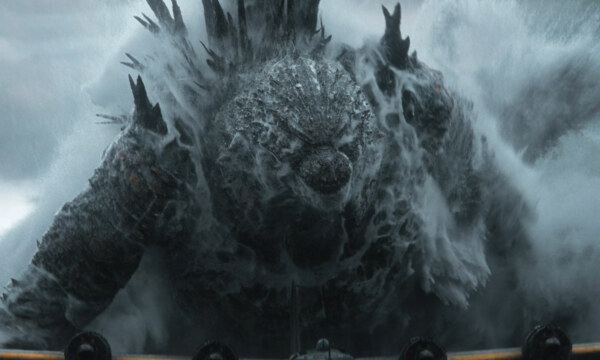
Godzilla Minus Zero
Christopher Connor
Players Social launches free challenge zone The Box in Spitalfields
Food & Travel Desk




I Play Rocky
Umar Ali
Think of England
Antonia Georgiou
Stereophonics celebrate 30 years with new greatest hits album Tune!
The editorial unit





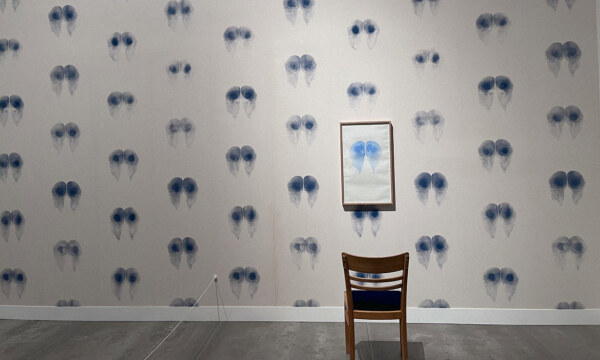
David Maljkovic’s works have been exhibited all over the world, attracting interest mainly for their deconstruction of common themes. The original, and sometimes surprising, approach in the arrangement of the pieces creates a curious atmosphere, and leaves the viewer searching for connections.
In his London exhibition at the Sprüth Magers gallery, the bearings are muddled upon realising that the walls bear life-size images of projector screens. These pictures were taken at his Tokyo exhibition, and actually serve to display the images of a projector placed at the centre of the room. As the space is entered, the atmosphere becomes surreal. The projector casts footage of a brief black-and-white film sequence, called Out of Projection, showing a group of people walking and interacting on a car-testing track. The video’s grainy quality adds an eerie element to the experience. The lights in the gallery are dimmed, and the only sound pervading the room is the quiet whirring of the film projector. On the other side are two collages, entitled New Reproductions, bearing torn images and large blank spaces.
The works are purposefully taken out of context, to such an extent that they become completely open to interpretation. The general topic, however, is the unreliability of the methods used to record memories. Film and photography give a false sense of capturing a memory faithfully; in reality, these mediums provide warped renditions of an experience. The unreliability actually manifests on two levels: one drawback is the physical fragility of objects, such as decomposing photographs or damaged films. The second limitation relates to interpretation, or rather, how a future peruser of the material may read, and perhaps misinterpret what they see, using the imagination to attribute new data to the image and to the memory itself.
The collages also suggest that information can be manipulated. Scraps of photographs are combined together, but it is unclear what they may have looked like in their integral form. Once distorted into a new shape, the original image acquires a different set of connotations. These photographs move away from what they once represented, becoming loose limbs forming new abstract figures.
Not only do the images and memories fuse, but through the addition of the Tokyo pictures, even the exhibitions themselves overlap. Over time, recollections wither and merge into one another, and Maljkovic seeks to capture this volatility by cutting and pasting fragments of information, and offering them as stimuli on which the viewers can develop their own interpretations of the theme.
Mersa Auda
David Maljkovic is at Sprüth Magers London Gallery from 10th April until 9th May 2015, for further information visit here.