
Can image recognition take translation apps to the next level?
 26 June 2015
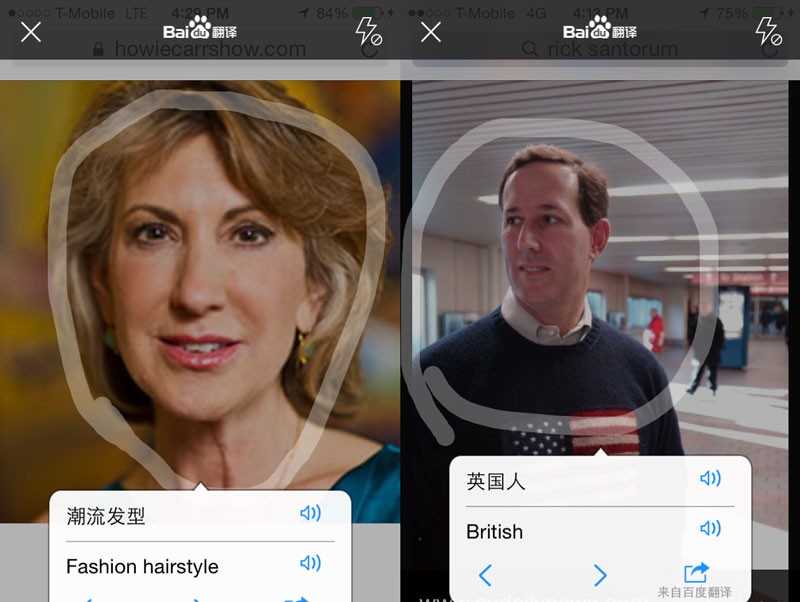
Apps like Baidu have employed image recognition technology to translate camera photos into your chosen language. Often this has been to hilarious effect as the tech is not yet sophisticated enough to avoid major errors. But, if this technology is fine tuned it could open new doors for translation apps.
How useful can this technology be?
There are two main ways in which image recognition can be used in the context of translation. One is to to capture images of text, recognise the text and translate it, this is known as optical character recognition (OCR). The other is to recognise objects, or even actions, and translate them into a chosen language.
This is an incredibly useful tool for holidaymakers wishing for simple translations. By translating signs or menus Google Translate’s OCR function can help tourists navigate a new land and language. Apps like Baiko could be used, once the technology advances, to identify objects alien to a person outside of their country. This is useful but it is only a small stretch from the translation technology we’re already using regularly.
Can this technology be used for business translation?
It’s safe to assume that image recognition technology would not be safe for high-quality business translation. By incorporating human corrections into the machine translation process through an interactive framework, it is possible to deliver accurate and high-quality translations within a shorter period of time.
Machines are useful for efficiency but the human touch is certainly needed. When it comes to the intricacies of a quality translation only a human eye can identify important factors like localisation. But image recognition translation technology could have other uses for business.
Can image recognition make translation apps an advertising tool?
Image recognition technology has been the focus of much new advertising technology, and translation apps can’t be far off joining the throng. As more companies engage in localisation and interactive advertising, these apps could be use to take this to the next level, helping brands speak a global language.
Advertising ideas based on image recognition are generating millions in investment. It makes sense for translation apps to adapt their usability as image recognition technology advances.
A passerby could use a translation app to take a photo of a billboard, translating the ad but also linking to other material available in a variety of languages. This creates a dynamic advertising campaign that could be beneficial in tourist destinations or multilingual cities. If businesses work alongside these apps it can benefit the company greatly – but also the app providers. Shazam has already jumped on the bandwagon suggesting it won’t be long til translation apps do the same.
Translation apps will also have their downsides. They’re largely one dimensional and are often only used on the odd occasion. However if these apps engage with brands and advertising they can become a more multidimensional platform allowing users to both utilise simple translation tools and also engage with brands and business on a variety of levels.
The editorial unit























Facebook
Twitter
Instagram
YouTube
RSS