
Schwitters in Britain at the Tate

 29 January 2013
Here was a rare chance to see much of the late work of Kurt Schwitters, the influential German artist who fled Germany during the war and ended his days in Britain.
Although the exhibition is focused on his work from the ‘40s (he died in 1948); some of his earlier work is included to show context and progression. Schwitters was never a member of artist collectives or groups, but he exhibited alongside artists of the Dada movement and was a champion of the idea of Merz, or everyday materials being used in art.
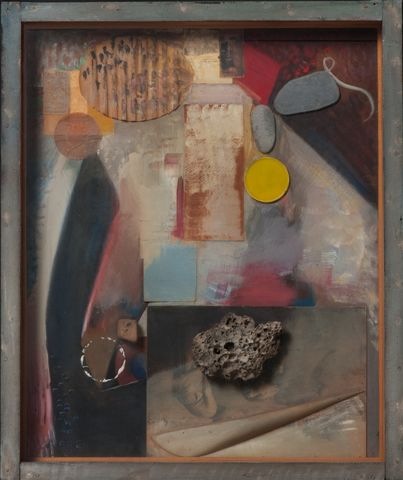
Schwitters was a prolific and driven artist who worked in many different media, and crucially, combined them – his collage work incorporates natural materials, found objects and text and scraps from publications.
He considered such materials and objects equal to paint within compositions, and so colour, shape and form all combine beautifully. He could make art out of anything – but not just any art; he utilised whatever passed through his hands to serve as valid material for his acute vision and sense of visual balance.
He was also an excellent figurative painter, as evidenced by portraits and landscapes; while painted hand-held sculptures are evidence of his inventive mind, it is his collage work he is best known for.
Sadly, only photographs and remnants remain from installed structures, the large scale, sculptural rooms, Merz barns, which he made wherever he settled.
In Schwitters’ body of work you can see just about every idea in art of the twentieth century, but above all, an individual sense of aesthetic and beauty which is simply inspiring.
A personal view might be that the image Tate Britain has chosen for the exhibition poster doesn’t really represent Schwitters’ work: it is an out of context detail of collage which makes his work appear much more random than the pieces are. In their entirety they are all about exquisite precision and overall balanced composition.
The exhibition ends with two contemporary artist projects which are in some ways inspired by Schwitters’ ideals – perhaps to questionable success.
Eleanor MacFarlane
Schwitters in Britain is at Tate Britain from 30th January to 12th May 2013. For further information visit the gallery’s website here.

















Facebook
Twitter
Instagram
YouTube
RSS