
Romeo and Juliet at the Barbican: A current and relevant retelling
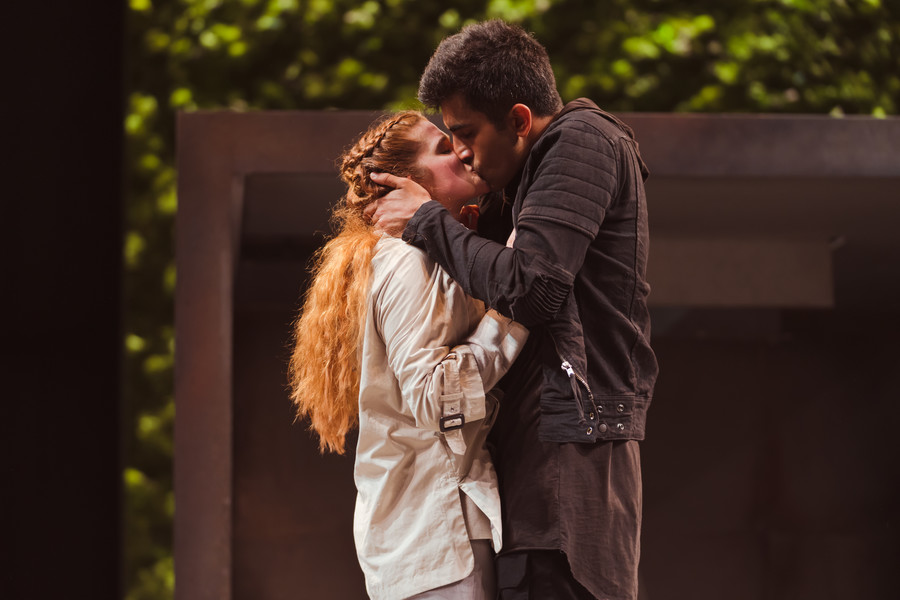



Retelling Shakespeare’s most celebrated work, and finding new elements in it for the audience to ponder, is no easy feat. The Royal Shakespeare Company has updated Romeo and Juliet with the intent of creating characters that young people can identify with. Thus, the play begins with a crew of hoodie-clad teenagers introducing the “two households, both alike dignity” whose feud has lethal consequences on the younger generation of the families.
The text is unchanged, but the costumes and attitudes of the characters succeed, for the most part, in making the action feel current and relevant. The producers have analysed the story in depth and found social parallels between then and now that they deemed worthy of exploration. The principal theme they focus on is violence as the driver of (too) many social exchanges, and knife crime as one of the worrying phenomena emerging from this aggressive approach to finding a place in the world. The other issue explored by director Erica Whyman is gender identity. Mercutio becomes a female character, a choice that adds an interesting layer in the friendship dynamic with Romeo, and the challenging of Tybalt.
The first scenes do not do justice to the creative team’s intentions of revolutionising the context while maintaining Shakespeare’s rich storytelling. The beginning comes across as rushed, fragmentary and as if just going through the motions of modernising the play rather than delving into the story. There is no sense of background (figuratively and literally) as the characters seem detached from any place or personal history, and the bare stage does nothing to create an atmosphere or set a foundation for the events. It takes a while for the play to warm up, but Whyman’s Romeo & Juliet does eventually become engaging. The first scene that really makes one connect with the characters is the infamous balcony exchange between the two protagonists. It is also the first time that the dialogue is long enough to allow the audience to get into the action and sympathise with the characters.
The production suffers from constant ups and downs, going from brilliant and solid to underwhelming. Throughout the play, scenes involving the main characters are far more powerful than the ensembles, which are quite dispersive. Oddly, the energy dips every time there is a group scene, even if it is a party or a salient moment. Bally Gill and Karen Fishwick shine as the leading duo and they are believable as two stubborn yet sensitive teenagers boldly following their passion. While imperfect, the production makes for a great introduction to Shakespeare for a younger audience, and it has enough dynamism and humour (injected with great skill) to please all theatre-goers.
Mersa Auda
Photo: Topher McGrillis © RSC
Romeo and Juliet is at the Barbican from 2nd November until 19th January 2019. For further information or to book visit the theatre’s website here.















Facebook
Twitter
Instagram
YouTube
RSS