
Henry Moore: Monumental Nature at Kew Gardens
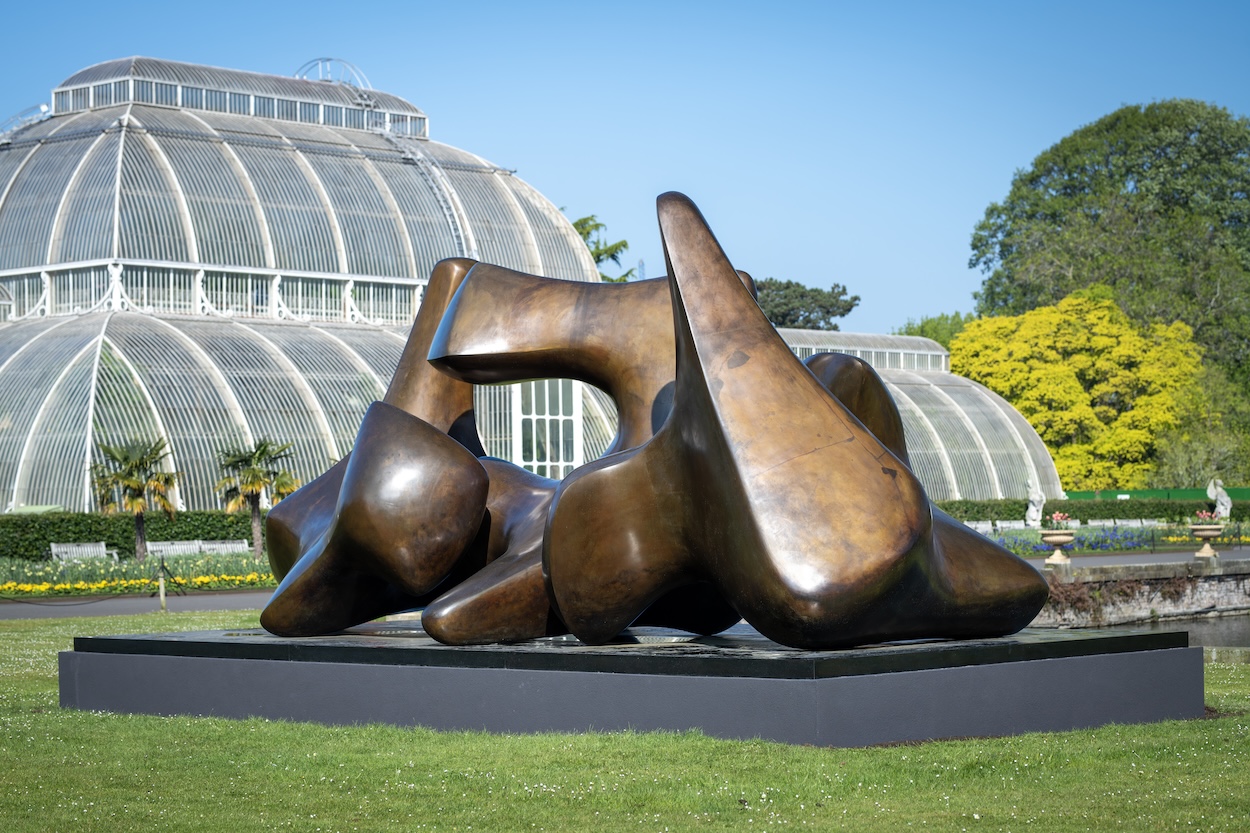


Voluminous and sinuous, 30 sculptures – along with 90 smaller and rarely seen works – by Henry Moore are currently on display at Kew Gardens, and the result is grandiose and astounding. The last time an exhibition of similar scale was staged was in 2007. This new show, though, is the artist’s largest and most comprehensive survey ever mounted.
Moore’s oeuvre feels primordial and complex at the same time. Their magnetic quality stems from both their deeply human origins – whether made as an exploration of human emotions or of our connection to the world around us – and the abstract, yet relatable, evolution of their forms. The location could hardly be more fitting: the vast, richly planted grounds at Kew Gardens complement these monumental pieces, if not enhance them further. Moore, after all, conceived his works in relation to the environments in which they would be displayed. The relationship extends beyond a simple blending into the landscape. It is one of symbiotic kinship.
Visitors are encouraged to engage with the statues, their surroundings and the multitude of meanings that emerge simply by walking around these colossal pieces. Whether following the suggested trail, joining a guided tour or encountering them during a leisurely walk through the gardens, the power of the experience is undeniable.
The selection showcases a variety of themes as well as techniques explored by the artist. Works ranging from Family Group 1948-49 to Reclining Woman: Elbow 1981 reflect his tender approach to maternal protection and the female form. Particularly striking is the placement of Large Two Forms 1969 on the Syon Outlook, aligned with the view along the Syon Vista towards Double Oval 1966, positioned in front of the Palm House.
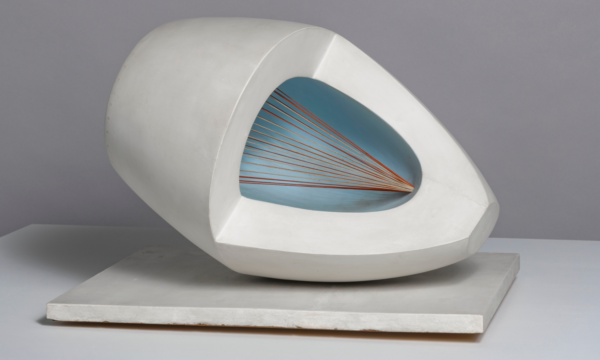
The fluid interplay of geometric forms can be traced from smaller models, such as the Working Model for Spindle Piece 1968-69, delicately lit inside one of the side glasshouses of the Temperate House, to its larger-scale counterpart, Large Spindle Piece 1968, installed beside the Orangery.
The shift towards more vertically oriented sculptures is evident in Upright Motive No 5, 1955-56, Upright Motive No 7 1955-56, Upright Motive No 9 1979 – intended for the Olivetti building in Milan and inspired by North American totem poles. By contrast, the reclining figure of the Goslar Warrior 1973-74 draws on influences from Ancient Greek art. The silhouettes of Large Standing Figure: Knife Edge 1961 and Locking Piece 1962-63 recall the natural motifs of their origin.
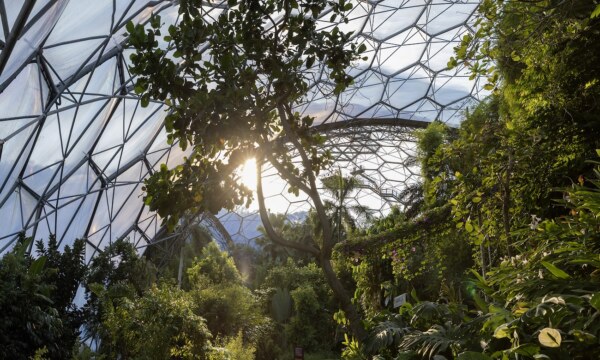
Visitors can move around – and in some cases even inside – the sculptures, observing how the spatula and point have shaped the material; how a bluish patina on the bronze bears witness to the work’s installation history; and how its alignment with surrounding trees and foliage, whether cast in shadow, sided or backed by temples and glasshouses, alters the way we perceive and respond to it. A quiet dialogue emerges with every turn and every glance.
The connection with the landscape, however, is not limited to the placement of the finished works. Indeed, their positioning is rooted in the very origins of the ideas behind them. The outdoor installations are complemented by the exhibition inside the Shirley Sherwood Gallery, where drawings, etchings and smaller models are displayed, bearing witness to the painstaking work behind each piece and to the constant inspiration Moore drew from the natural world, whether animal bones, seeds or caves. The works shown here also highlight his practice as a wood carver. The plaster cast Upright Internal / External Form 1952-53 echoes the bronze Large Interior Form 1953-54, situated right beyond Victoria Gate, creating a fascinating referral within the collection itself.
At a time when everything seems increasingly fragmented, the silent magnitude of Henry Moore’s oeuvre at Kew Gardens offers a profound sense of calm and interconnectedness, which is, in its own way, overwhelming.
Cristiana Ferrauti
Photo: Stuart Davidson
Henry Moore: Monumental Nature is at Kew Gardens from 9th May until 31st January 2027. For further information or to book, visit the exhibition’s website here.










Facebook
Twitter
Instagram
YouTube
RSS