
Nicole Eisenman: What Happened at Whitechapel Gallery
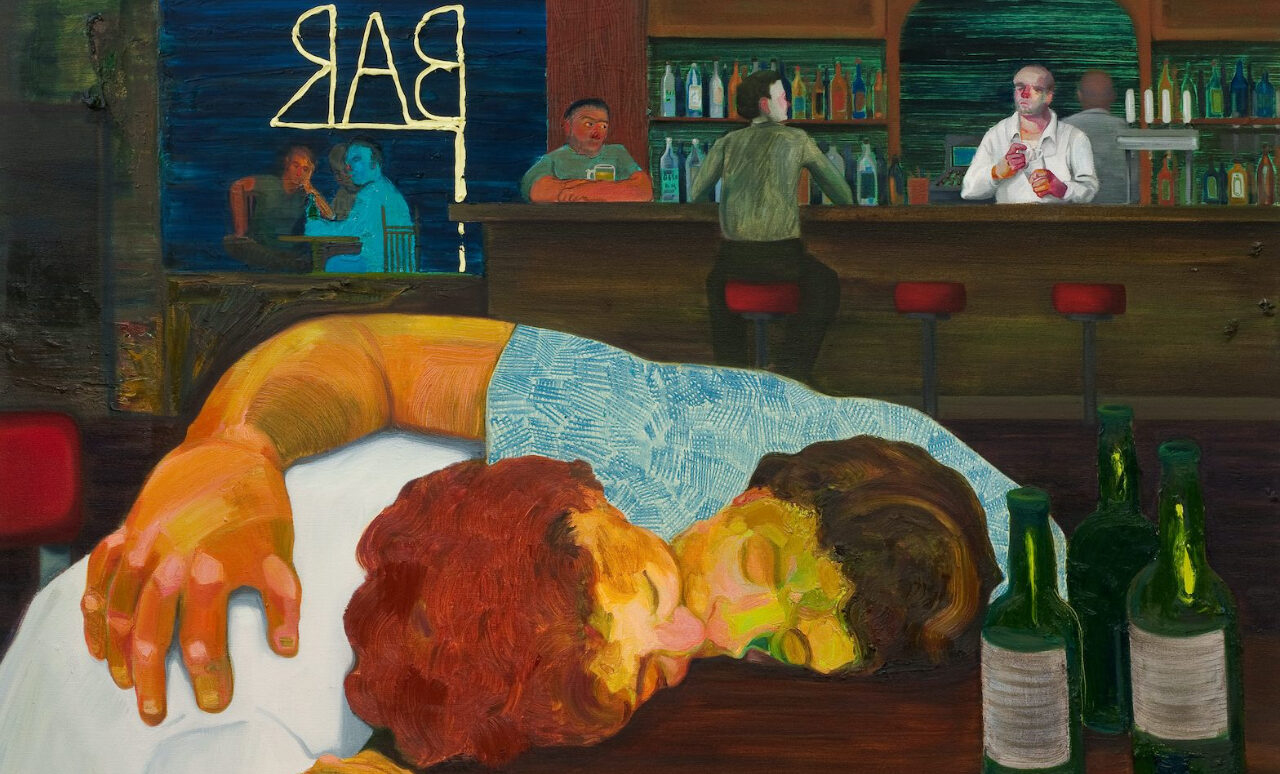


Multidisciplinary artist Nicole Eisenman (born 1965) delves into gender, politics, activism and our relationship with technology in her first UK retrospective. Curated by Mark Godfrey, the former curator of contemporary art at Tate Modern, and Monika Bayer-Wermuth, the exhibition is a comprehensive showcase of Eisenman’s versatility, featuring large-scale paintings, sculptures, monoprints, animation and drawings. Arranged chronologically into eight distinct sections, Eisenman navigates the line between the whimsical and the profound, predominantly relying on figurative painting and intricate storytelling throughout her body of work.
Her early paintings, often populated with feminine forms, harken back to early modern allegorical works. One triptych, at first reminiscent of a hellscape, unveils a shipwreck and its aftermath. The first gallery space notably exhibits a new video work made in collaboration with artist Ryan McNamara that transforms Eisenman’s ephemeral, site-specific murals into animated and narrated pictures. Opposite this, a wall adorned with artistic references provides us a glimpse into Eisenman’s practice; the artist’s smaller works on paper and collected objects inform her larger scale works.
Paintings from the early 2000s take on a narratorial role, reflecting on her initial success. One highlight is the use of tromp-l’oeil in Were-artist (2007), where the canvas transforms into a canvas within the painting.
As the exhibition progresses, Eisenman’s exploration evolves into social commentary, critique and psychological themes. In The Session (2008), a patient reclines in a chaise longue, a therapist writes notes, and the books on the shelves feature titles on their spines, cleverly curated for us. Freud, The History of Torture, or Male Fantasies, the bookshelves are worth your attention. From book titles to derogatory slurs painted onto images of women, the weaving of words in Eisenman’s work is instrumental in driving narrative.
Eisenman’s artistic journey remains in constant transformation. She experiments with the fantastical, introducing elements like inverted body parts and miniature figures. Again, the artist draws inspiration from art history, basing one composition on Hieronymus Bosch.
Moving upstairs, the monstrous hands from Were-artist (2007) reappear in The Drawing Class (2011). Here she uses charcoal over oil paint to weave a further layer of narrative into the painting. The 2010s usher in the introduction of the mythological cyclops as a metaphor for both surveillance and our obsession with technology, while the adjoining space features meditations on the human head through sculpture and painting. In the final gallery, a reactionary work can be found that includes a painterly response to the Black Lives Matter movement.
Eisenman’s enduring commentary and expressiveness remain central. It’s worth noting that, like many retrospectives, this one occasionally falls into the common trap of packing in too much. Nevertheless, it provides a comprehensive overview of Nicole Eisenman’s career, showcasing both critical perspectives and artistic ingenuity. As Eisenman continues to redefine and challenge traditional boundaries, her retrospective offers an engaging exploration of her ever-evolving artistic repertoire.
Joseph Knoeppel
Nicole Eisenman: What Happened is at Whitechapel Gallery from 11th October until 14th January 2024. For further information visit the exhibition’s website here.






Facebook
Twitter
Instagram
YouTube
RSS