
Life and Death in Pompeii and Herculaneum at the British Museum
 27 March 2013
Most people will have heard of Pompeii, fewer perhaps of Pompeii’s little sister, Herculaneum. Late in 79 AD, over the course of a day and a night, both of these Roman cities were wiped out by a massive volcanic eruption issuing from Mount Vesuvius. Ash and pumice rained down on Pompeii, crushing houses under the weight, while in the night a devastating pyroclastic surge instantly destroyed Herculaneum. Soon after, Pompeii also suffered the same fate, killing anyone who had not already fled. It was a truly dramatic and tragic end to two lively, cosmopolitan cities. But what the volcano buried from sight nearly 2000 years ago it also preserved, in incredible detail, for future generations.
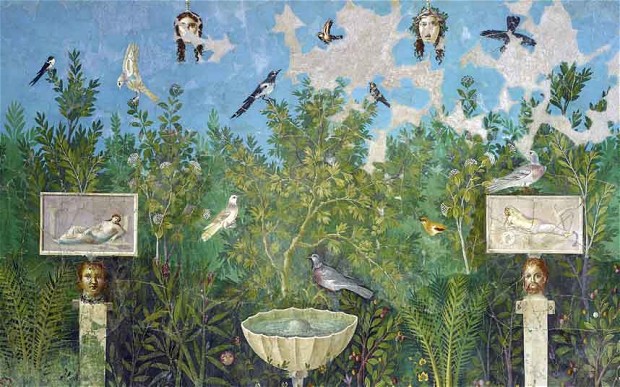
Life and Death in Pompeii and Herculaneum celebrates the vibrant lives of the inhabitants of these cities in what is an intimate and moving exhibition. For the most part the exhibition is set out like the plan of a house. Visitors enter through the atrium and then on into the garden and the adjoining bedroom and kitchen. Each room contains something wonderful and touchingly intimate. A carbonised wooden chest still contains the charred remains of clothes, make-up pots still contain pigments and the various frescoes on display are as fresh and vivid as if they had been painted yesterday. The most stunning example is surely a garden fresco teeming with palms and oleanders and an array of delicately painted birds. It really is breath-taking.
While so much of the exhibition concentrates on the lust for life and the everyday domestic goings on of the inhabitants of Pompeii and Herculaneum, one is reminded that the lives of many of these people ended so suddenly and so violently. Casts taken from the voids left in the hardened volcanic ash by the now decomposed bodies, show us the last seconds of some of those who could not escape in time. Most moving is a family group, mother and father thrown back by the white hot blast and two tiny children, one on his mother’s knee, clearly clawing at the walls in panic. It is hard not to be affected by the scene.
This is a stunning exhibition, rich in treasures detailing the humour, the sex lives, the broken hearts and aspirations of the inhabitants of these two tragic cities. It really is not to be missed and promises to be the British Museum’s blockbuster exhibition of 2013.
Emily Spicer
Life and Death in Pompeii and Herculaneum is on at the British Museum until 29th September 2013. For further information or to book visit the museum’s website here.







Facebook
Twitter
Instagram
YouTube
RSS